Lopez Anna Lena, Aldaba Josephine G, Roque Vito G, Tandoc Amado O, Sy Ava Kristy, Espino Fe Esperanza, DeQuiroz-Castro Maricel, Jee Youngmee, Ducusin Maria Joyce, Fox Kimberley K
University of the Philippines Manila-National Institutes of Health, Institute of Child Health and Human Development, Manila, Philippines.
Epidemiology Bureau, Department of Health, Manila, Philippines.
PLoS Negl Trop Dis. 2015 Mar 20;9(3):e0003630. doi: 10.1371/journal.pntd.0003630. eCollection 2015 Mar.
Japanese encephalitis virus (JEV) is an important cause of encephalitis in most of Asia, with high case fatality rates and often significant neurologic sequelae among survivors. The epidemiology of JE in the Philippines is not well defined. To support consideration of JE vaccine for introduction into the national schedule in the Philippines, we conducted a systematic literature review and summarized JE surveillance data from 2011 to 2014.
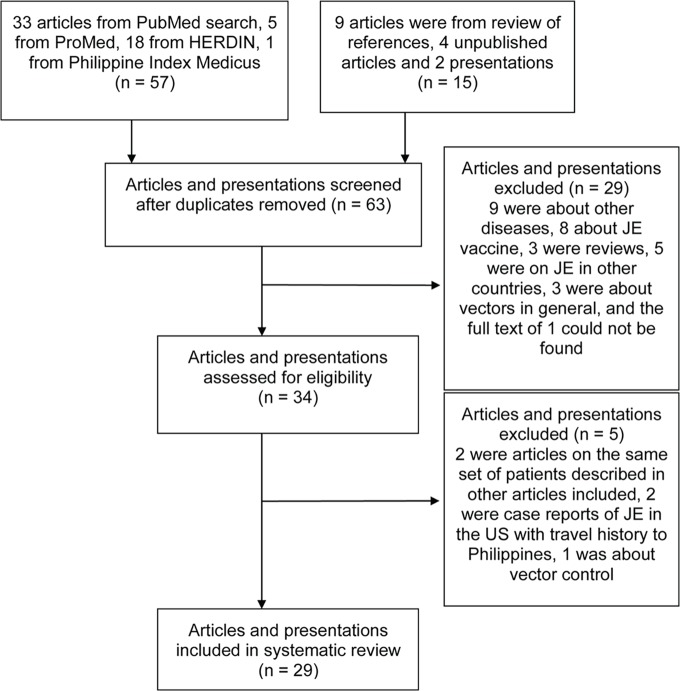
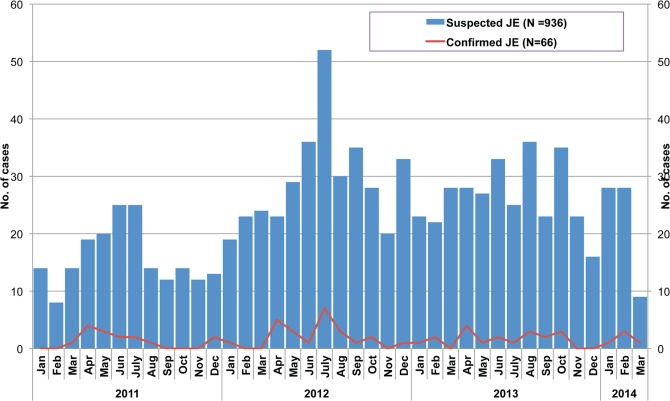
We conducted searches on Japanese encephalitis and the Philippines in four databases and one library. Data from acute encephalitis syndrome (AES) and JE surveillance and from the national reference laboratory from January 2011 to March 2014 were tabulated and mapped.
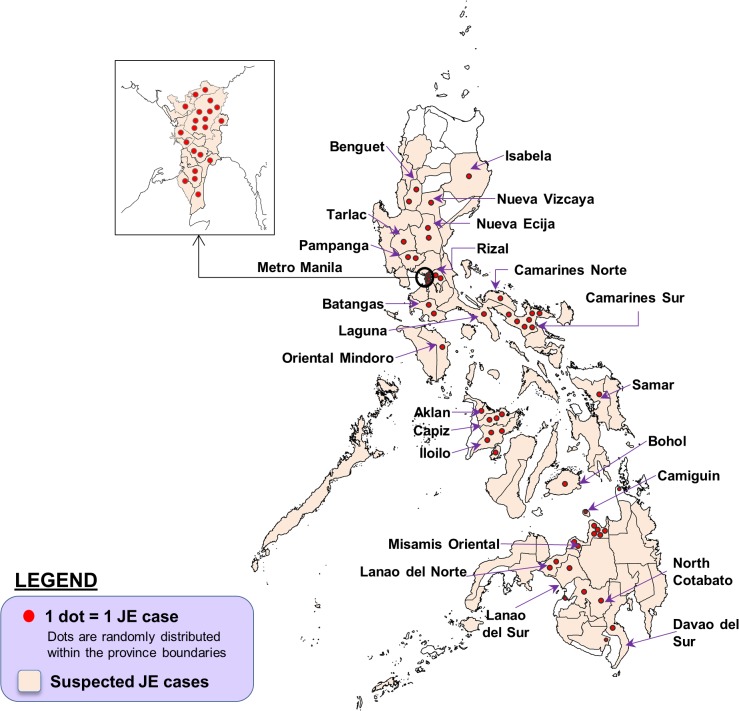
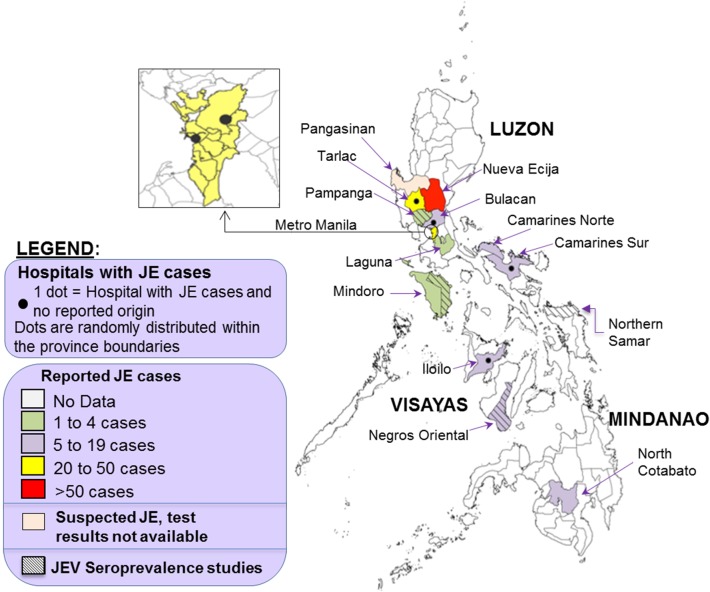
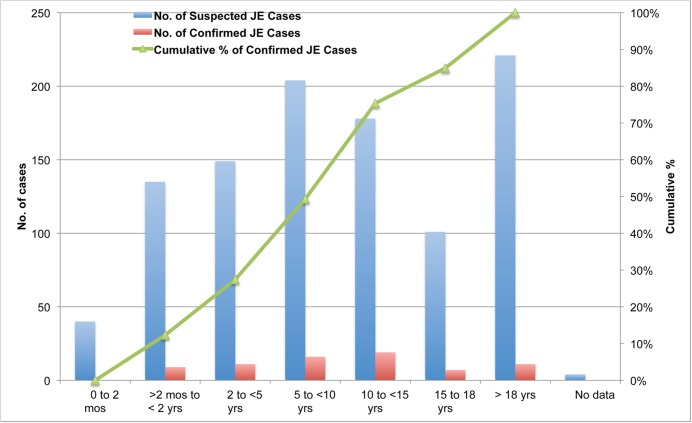
We identified 29 published reports and presentations on JE in the Philippines, including 5 serologic surveys, 18 reports of clinical cases, and 8 animal studies (including two with both clinical cases and animal data). The 18 clinical studies reported 257 cases of laboratory-confirmed JE from 1972 to 2013. JE virus (JEV) was the causative agent in 7% to 18% of cases of clinical meningitis and encephalitis combined, and 16% to 40% of clinical encephalitis cases. JE predominantly affected children under 15 years of age and 6% to 7% of cases resulted in death. Surveillance data from January 2011 to March 2014 identified 73 (15%) laboratory-confirmed JE cases out of 497 cases tested.
This comprehensive review demonstrates the endemicity and extensive geographic range of JE in the Philippines, and supports the use of JE vaccine in the country. Continued and improved surveillance with laboratory confirmation is needed to systematically quantify the burden of JE, to provide information that can guide prioritization of high risk areas in the country and determination of appropriate age and schedule of vaccine introduction, and to measure the impact of preventive measures including immunization against this important public health threat.
日本脑炎病毒(JEV)是亚洲大部分地区脑炎的重要病因,病死率高,幸存者常伴有严重的神经后遗症。菲律宾的日本脑炎流行病学情况尚不明确。为支持考虑将日本脑炎疫苗纳入菲律宾国家免疫规划,我们进行了系统的文献综述,并总结了2011年至2014年的日本脑炎监测数据。
我们在四个数据库和一个图书馆中搜索了关于日本脑炎和菲律宾的信息。将2011年1月至2014年3月急性脑炎综合征(AES)和日本脑炎监测以及国家参考实验室的数据进行列表和绘图。
我们确定了29篇关于菲律宾日本脑炎的已发表报告和展示,包括5项血清学调查、18篇临床病例报告和8项动物研究(其中两项既有临床病例又有动物数据)。18项临床研究报告了1972年至2013年期间257例实验室确诊的日本脑炎病例。日本脑炎病毒(JEV)是临床脑膜炎和脑炎合并病例的7%至18%以及临床脑炎病例的16%至40%的病原体。日本脑炎主要影响15岁以下儿童,6%至7%的病例导致死亡。2011年1月至2014年3月的监测数据显示,在497例检测病例中有73例(15%)实验室确诊的日本脑炎病例。
这项全面综述表明日本脑炎在菲律宾呈地方性流行且地理范围广泛,并支持在该国使用日本脑炎疫苗。需要持续且改进的实验室确诊监测,以系统地量化日本脑炎的负担,提供可指导确定该国高风险地区优先级以及确定疫苗引入的合适年龄和接种计划的信息,并衡量包括针对这一重要公共卫生威胁进行免疫接种在内的预防措施的影响。