Kim Junhwan, Lee Keumho, Hwang Won-min, Kang Jaeku
Department of Medical Humanities, Konyang University College of Medicine, Daejeon, Korea.
Faculty Development & Mentoring Center, Konyang University College of Medicine, Daejeon, Korea.
Korean J Med Educ. 2013 Jun;25(2):157-65. doi: 10.3946/kjme.2013.25.2.157. Epub 2013 Jun 30.
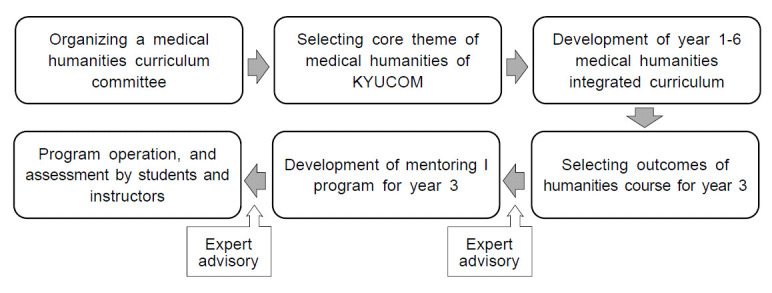
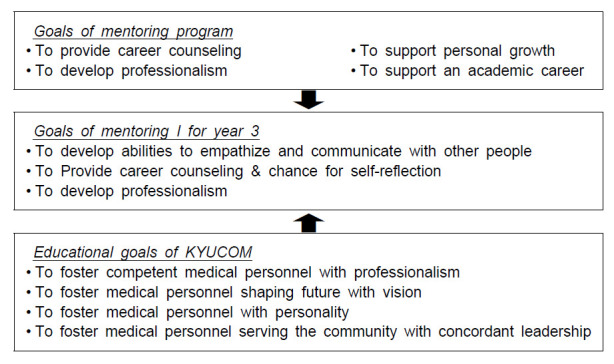
This study aims to explore development of a student-centered mentoring program and assess satisfaction about the course in order to improve system of the course on the basis of our implementation experience.
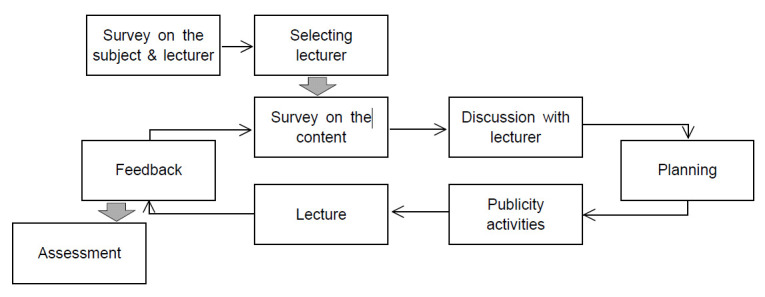
The course was designed for 58 third-year medical students in 2012. A student council acted as the core management team. We evaluate assessment about the course with a 50-item questionnaire administered on a 5-point Likert scale using SPSS version 20.0, and a short-answer form asked students, faculty, and lecturers for their opinions on the course.
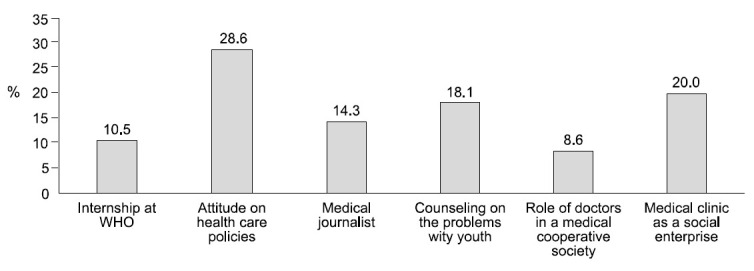
Students felt that 'Attitude on health care policies (28.6%)' was the most useful lecture. The 'Meeting with a patient' session was useful for developing students' abilities to empathize and communicate with other people (81.1%). The 50.9% of students were very satisfied with the course, as well as with the form of the course (49.2%).
A bold action that medical educators can take is to get students involved from the outset of the curriculum development. Allowing students to become actively involved in developing the program is an effective means of hearing them and providing a more meaningful learning experience.
本研究旨在探索以学生为中心的指导计划的发展情况,并评估对该课程的满意度,以便根据我们的实施经验改进课程体系。
该课程于2012年面向58名三年级医学生开设。学生会作为核心管理团队。我们使用SPSS 20.0版本,通过一份50项的问卷(采用5点李克特量表)对课程评估进行评价,并通过一份简答题形式向学生、教师和讲师征求他们对该课程的意见。
学生认为“医疗保健政策态度(28.6%)”是最有用的讲座。“与患者会面”环节对于培养学生与他人共情和沟通的能力很有用(81.1%)。50.9%的学生对该课程以及课程形式非常满意(49.2%)。
医学教育工作者可以采取的一个大胆举措是让学生从课程开发的一开始就参与进来。让学生积极参与制定该计划是倾听他们意见并提供更有意义学习体验的有效方式。