Yukl Steven A, Shergill Amandeep K, Girling Valerie, Li Qingsheng, Killian Maudi, Epling Lorrie, Li Peilin, Kaiser Philipp, Haase Ashley, Havlir Diane V, McQuaid Kenneth, Sinclair Elizabeth, Wong Joseph K
Department of Medicine, San Francisco VA Medical Center, San Francisco, California, United States of America; Department of Medicine, University of California, San Francisco (UCSF), San Francisco, California, United States of America.
Department of Medicine, University of California, San Francisco (UCSF), San Francisco, California, United States of America.
PLoS One. 2015 Mar 26;10(3):e0121290. doi: 10.1371/journal.pone.0121290. eCollection 2015.
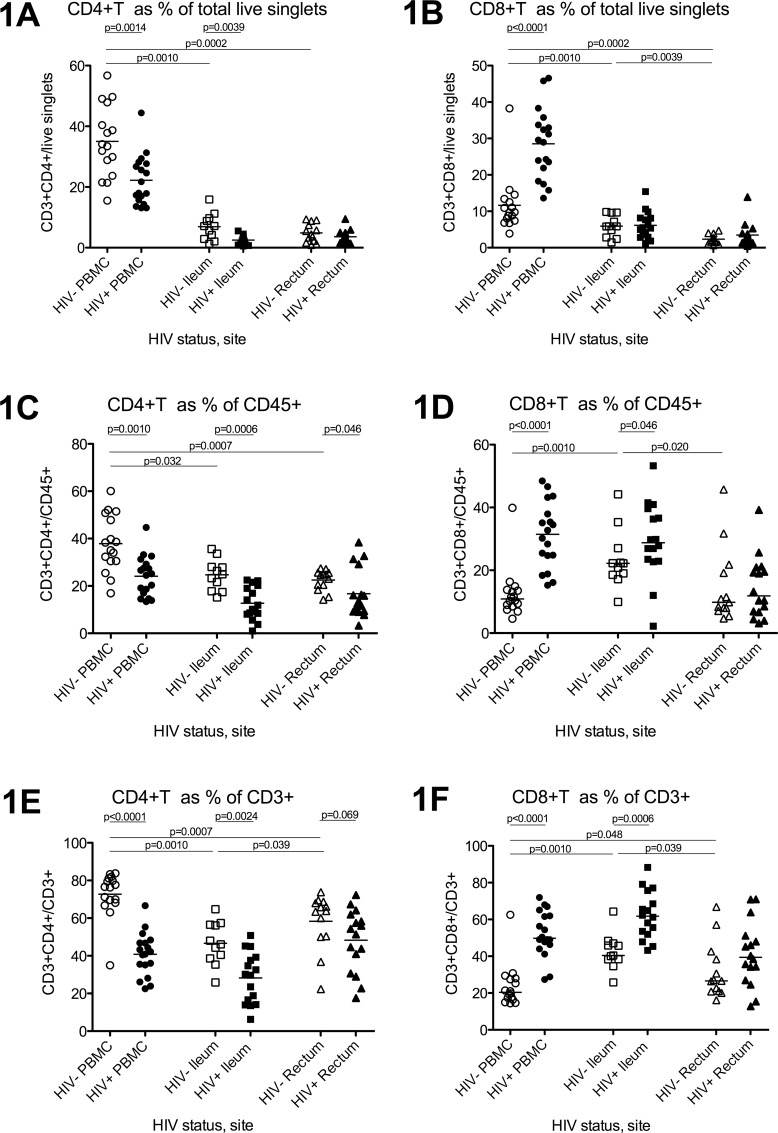
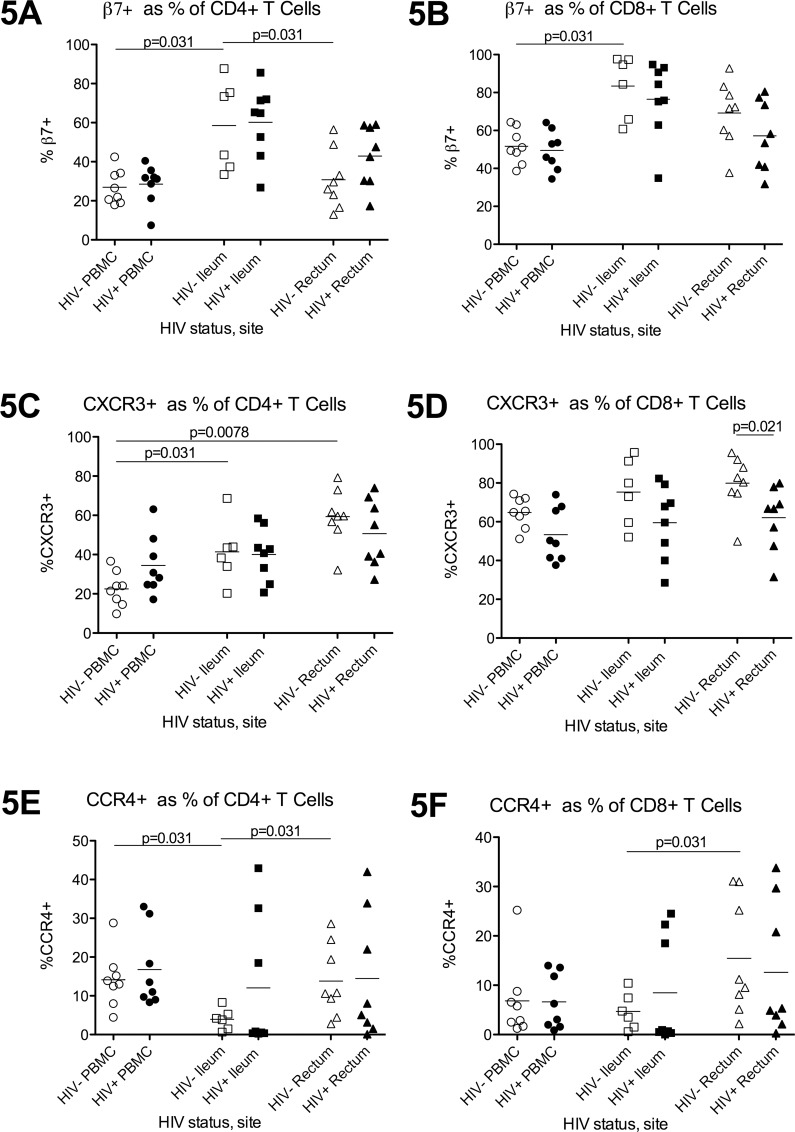
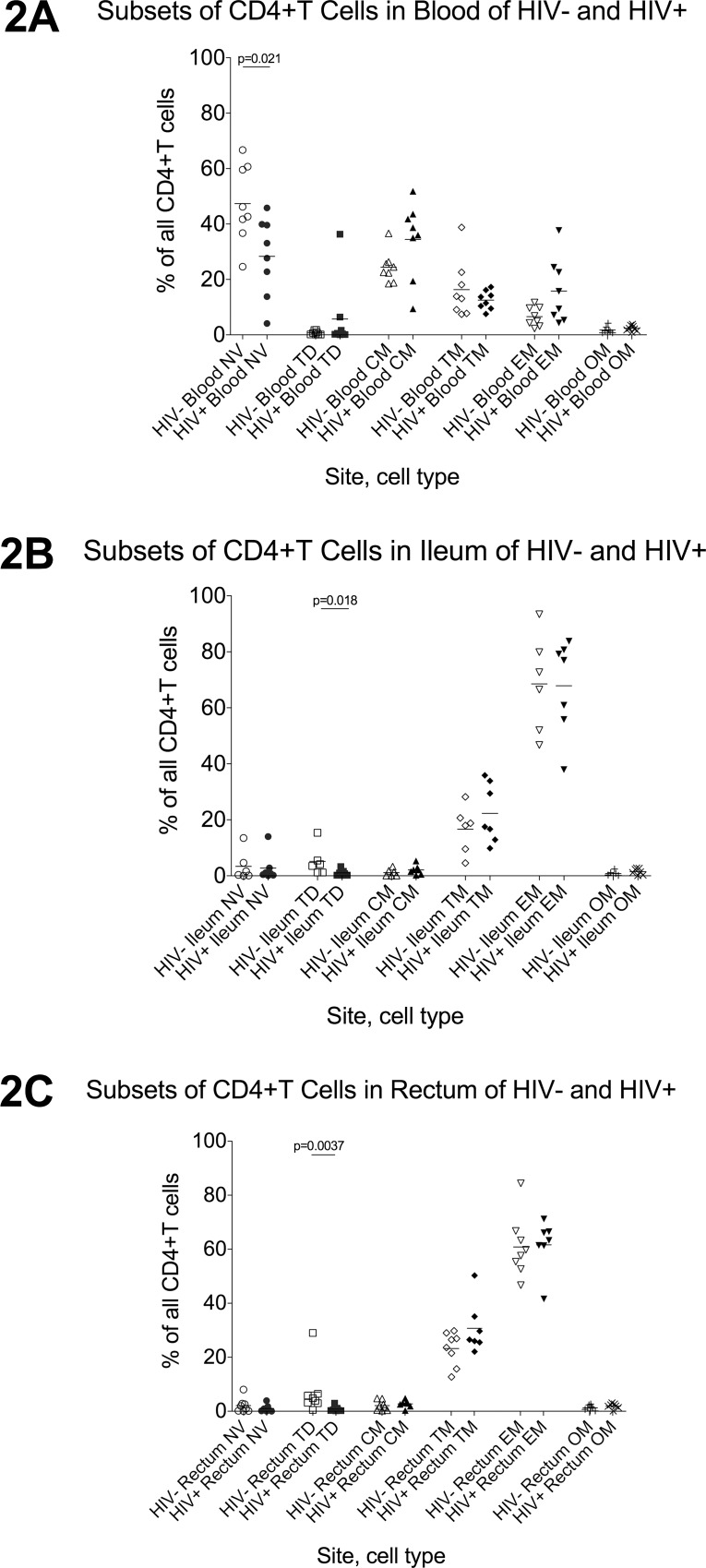
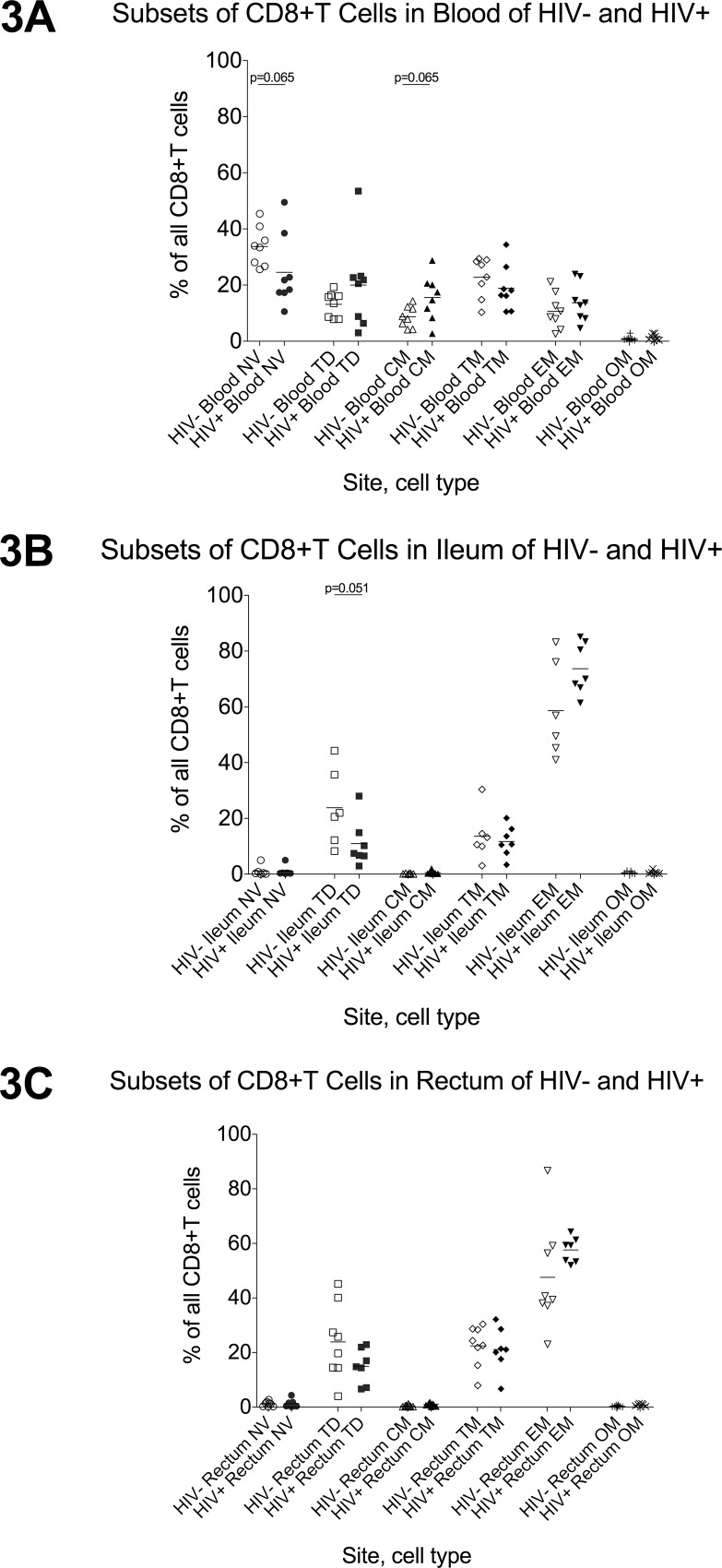
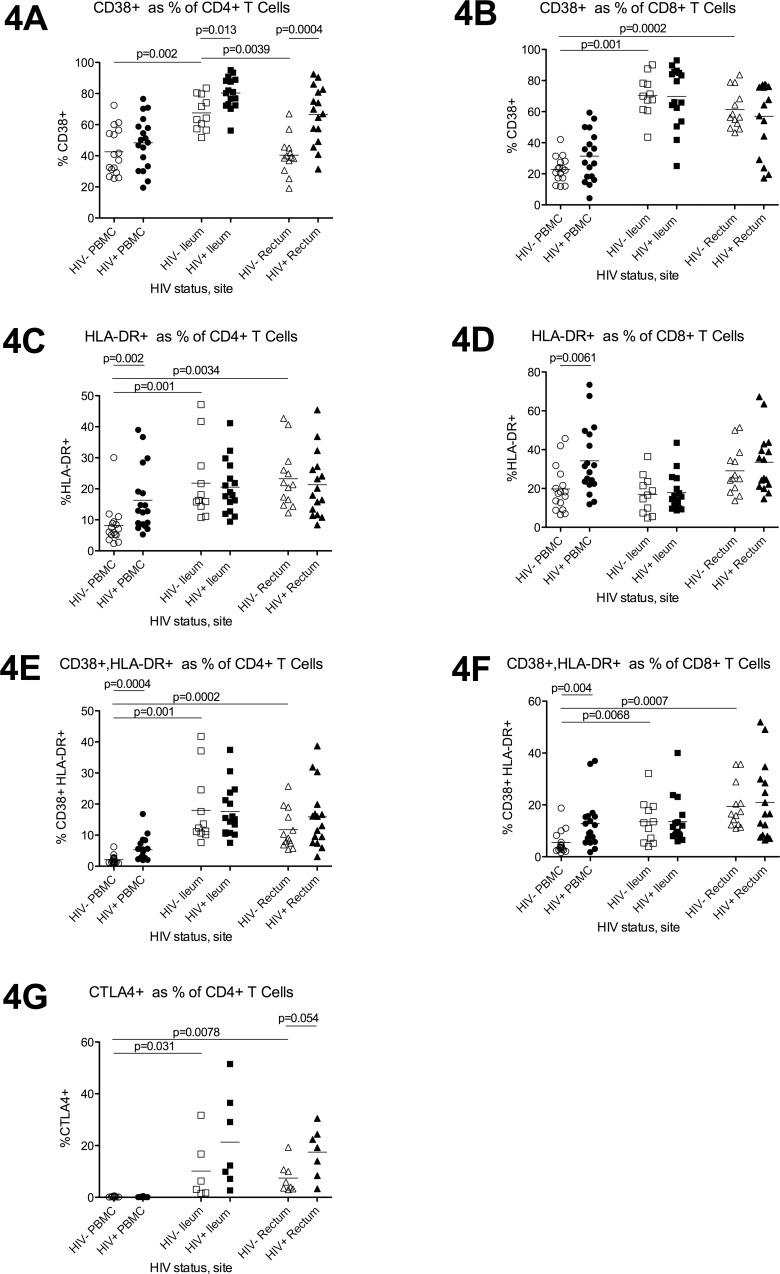
Gastrointestinal T lymphocytes are critical for mucosal immunity and HIV pathogenesis, yet little is known about normal T cell numbers and phenotypes in different regions of the gut, or the degree to which ART can restore levels to those of HIV-uninfected individuals. To investigate these questions, we measured T cell frequencies and markers of memory, activation, anergy, and homing in the blood, ileum, and rectum of HIV- and ART-suppressed HIV+ adults. In HIV- individuals, T cell frequencies and phenotypes differed significantly between sites. Compared to HIV- adults, HIV+ adults had lower absolute CD4+T cell counts in the ileal lamina propria and lower relative CD4+T cell counts in the blood and ileum. In the gut, HIV+ adults had a higher proportion of CD38+ CD4+T cells, a lower proportion of terminally-differentiated effector cells, and, in the rectum, a higher proportion of CTLA-4+ CD4+T cells. In HIV+ individuals, relative CD4+T cell numbers in the ileum correlated with the proportion of CTLA-4+ CD4+T cells, whereas in the rectum, they tended to correlate with the proportion of circulating CD4+T cells expressing α4β7 or CCR6. Mechanisms of T cell reconstitution may differ throughout the gut, with homing contributing more in the rectum while ileal reconstitution is associated with mucosal CD4+T cell anergy.
胃肠道T淋巴细胞对黏膜免疫和HIV发病机制至关重要,但对于肠道不同区域正常T细胞数量和表型,以及抗逆转录病毒疗法(ART)能将水平恢复到未感染HIV个体程度的了解却很少。为了研究这些问题,我们测量了接受ART治疗且病情得到抑制的HIV阳性成人以及HIV阴性成人血液、回肠和直肠中的T细胞频率以及记忆、活化、无反应性和归巢标志物。在HIV阴性个体中,不同部位的T细胞频率和表型存在显著差异。与HIV阴性成人相比,HIV阳性成人回肠固有层中CD4+T细胞绝对计数较低,血液和回肠中CD4+T细胞相对计数也较低。在肠道中,HIV阳性成人CD38+CD4+T细胞比例较高,终末分化效应细胞比例较低,在直肠中,CTLA-4+CD4+T细胞比例较高。在HIV阳性个体中,回肠中CD4+T细胞相对数量与CTLA-4+CD4+T细胞比例相关,而在直肠中,它们往往与表达α4β7或CCR6的循环CD4+T细胞比例相关。T细胞重建机制在整个肠道可能有所不同,归巢在直肠中作用更大,而回肠重建与黏膜CD4+T细胞无反应性有关。