Burks Scott R, Legenzov Eric A, Martin Erik W, Li Changqing, Lu Wuyuan, Kao Joseph P Y
Center for Biomedical Engineering and Technology and Department of Physiology, University of Maryland, Baltimore, Maryland, 21201, United States of America.
Institute of Human Virology and Department of Biochemistry and Molecular Biology, University of Maryland, Baltimore, Maryland, 21201, United States of America.
PLoS One. 2015 Mar 27;10(3):e0120982. doi: 10.1371/journal.pone.0120982. eCollection 2015.
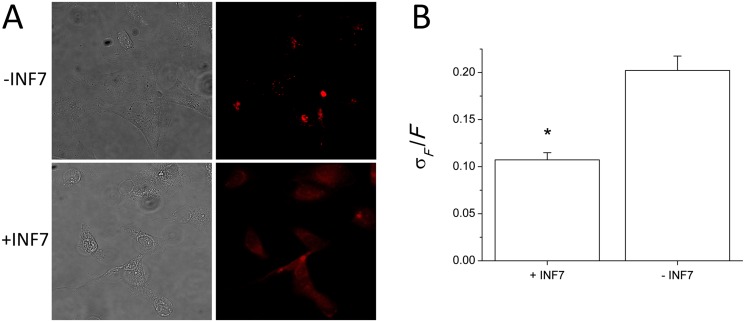
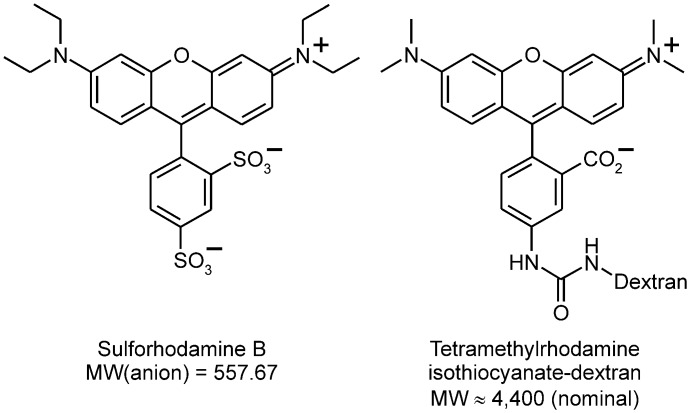
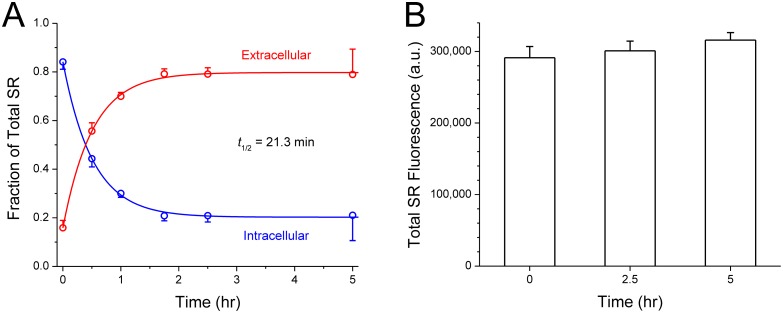
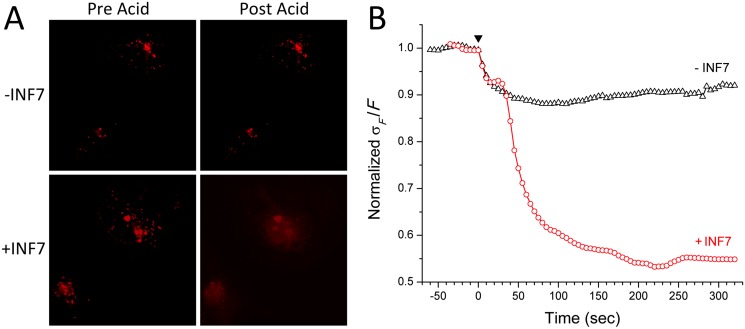
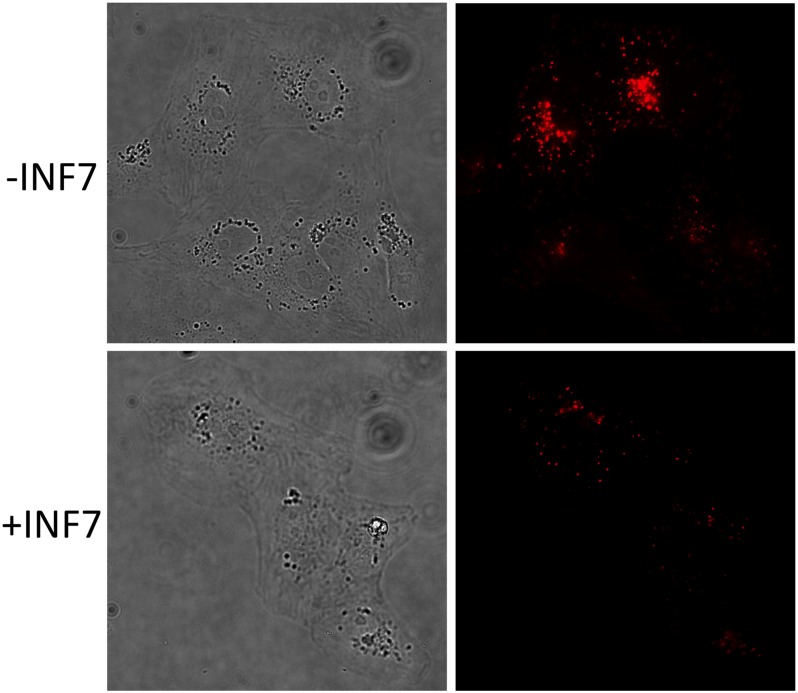
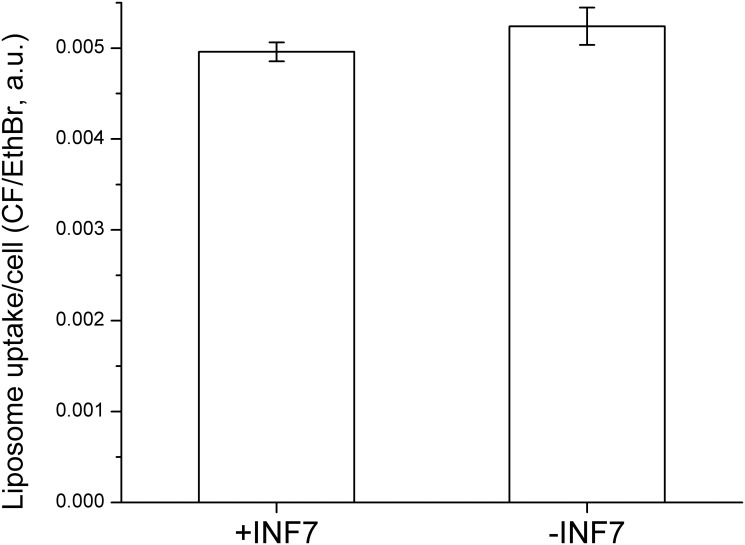
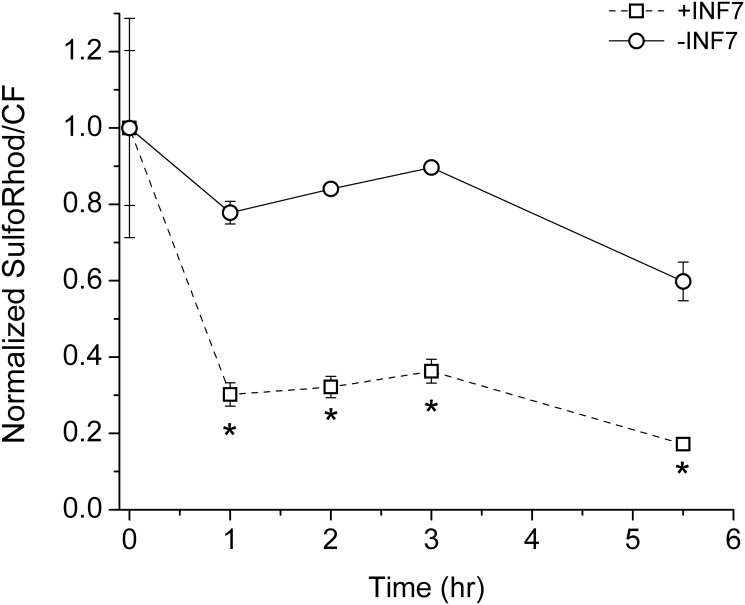
Liposomes are promising vehicles to deliver diagnostic and therapeutic agents to cells in vivo. After uptake into cells by endocytosis, liposomes are degraded in the endolysosomal system. Consequently, the encapsulated cargo molecules frequently remain sequestered in endosomal compartments; this limits their usefulness in many applications (e.g. gene delivery). To overcome this, various fusogenic peptides have been developed to facilitate delivery of liposomally-encapsulated molecules into the cytosol. One such peptide is the pH-sensitive influenza-derived peptide INF7. Liposomal delivery of imaging agents is an attractive approach for enabling cell imaging and cell tracking in vivo, but can be hampered by inadequate intracellular accumulation and retention of probes caused by exocytosis (and possible degradation) of endosome-entrapped probes. Such signal loss could be minimized by facilitating escape of probe molecules from endolysosomal compartments into the cytosol. We investigated the ability of co-encapsulated INF7 to release liposomally-delivered rhodamine fluorophores into the cytosol after endosomal acidification/maturation. We co-encapsulated INF7 and fluorescent rhodamine derivatives having vastly different transport properties to show that after endocytosis by CV1 cells, the INF7 peptide is activated by acidic endosomal pH and facilitates efficient release of the fluorescent tracers into the cytosol. Furthermore, we show that INF7-facilitated escape from endosomes markedly enhanced retention of tracers that cannot be actively extruded from the cytosol. Minimizing loss of intracellular probes improves cellular imaging by increasing the signal-to-noise ratio of images and lengthening the time window that imaging can be performed. In particular, this will enhance in vivo electron paramagnetic resonance imaging, an emergent magnetic resonance imaging modality requires exogenous paramagnetic imaging agents and is highly promising for cellular and molecular imaging.
脂质体是一种很有前景的载体,可在体内将诊断和治疗剂递送至细胞。通过内吞作用被细胞摄取后,脂质体在内溶酶体系统中降解。因此,被包裹的货物分子常常被隔离在内体区室中;这限制了它们在许多应用(如基因递送)中的效用。为克服这一问题,已开发出各种融合肽,以促进脂质体包裹分子递送至细胞质中。一种这样的肽是pH敏感的源自流感病毒的肽INF7。成像剂的脂质体递送是一种在体内实现细胞成像和细胞追踪的有吸引力的方法,但可能会因内体包裹的探针通过胞吐作用(以及可能的降解)导致细胞内积累和保留不足而受到阻碍。通过促进探针分子从内溶酶体区室逃逸到细胞质中,可以将这种信号损失降至最低。我们研究了共包裹的INF7在内体酸化/成熟后将脂质体递送的罗丹明荧光团释放到细胞质中的能力。我们共包裹了INF7和具有截然不同转运特性的荧光罗丹明衍生物,以表明CV1细胞内吞后,INF7肽被酸性内体pH激活,并促进荧光示踪剂有效释放到细胞质中。此外,我们表明INF7促进的从内体逃逸显著增强了无法从细胞质中主动排出的示踪剂的保留。通过提高图像的信噪比和延长成像可进行的时间窗口,最小化细胞内探针的损失可改善细胞成像。特别是,这将增强体内电子顺磁共振成像,这是一种新兴的磁共振成像方式,需要外源性顺磁成像剂,对细胞和分子成像极具前景。