Wakayo Tolassa, Belachew Tefera, Vatanparast Hassan, Whiting Susan J
Jimma University, Jimma, Ethiopia.
University of Saskatchewan, Saskatoon, Canada.
PLoS One. 2015 Mar 30;10(3):e0120963. doi: 10.1371/journal.pone.0120963. eCollection 2015.
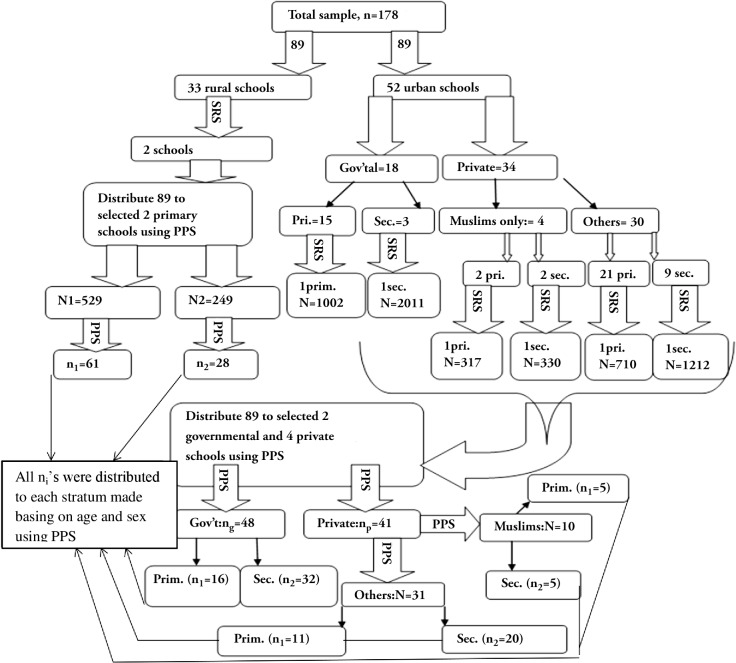
Studies examining vitamin D status among children living in sunny climates indicated that children did not receive adequate vitamin D, however, this has not been looked at among children living in Ethiopia. In this study, we determined vitamin D deficiency and its predictors among school children aged 11-18 years, examining circulating 25-hydroxy vitamin D [25(OH)D]. The school-based cross-sectional study was conducted in schools in Adama Town (n = 89) and in rural Adama (n = 85) for a total sample of 174. Students were randomly selected using multi-stage stratified sampling method from both settings. Socioeconomic status of parents and demographic, anthropometric, sun exposure status and blood 25(OH)D levels were obtained. Vitamin D deficiency, defined as circulating levels of 25(OH)D <50 nmol/L, was found in 42% of the entire study participants. Prevalence of deficiency was significantly higher among students in urban setting compared to rural (61.8% vs 21.2%, respectively, p<0.001). After controlling for potential confounders using multivariable logistic regression model, duration of exposure to sunlight, amount of body part exposed to sunlight, place of residence, maternal education, body fatness, having TV/computer at home and socioeconomic status were significant predictors of vitamin D deficiency. The findings suggest that Vitamin D deficiency was prevalent in healthy school children living both in urban and rural areas of a country with abundant year round sunshine providing UVB, with the prevalence of deficiency being significantly higher among urban school children who were less exposed to sunlight. Behaviour change communication to enhance exposure to ultraviolet light is critical to prevent vitamin D deficiency in tropical country like Ethiopia. Further study is required to assess the deleterious effect of its deficiency on bone mineral homeostasis of growing children in Ethiopia during their most critical period of bone development.
对生活在阳光充足地区的儿童进行的维生素D状况研究表明,儿童没有获得足够的维生素D,然而,埃塞俄比亚的儿童尚未进行过此类研究。在本研究中,我们测定了11至18岁学龄儿童的维生素D缺乏情况及其预测因素,检测循环中的25-羟基维生素D [25(OH)D]。这项基于学校的横断面研究在阿达马镇(n = 89)和阿达马农村地区(n = 85)的学校进行,总样本量为174。使用多阶段分层抽样方法从这两个地区随机选取学生。获取了父母的社会经济状况以及人口统计学、人体测量学、阳光暴露状况和血液25(OH)D水平等信息。将循环中的25(OH)D水平<50 nmol/L定义为维生素D缺乏,在整个研究参与者中,42%的人存在维生素D缺乏。城市地区学生的缺乏率显著高于农村地区(分别为61.8%和21.2%,p<0.001)。在使用多变量逻辑回归模型控制潜在混杂因素后,阳光暴露时长、身体暴露于阳光的部位数量、居住地、母亲教育程度、身体脂肪含量、家中拥有电视/电脑情况以及社会经济状况是维生素D缺乏的显著预测因素。研究结果表明,在一个全年阳光充足可提供紫外线B的国家,城市和农村地区的健康学龄儿童中维生素D缺乏情况普遍存在,且城市学龄儿童因阳光暴露较少,维生素D缺乏率显著更高。在埃塞俄比亚这样的热带国家,通过行为改变沟通来增加紫外线暴露对于预防维生素D缺乏至关重要。需要进一步研究来评估维生素D缺乏对埃塞俄比亚成长中儿童在骨骼发育最关键时期的骨矿物质稳态的有害影响。