Tononi Giulio, Koch Christof
Department of Psychiatry, University of Wisconsin, Madison WI, USA.
Allen Institute for Brain Science, Seattle, WA, USA
Philos Trans R Soc Lond B Biol Sci. 2015 May 19;370(1668). doi: 10.1098/rstb.2014.0167.
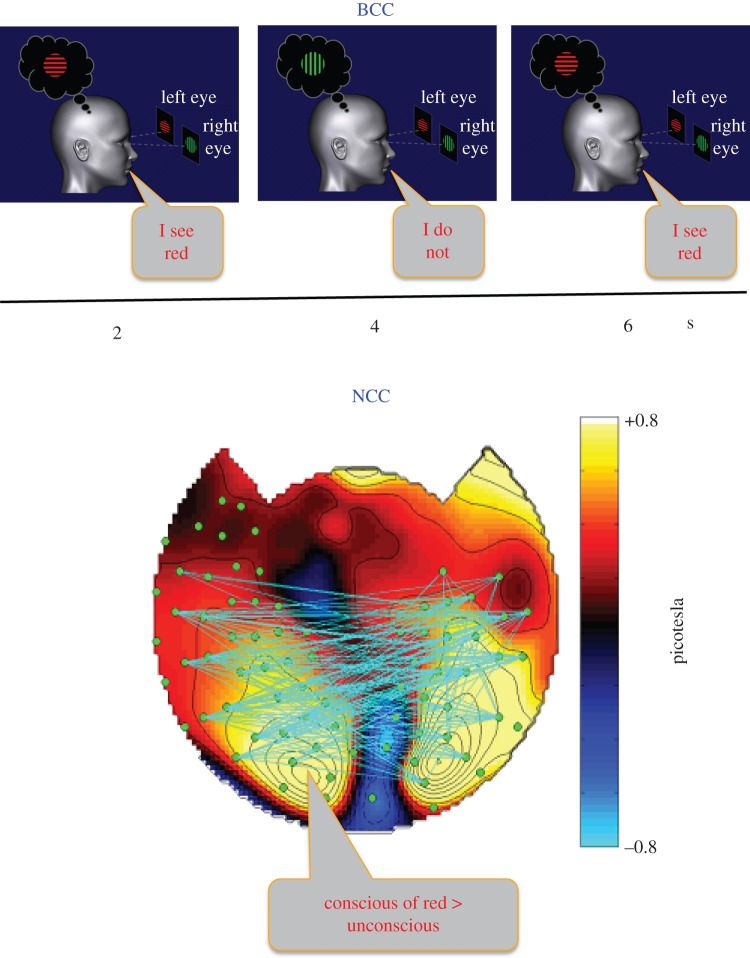
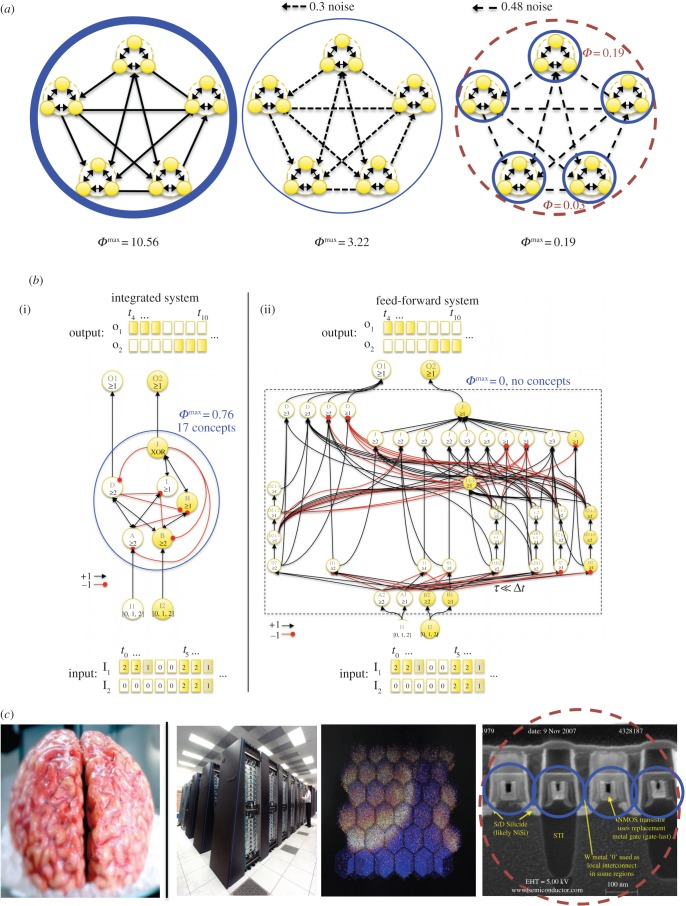
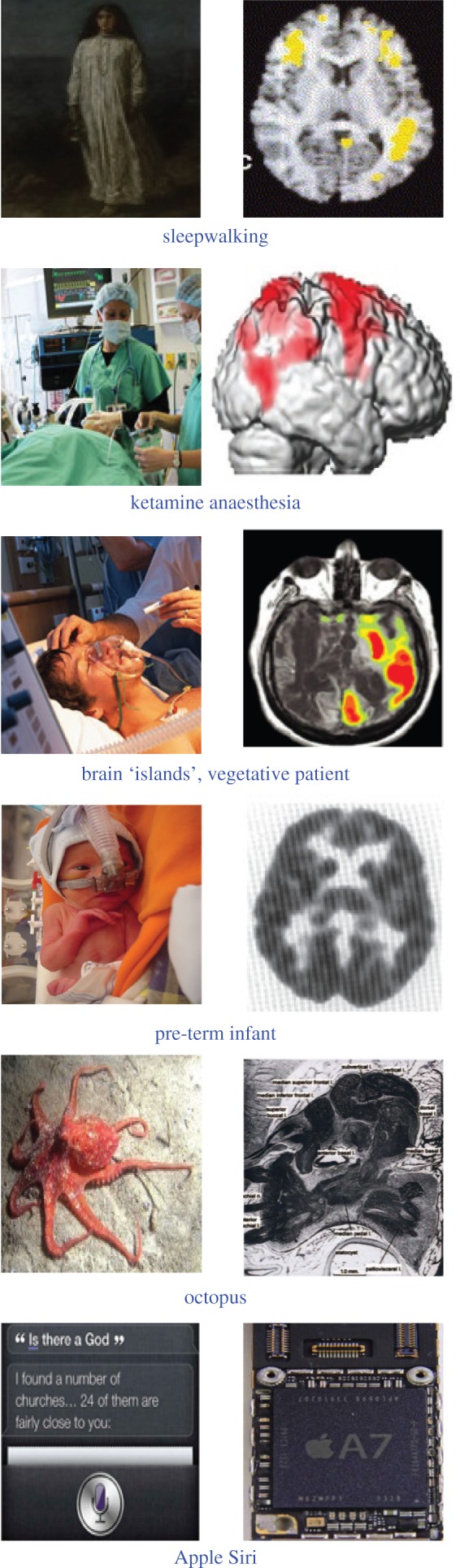
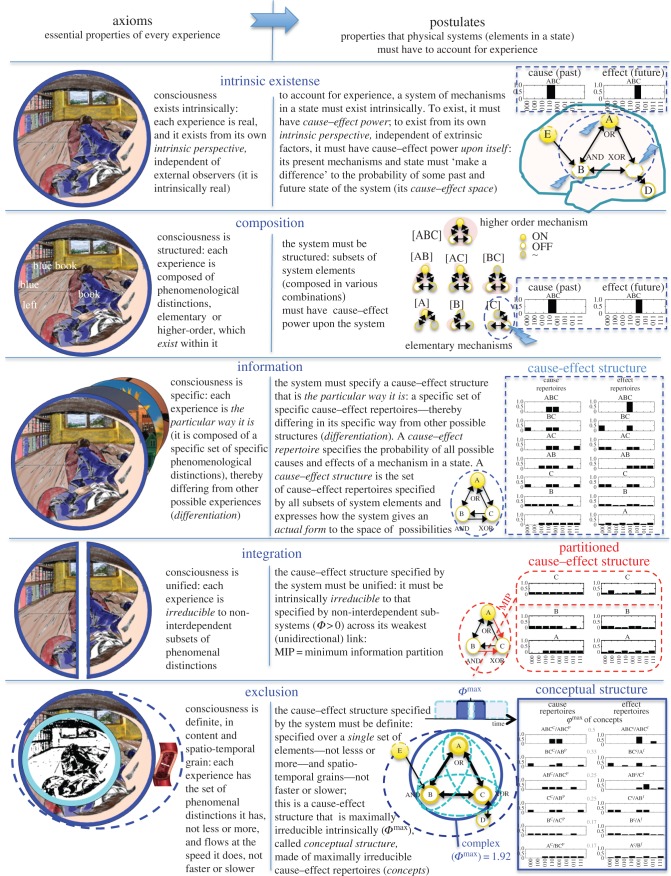
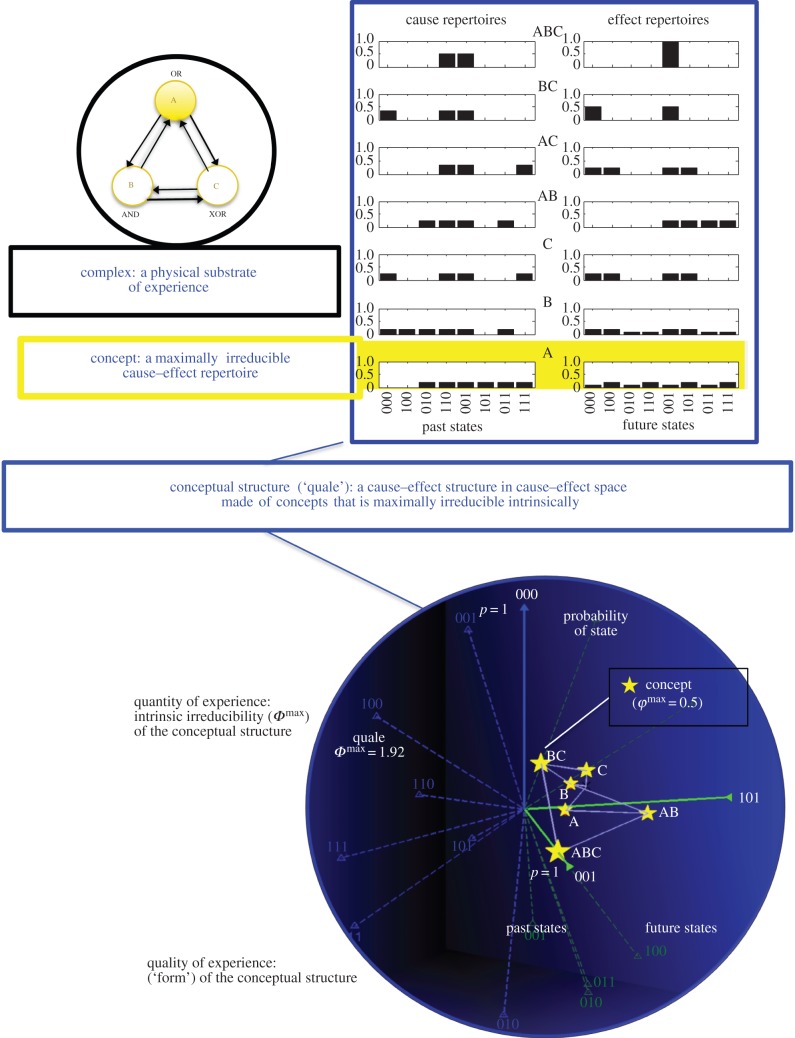
The science of consciousness has made great strides by focusing on the behavioural and neuronal correlates of experience. However, while such correlates are important for progress to occur, they are not enough if we are to understand even basic facts, for example, why the cerebral cortex gives rise to consciousness but the cerebellum does not, though it has even more neurons and appears to be just as complicated. Moreover, correlates are of little help in many instances where we would like to know if consciousness is present: patients with a few remaining islands of functioning cortex, preterm infants, non-mammalian species and machines that are rapidly outperforming people at driving, recognizing faces and objects, and answering difficult questions. To address these issues, we need not only more data but also a theory of consciousness-one that says what experience is and what type of physical systems can have it. Integrated information theory (IIT) does so by starting from experience itself via five phenomenological axioms: intrinsic existence, composition, information, integration and exclusion. From these it derives five postulates about the properties required of physical mechanisms to support consciousness. The theory provides a principled account of both the quantity and the quality of an individual experience (a quale), and a calculus to evaluate whether or not a particular physical system is conscious and of what. Moreover, IIT can explain a range of clinical and laboratory findings, makes a number of testable predictions and extrapolates to a number of problematic conditions. The theory holds that consciousness is a fundamental property possessed by physical systems having specific causal properties. It predicts that consciousness is graded, is common among biological organisms and can occur in some very simple systems. Conversely, it predicts that feed-forward networks, even complex ones, are not conscious, nor are aggregates such as groups of individuals or heaps of sand. Also, in sharp contrast to widespread functionalist beliefs, IIT implies that digital computers, even if their behaviour were to be functionally equivalent to ours, and even if they were to run faithful simulations of the human brain, would experience next to nothing.
意识科学通过关注经验的行为和神经元关联取得了巨大进展。然而,虽然这些关联对于取得进展很重要,但如果我们要理解哪怕是基本事实,它们是不够的,例如,为什么大脑皮层会产生意识而小脑却不会,尽管小脑有更多的神经元并且看起来同样复杂。此外,在许多我们想知道是否存在意识的情况下,关联几乎没有帮助:只有少数残留功能皮层岛的患者、早产儿、非哺乳动物物种以及在驾驶、识别面孔和物体以及回答难题方面迅速超越人类的机器。为了解决这些问题,我们不仅需要更多数据,还需要一种意识理论——一种能说明经验是什么以及何种物理系统能够拥有经验的理论。整合信息理论(IIT)通过从经验本身出发,经由五个现象学公理来做到这一点:内在存在、构成、信息、整合和排他性。由此它推导出关于支持意识所需物理机制属性的五个假设。该理论对个体经验(一种感受质)的数量和质量都给出了有原则的解释,以及一种用于评估特定物理系统是否有意识以及有何种意识的演算方法。此外,IIT可以解释一系列临床和实验室发现,做出一些可测试的预测并外推到一些有问题的情况。该理论认为意识是具有特定因果属性的物理系统所拥有的一种基本属性。它预测意识是分级的,在生物有机体中很常见并且可以在一些非常简单的系统中出现。相反,它预测前馈网络,即使是复杂的前馈网络,也没有意识,个体群体或沙堆等集合体也没有意识。此外,与广泛的功能主义信念形成鲜明对比的是,IIT意味着数字计算机,即使它们的行为在功能上与我们的等效,即使它们运行对人类大脑的忠实模拟,也几乎不会有任何体验。