Oliveira Jorge S, Araújo Wydemberg, Lopes Sales Ana Isabela, Brito Guerra Alaine de, Silva Araújo Sinara Carla da, de Vasconcelos Ana Tereza Ribeiro, Agnez-Lima Lucymara F, Freitas Ana Teresa
INESC-ID/IST-Instituto de Engenharia de Sistemas e Computadores/Instituto Superior Técnico, Universidade de Lisboa, Rua Alves Redol 9, 1000-029 Lisboa, Portugal, Universidade Federal do Rio Grande do Norte, Natal, RN, Brazil and Laboratório Nacional de Computação Científica, Petrópolis, RJ, Brazil.
INESC-ID/IST-Instituto de Engenharia de Sistemas e Computadores/Instituto Superior Técnico, Universidade de Lisboa, Rua Alves Redol 9, 1000-029 Lisboa, Portugal, Universidade Federal do Rio Grande do Norte, Natal, RN, Brazil and Laboratório Nacional de Computação Científica, Petrópolis, RJ, Brazil
Database (Oxford). 2015 Mar 31;2015. doi: 10.1093/database/bav033. Print 2015.
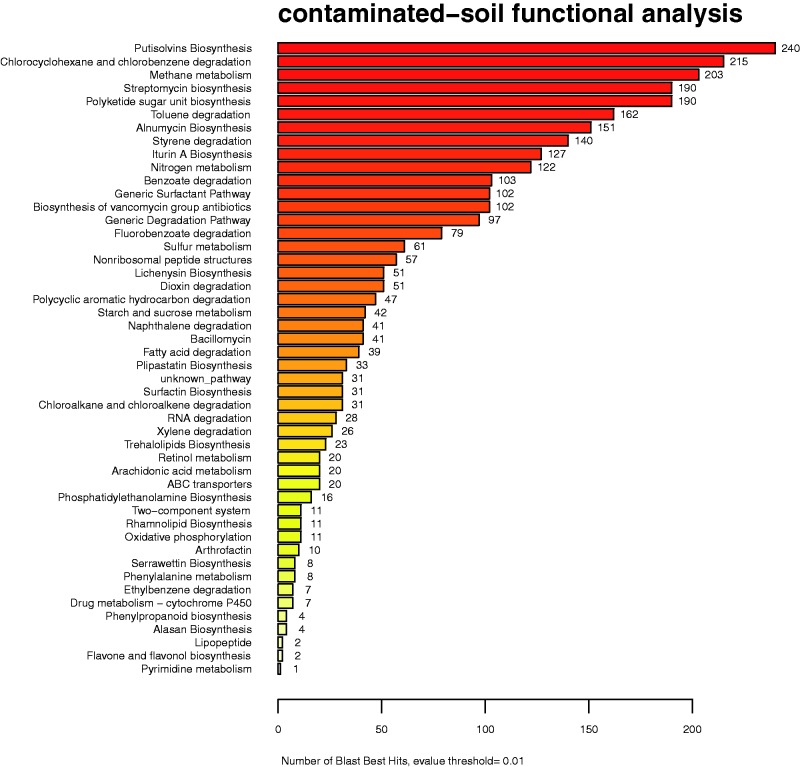
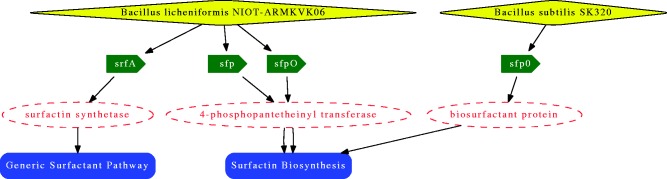
Crude oil extraction, transportation and use provoke the contamination of countless ecosystems. Therefore, bioremediation through surfactants mobilization or biodegradation is an important subject, both economically and environmentally. Bioremediation research had a great boost with the recent advances in Metagenomics, as it enabled the sequencing of uncultured microorganisms providing new insights on surfactant-producing and/or oil-degrading bacteria. Many research studies are making available genomic data from unknown organisms obtained from metagenomics analysis of oil-contaminated environmental samples. These new datasets are presently demanding the development of new tools and data repositories tailored for the biological analysis in a context of bioremediation data analysis. This work presents BioSurfDB, www.biosurfdb.org, a curated relational information system integrating data from: (i) metagenomes; (ii) organisms; (iii) biodegradation relevant genes; proteins and their metabolic pathways; (iv) bioremediation experiments results, with specific pollutants treatment efficiencies by surfactant producing organisms; and (v) a biosurfactant-curated list, grouped by producing organism, surfactant name, class and reference. The main goal of this repository is to gather information on the characterization of biological compounds and mechanisms involved in biosurfactant production and/or biodegradation and make it available in a curated way and associated with a number of computational tools to support studies of genomic and metagenomic data.
原油的开采、运输和使用对无数生态系统造成了污染。因此,通过表面活性剂动员或生物降解进行生物修复在经济和环境方面都是一个重要课题。随着宏基因组学的最新进展,生物修复研究得到了极大的推动,因为它能够对未培养的微生物进行测序,从而为产表面活性剂和/或石油降解细菌提供新的见解。许多研究正在提供从受油污染环境样本的宏基因组学分析中获得的未知生物的基因组数据。目前,这些新数据集需要开发专门用于生物修复数据分析背景下生物分析的新工具和数据存储库。这项工作展示了BioSurfDB(www.biosurfdb.org),这是一个经过整理的关系信息系统,整合了来自以下方面的数据:(i)宏基因组;(ii)生物体;(iii)与生物降解相关的基因、蛋白质及其代谢途径;(iv)生物修复实验结果,以及产表面活性剂生物体对特定污染物的处理效率;(v)一份按产生生物体、表面活性剂名称、类别和参考文献分组的生物表面活性剂整理清单。这个存储库的主要目标是收集有关生物表面活性剂生产和/或生物降解中涉及的生物化合物和机制的表征信息,并以经过整理的方式提供这些信息,并与一些计算工具相关联,以支持基因组和宏基因组数据的研究。