Department of Biology, Federal University of São Carlos, Rodovia João Leme dos Santos km 110 SP-264, Bairro Itinga, Sorocaba, SP, 18052-780, Brazil.
Institute for Bioinformatics and Medical Informatics, University of Tübingen, Sand 14, 72076, Tübingen, Germany.
Sci Rep. 2022 May 11;12(1):7769. doi: 10.1038/s41598-022-11753-0.
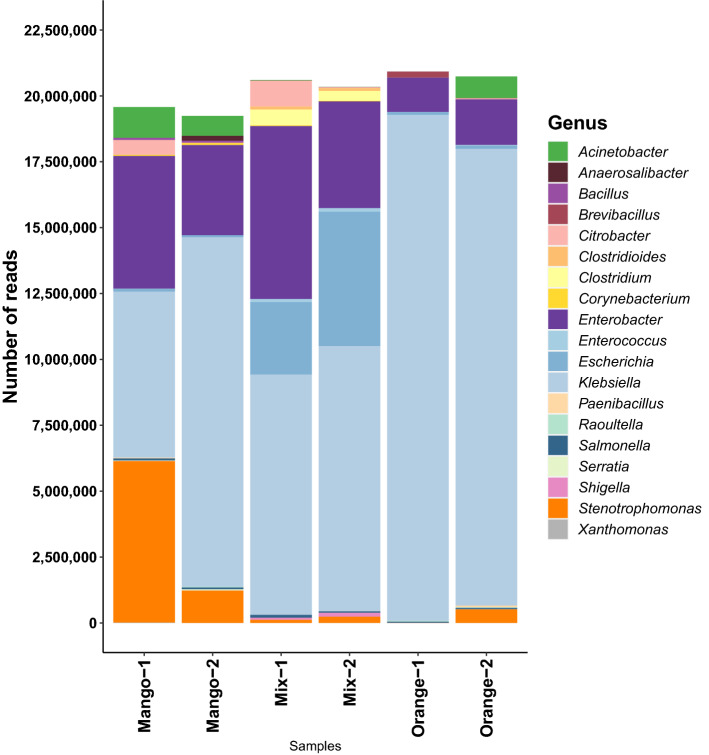
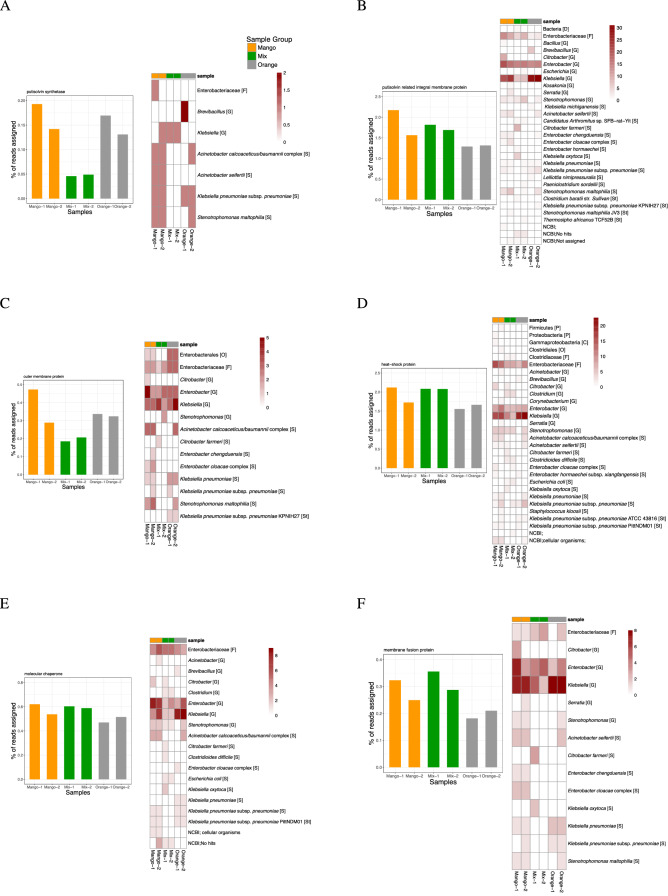
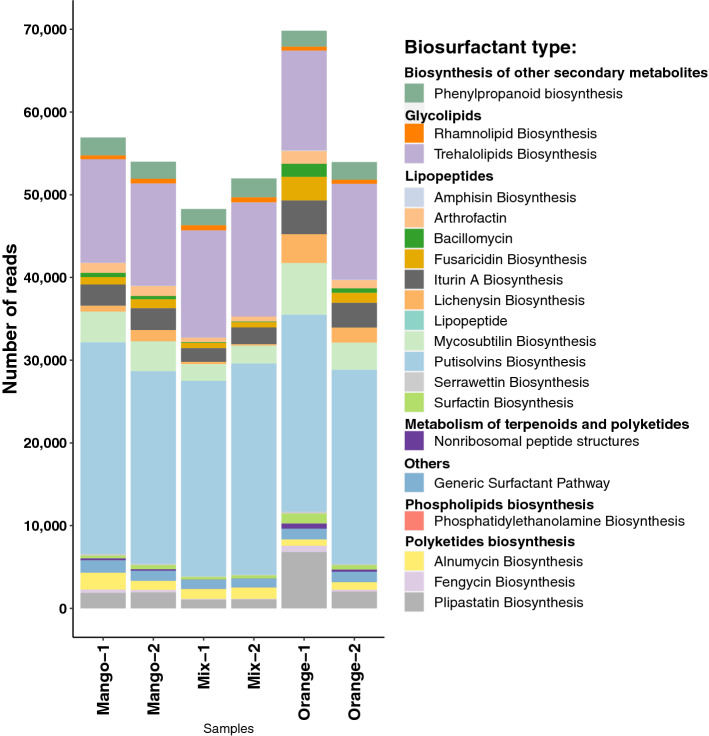
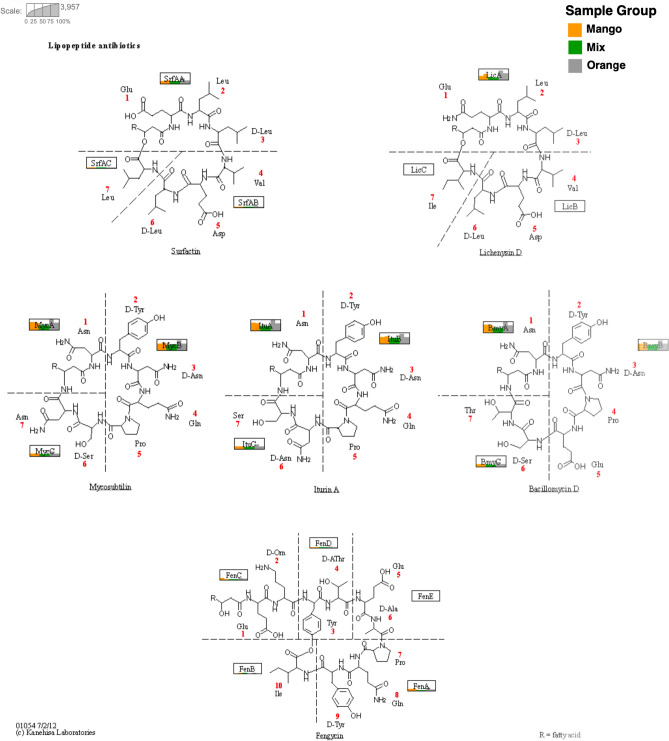
Agroindustrial waste, such as fruit residues, are a renewable, abundant, low-cost, commonly-used carbon source. Biosurfactants are molecules of increasing interest due to their multifunctional properties, biodegradable nature and low toxicity, in comparison to synthetic surfactants. A better understanding of the associated microbial communities will aid prospecting for biosurfactant-producing microorganisms. In this study, six samples of fruit waste, from oranges, mangoes and mixed fruits, were subjected to autochthonous fermentation, so as to promote the growth of their associated microbiota, followed by short-read metagenomic sequencing. Using the DIAMOND+MEGAN analysis pipeline, taxonomic analysis shows that all six samples are dominated by Proteobacteria, in particular, a common core consisting of the genera Klebsiella, Enterobacter, Stenotrophomonas, Acinetobacter and Escherichia. Functional analysis indicates high similarity among samples and a significant number of reads map to genes that are involved in the biosynthesis of lipopeptide-class biosurfactants. Gene-centric analysis reveals Klebsiella as the main assignment for genes related to putisolvins biosynthesis. To simplify the interactive visualization and exploration of the surfactant-related genes in such samples, we have integrated the BiosurfDB classification into MEGAN and make this available. These results indicate that microbiota obtained from autochthonous fermentation have the genetic potential for biosynthesis of biosurfactants, suggesting that fruit wastes may provide a source of biosurfactant-producing microorganisms, with applications in the agricultural, chemical, food and pharmaceutical industries.
农业工业废物,如水果残渣,是一种可再生、丰富、低成本、常用的碳源。与合成表面活性剂相比,生物表面活性剂具有多功能特性、可生物降解性和低毒性,因此越来越受到关注。更好地了解相关的微生物群落将有助于寻找生产生物表面活性剂的微生物。在这项研究中,对来自橙子、芒果和混合水果的六种水果废物样本进行了土著发酵,以促进其相关微生物群的生长,然后进行短读宏基因组测序。使用 DIAMOND+MEGAN 分析管道,分类分析表明,所有六个样本都以变形菌门为主,特别是由克雷伯氏菌属、肠杆菌属、寡养单胞菌属、不动杆菌属和大肠杆菌属组成的常见核心。功能分析表明,样本之间具有高度相似性,并且大量读取序列映射到参与脂肽类生物表面活性剂生物合成的基因。基因中心分析表明,克雷伯氏菌属是与普氏菌生物合成相关基因的主要分配。为了简化此类样本中与表面活性剂相关基因的交互可视化和探索,我们已将 BiosurfDB 分类集成到 MEGAN 中,并提供了此功能。这些结果表明,土著发酵获得的微生物群具有生物合成生物表面活性剂的遗传潜力,表明水果废物可能是生产生物表面活性剂的微生物的来源,可应用于农业、化工、食品和制药行业。