
胰腺结石的体外冲击波碎石术
Extracorporeal shock wave lithotripsy of pancreatic stones.
作者信息
Sauerbruch T, Holl J, Sackmann M, Paumgartner G
机构信息
Medical Department II, Klinikum Grosshadern, University of Munich, Federal Republic of Germany.
出版信息
Gut. 1989 Oct;30(10):1406-11. doi: 10.1136/gut.30.10.1406.
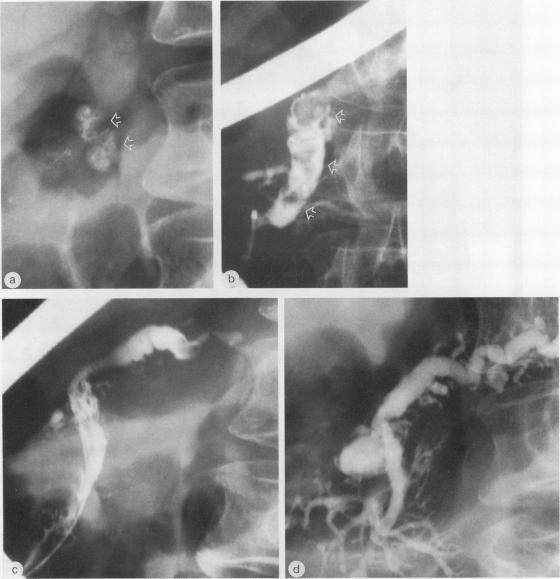
Extracorporeal shock wave lithotripsy of pancreatic stones was performed in eight patients with chronic pancreatitis and a dilated duct system harbouring stones 5 to 20 mm (means 10 (SD) 5 mm) in diameter. After endoscopic sphincterotomy of the pancreatic orifice the stones were disintegrated by shock waves under fluoroscopic control using a kidney lithotripter (Dornier HM3). The procedure was well tolerated by all but one patient, who had a mild pancreatitic attack immediately after lithotripsy. Clearance of the pancreatic duct systems from the larger stones was achieved in seven of eight patients. Half of the patients showed no improvement in the intensity and frequency of pain. The other patients had a marked amelioration of symptoms, however, both immediately and during a mean follow up interval of 11 (eight) months. A selective combined approach by endoscopy and extracorporeal shock wave lithotripsy for the treatment of pancreatic stones seems promising.
对8例慢性胰腺炎且伴有直径5至20毫米(平均10(标准差)5毫米)结石的扩张导管系统患者进行了体外冲击波碎石术治疗胰腺结石。在胰腺开口进行内镜括约肌切开术后,使用肾脏碎石机(多尼尔HM3)在荧光镜控制下通过冲击波将结石粉碎。除1例患者在碎石术后立即发生轻度胰腺炎发作外,所有患者对该手术耐受性良好。8例患者中有7例较大结石从胰管系统清除。一半患者的疼痛强度和频率没有改善。然而,其他患者无论是在术后即刻还是在平均11(8)个月的随访期内症状都有明显改善。内镜检查和体外冲击波碎石术联合治疗胰腺结石的选择性联合方法似乎很有前景。

 Zotero 插件