Olasehinde Olalekan O, Adisa Adewale O, Agbakwuru Elugwaraonu A, Etonyeaku Amarachukwu C, Kolawole Oladapo A, Mosanya Arinze O
Department of Surgery, Obafemi Awolowo University Teaching Hospitals Complex, Ile Ife, Nigeria.
Department of Surgery, Ladoke Akintola University Teaching Hospital, Osogbo, Nigeria.
Niger J Surg. 2015 Jan-Jun;21(1):52-5. doi: 10.4103/1117-6806.152722.
The Darning technique of inguinal hernia repair is a tissue-based technique with documented low recurrence rate in some parts of the world. Though practiced in our setting, little is documented on its outcome.
The aim was to review the outcome of Darning technique of inguinal hernia repair in our setting.
A descriptive retrospective study.
Clinical records of all patients who had inguinal hernia repair using the Darning technique between January 2007 and December 2011 in our institution were obtained. Details of sociodemographic data, intraoperative findings and postoperative complications were reviewed.
simple frequencies, proportions and cross-tabulations.
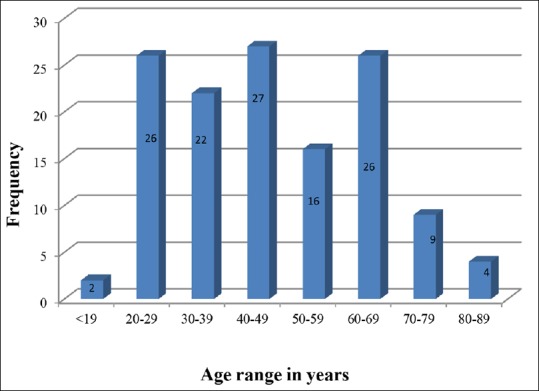
A total of 132 patients whose ages ranged from 15 to 84 years (mean = 49.4 years) with a male: female ratio of 12:1 were studied. Majority of the hernias were right sided (68.9%), mostly indirect (81.8%). The procedures were for emergencies in 17 (12.9%) cases whereas the rest (87.1%) were done electively. Most procedures, 110 (83.3%) were performed under local anesthesia. Surgical site infection was the most common complication occurring in six patients (4.5%), while four patients (3%) had chronic groin pain. At a mean follow-up period of 15 months there were two recurrences (1.5%) both occurring in patients with bilateral hernias (P = 0.001).
The Darning technique of inguinal hernia repair is a safe and effective method for inguinal hernia repair in our setting.
腹股沟疝修补的缝合法是一种基于组织的技术,在世界某些地区有文献记载其复发率较低。尽管在我们的医疗环境中也有应用,但关于其治疗效果的文献报道较少。
本研究旨在回顾在我们的医疗环境中腹股沟疝修补缝合法的治疗效果。
描述性回顾性研究。
收集了2007年1月至2011年12月期间在我院采用缝合法进行腹股沟疝修补的所有患者的临床记录。回顾了社会人口统计学数据、术中发现及术后并发症的详细情况。
简单频率、比例及交叉表分析。
共研究了132例患者,年龄范围为15至84岁(平均49.4岁),男女比例为12:1。大多数疝位于右侧(68.9%),多为间接疝(81.8%)。17例(12.9%)手术为急诊手术,其余(87.1%)为择期手术。大多数手术(110例,83.3%)在局部麻醉下进行。手术部位感染是最常见的并发症,有6例患者(4.5%)发生,4例患者(3%)有慢性腹股沟疼痛。平均随访15个月时,有2例复发(1.5%),均发生在双侧疝患者中(P = 0.001)。
在我们的医疗环境中,腹股沟疝修补缝合法是一种安全有效的腹股沟疝修补方法。