Pripuzova Natalia S, Getie-Kebtie Melkamu, Grunseich Christopher, Sweeney Colin, Malech Harry, Alterman Michail A
Tumor Vaccine and Biotechnology Branch, Division of Cellular and Gene Therapies, FDA, Center for Biologics Evaluation and Research, Bethesda, MD 20892-4555, USA.
Neurogenetics Branch, National Institute of Neurological Disorders and Stroke, National Institutes of Health, Bethesda, MD 20892-3705, USA.
Stem Cell Res. 2015 May;14(3):323-38. doi: 10.1016/j.scr.2015.01.009. Epub 2015 Feb 7.
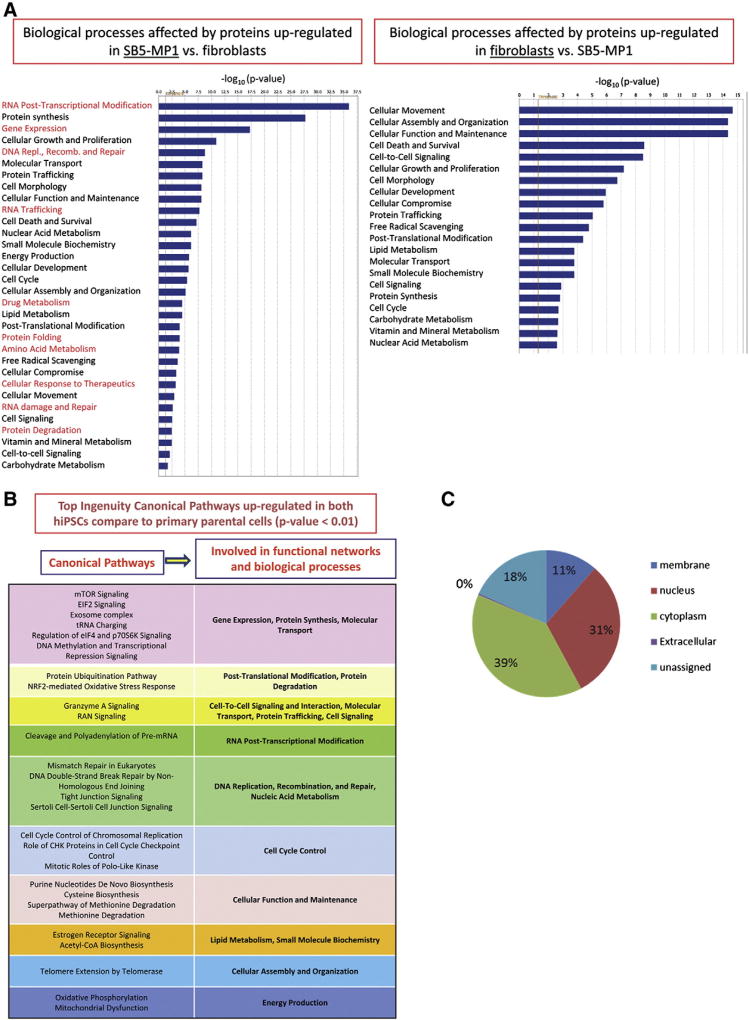
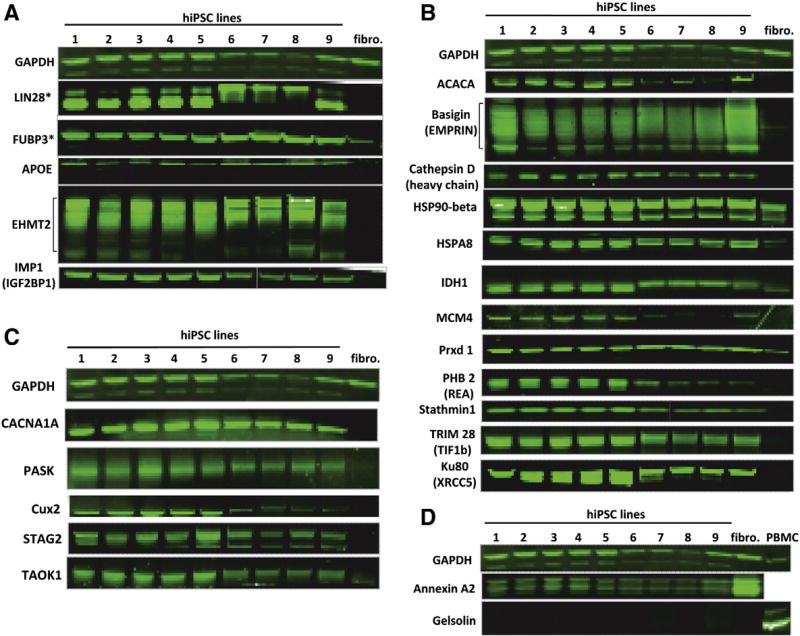
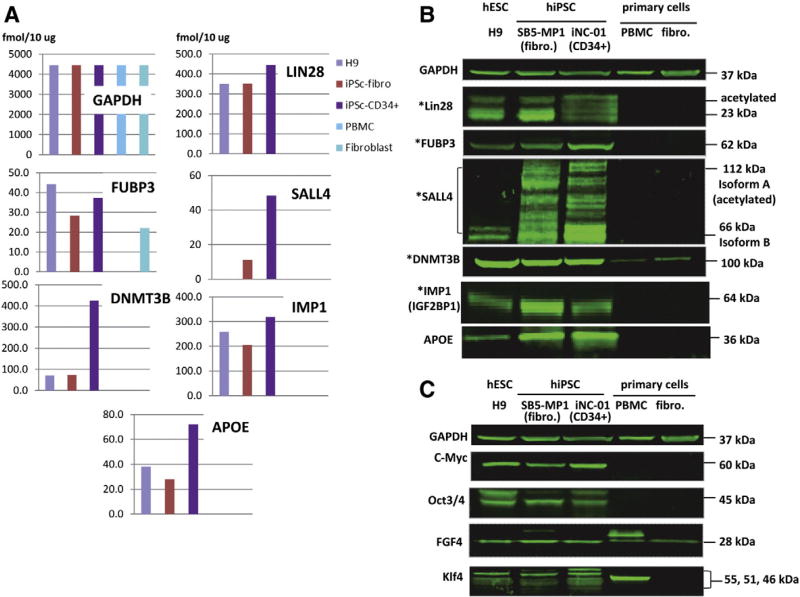
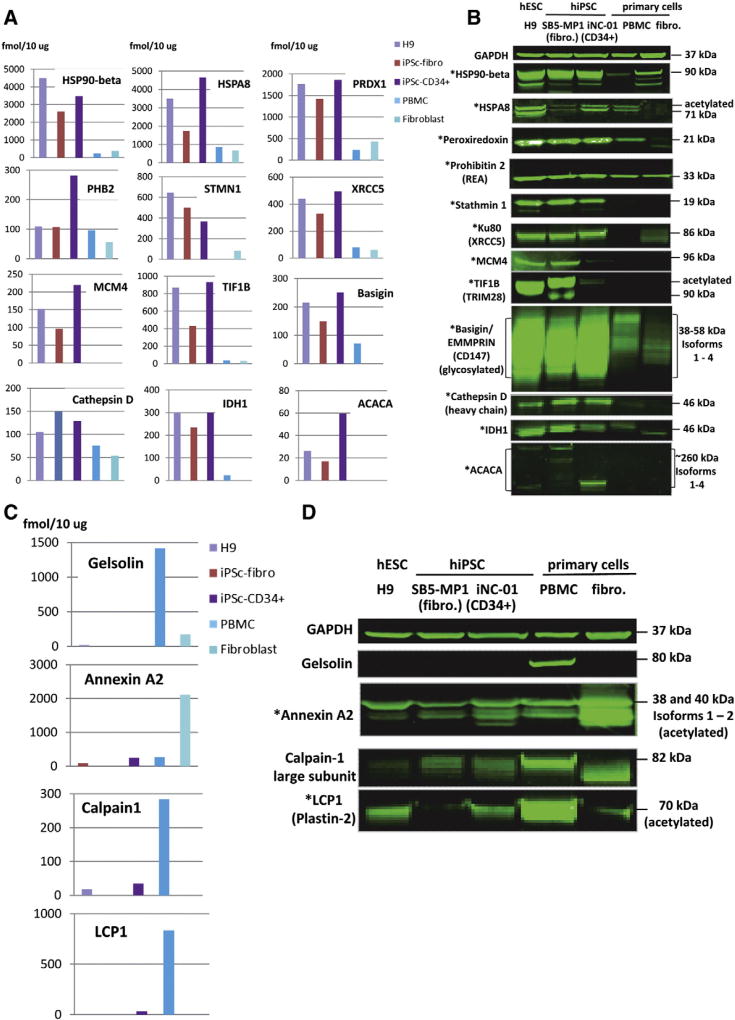
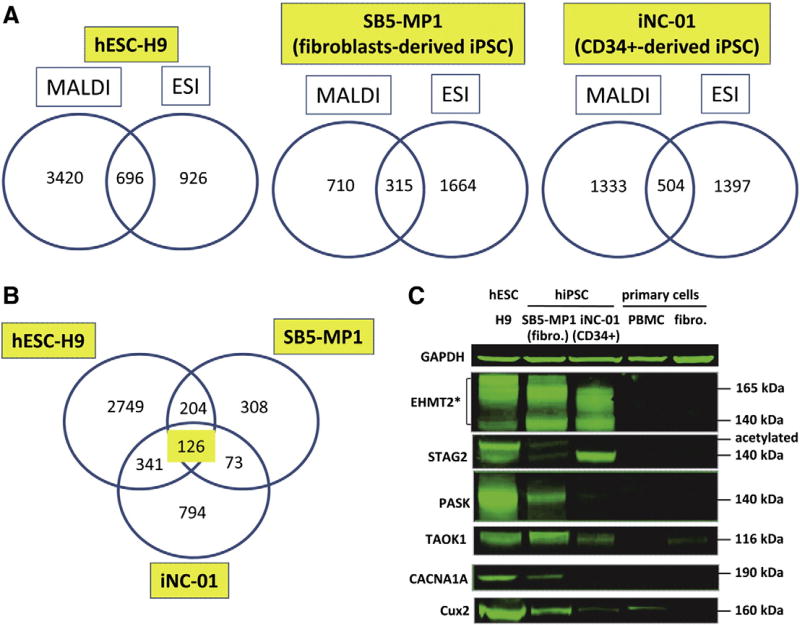
The emergence of new methods for reprogramming of adult somatic cells into induced pluripotent stem cells (iPSC) led to the development of new approaches in drug discovery and regenerative medicine. Investigation of the molecular mechanisms underlying the self-renewal, expansion and differentiation of human iPSC (hiPSC) should lead to improvements in the manufacture of safe and reliable cell therapy products. The goal of our study was qualitative and quantitative proteomic characterizations of hiPSC by means of electrospray ionization (ESI)-MS(e) and MALDI-TOF/TOF mass spectrometry (MS). Proteomes of hiPSCs of different somatic origins: fibroblasts and peripheral blood CD34(+) cells, reprogrammed by the same technique, were compared with the original somatic cells and hESC. Quantitative proteomic comparison revealed approximately 220 proteins commonly up-regulated in all three pluripotent stem cell lines compared to the primary cells. Expression of 21 proteins previously reported as pluripotency markers was up-regulated in both hiPSCs (8 were confirmed by Western blot). A number of novel candidate marker proteins with the highest fold-change difference between hiPSCs/hESC and somatic cells discovered by MS were confirmed by Western blot. A panel of 22 candidate marker proteins of hiPSC was developed and expression of these proteins was confirmed in 8 additional hiPSC lines.
将成人体细胞重编程为诱导多能干细胞(iPSC)的新方法的出现,推动了药物发现和再生医学新方法的发展。对人类iPSC(hiPSC)自我更新、扩增和分化的分子机制进行研究,有望改进安全可靠的细胞治疗产品的制造。我们研究的目标是通过电喷雾电离(ESI)-MS(e)和基质辅助激光解吸电离飞行时间/二级飞行时间质谱(MS)对hiPSC进行定性和定量蛋白质组学表征。将通过相同技术重编程的不同体细胞来源(成纤维细胞和外周血CD34(+)细胞)的hiPSC蛋白质组与原始体细胞和人胚胎干细胞(hESC)进行比较。定量蛋白质组学比较显示,与原代细胞相比,所有三种多能干细胞系中共有约220种蛋白质上调。先前报道的21种作为多能性标志物的蛋白质在两种hiPSC中均上调(其中8种经蛋白质免疫印迹法确认)。通过质谱发现的hiPSC/hESC与体细胞之间具有最大倍数变化差异的一些新型候选标志物蛋白质经蛋白质免疫印迹法确认。开发了一组22种hiPSC候选标志物蛋白质,并在另外8种hiPSC系中确认了这些蛋白质的表达。