Okun Michael, Steinmetz Nicholas, Cossell Lee, Iacaruso M Florencia, Ko Ho, Barthó Péter, Moore Tirin, Hofer Sonja B, Mrsic-Flogel Thomas D, Carandini Matteo, Harris Kenneth D
Dept. of Neuroscience, Physiology and Pharmacology, University College London, London WC1E 6DE.
UCL Institute of Neurology, University College London, London WC1N 3BG.
Nature. 2015 May 28;521(7553):511-515. doi: 10.1038/nature14273. Epub 2015 Apr 6.
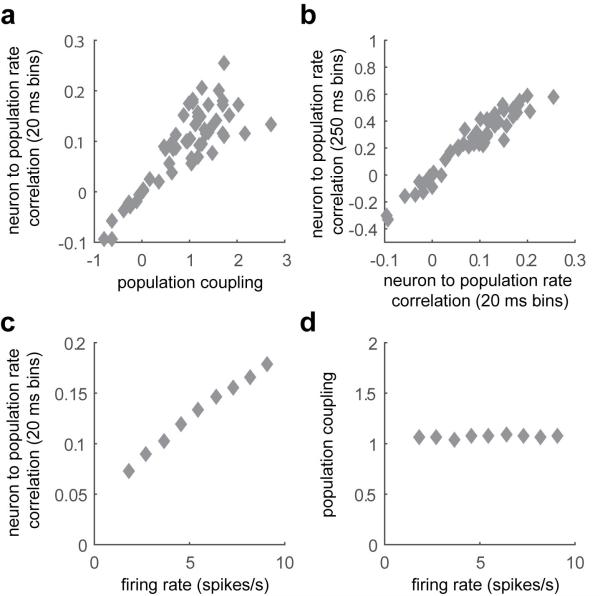
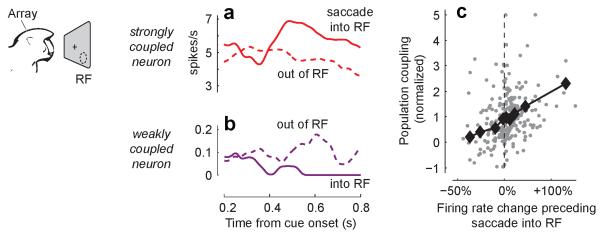
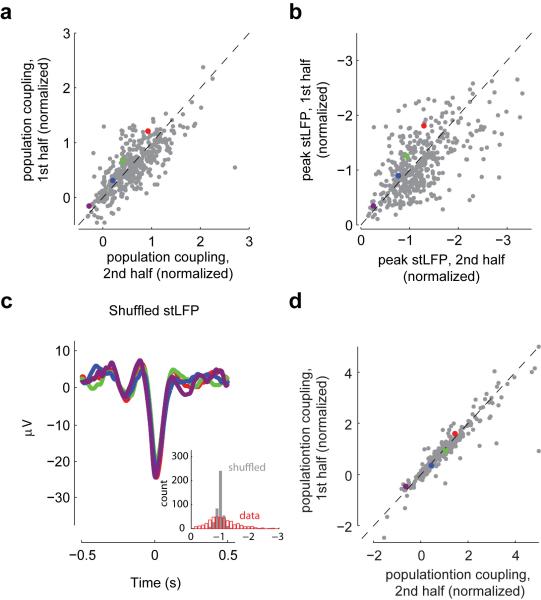
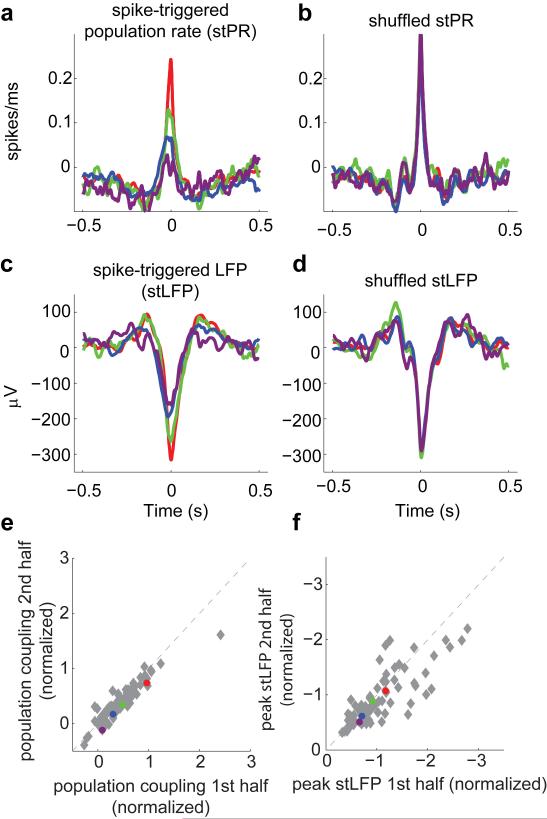
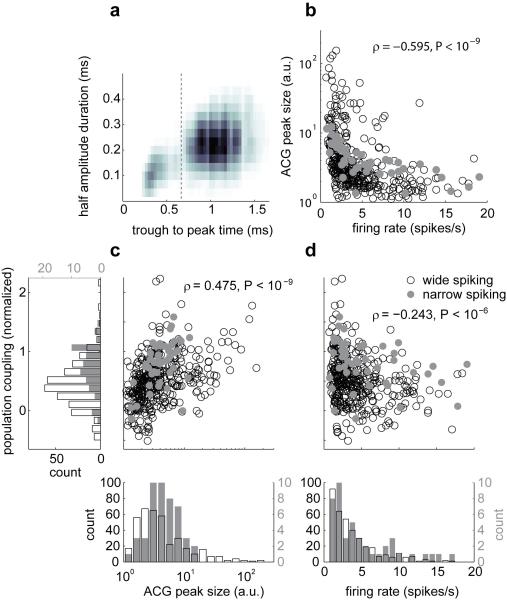
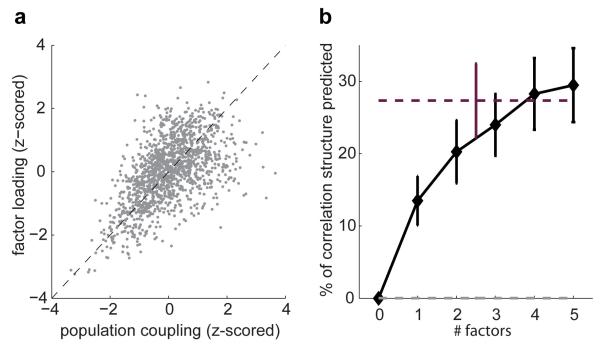
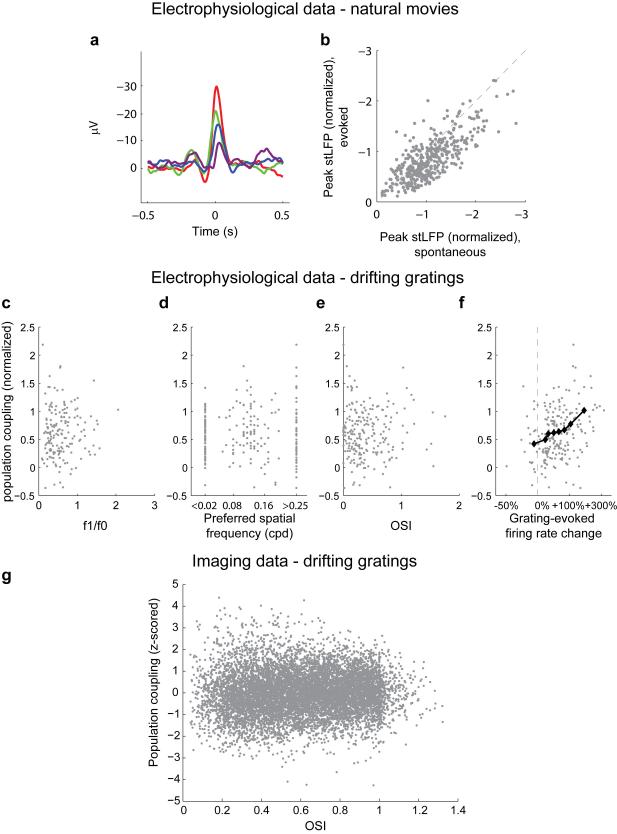
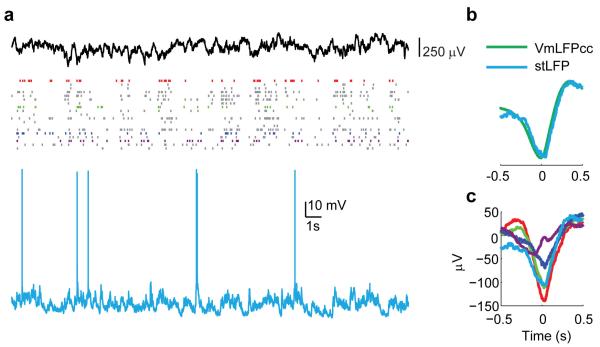
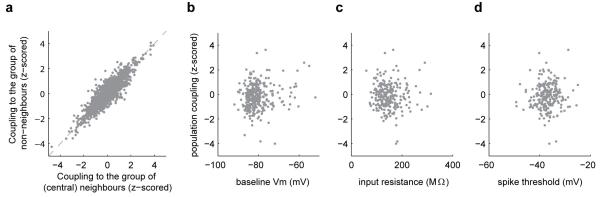
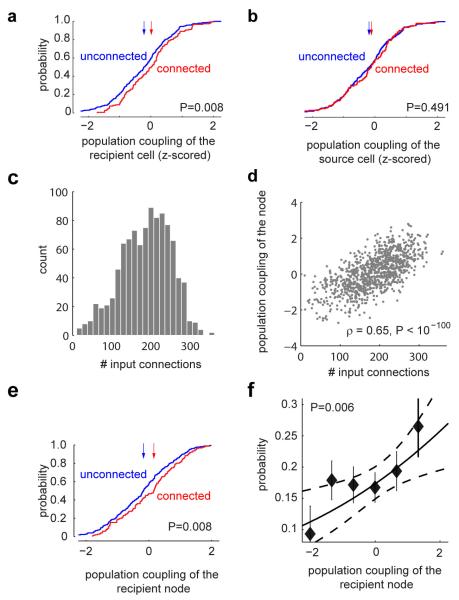
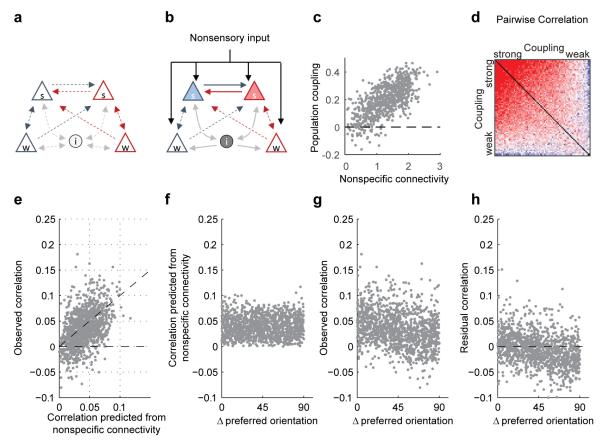
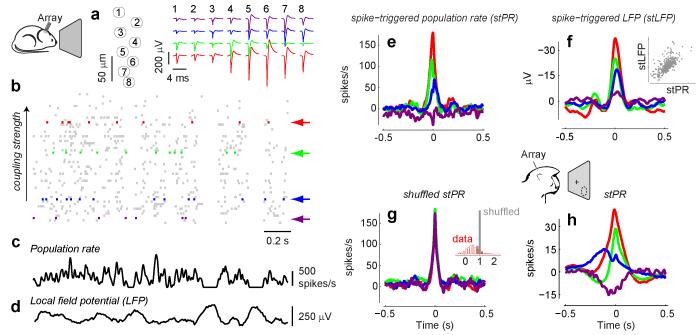
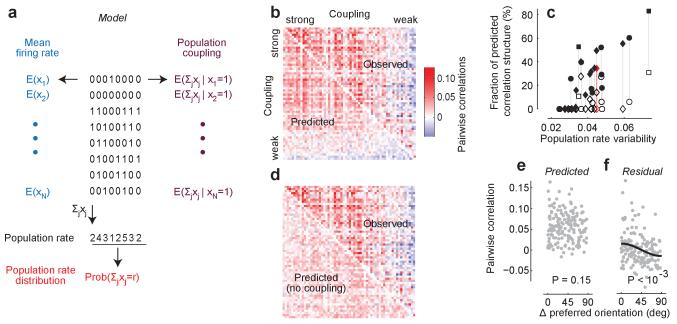
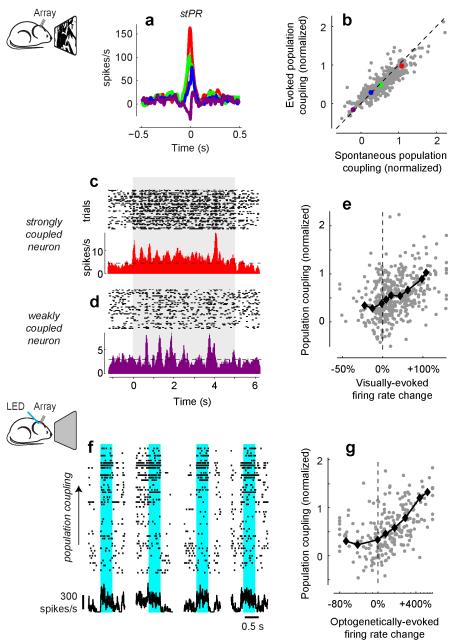
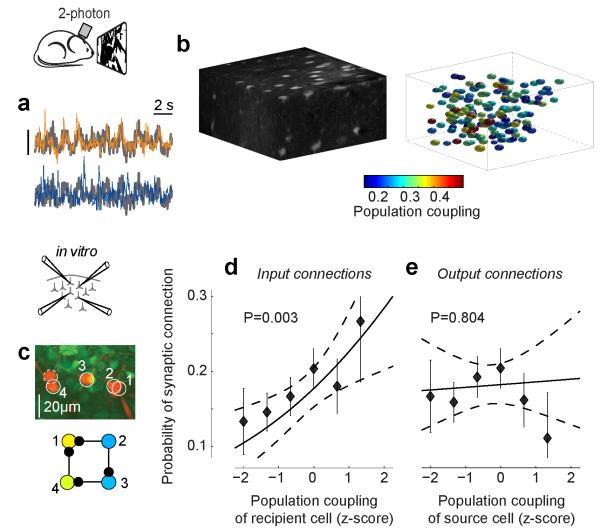
A large population of neurons can, in principle, produce an astronomical number of distinct firing patterns. In cortex, however, these patterns lie in a space of lower dimension, as if individual neurons were "obedient members of a huge orchestra". Here we use recordings from the visual cortex of mouse (Mus musculus) and monkey (Macaca mulatta) to investigate the relationship between individual neurons and the population, and to establish the underlying circuit mechanisms. We show that neighbouring neurons can differ in their coupling to the overall firing of the population, ranging from strongly coupled 'choristers' to weakly coupled 'soloists'. Population coupling is largely independent of sensory preferences, and it is a fixed cellular attribute, invariant to stimulus conditions. Neurons with high population coupling are more strongly affected by non-sensory behavioural variables such as motor intention. Population coupling reflects a causal relationship, predicting the response of a neuron to optogenetically driven increases in local activity. Moreover, population coupling indicates synaptic connectivity; the population coupling of a neuron, measured in vivo, predicted subsequent in vitro estimates of the number of synapses received from its neighbours. Finally, population coupling provides a compact summary of population activity; knowledge of the population couplings of n neurons predicts a substantial portion of their n(2) pairwise correlations. Population coupling therefore represents a novel, simple measure that characterizes the relationship of each neuron to a larger population, explaining seemingly complex network firing patterns in terms of basic circuit variables.
原则上,大量神经元能够产生天文数字般的不同放电模式。然而,在皮质中,这些模式存在于一个较低维度的空间中,就好像单个神经元是“一个巨大管弦乐队中顺从的成员”。在这里,我们利用对小鼠(小家鼠)和猴子(猕猴)视觉皮质的记录,来研究单个神经元与神经元群体之间的关系,并确定其潜在的电路机制。我们发现,相邻神经元与群体整体放电的耦合程度可能不同,从强耦合的“合唱者”到弱耦合的“独唱者”。群体耦合在很大程度上与感觉偏好无关,它是一种固定的细胞属性,不受刺激条件影响。群体耦合度高的神经元受诸如运动意图等非感觉行为变量的影响更大。群体耦合反映了一种因果关系,可预测神经元对光遗传学驱动的局部活动增加的反应。此外,群体耦合表明了突触连接性;在体内测量的神经元群体耦合度,可预测随后在体外对其从邻居接收的突触数量的估计。最后,群体耦合提供了群体活动的简洁概括;了解n个神经元的群体耦合度,就能预测它们n(2) 对成对相关性的很大一部分。因此,群体耦合代表了一种新颖、简单的测量方法,它表征了每个神经元与更大群体之间的关系,用基本电路变量解释了看似复杂的网络放电模式。