Iqbal Khursheed, Tran Diana A, Li Arthur X, Warden Charles, Bai Angela Y, Singh Purnima, Wu Xiwei, Pfeifer Gerd P, Szabó Piroska E
Genome Biol. 2015 Mar 27;16(1):59. doi: 10.1186/s13059-015-0619-z.
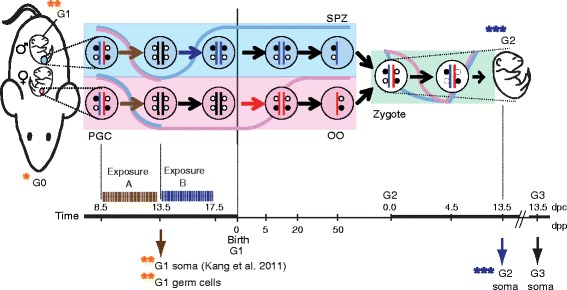
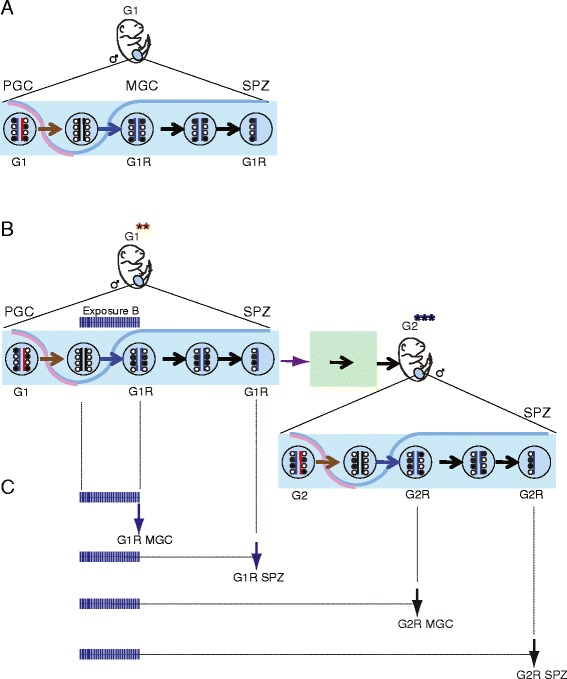
Exposure to environmental endocrine-disrupting chemicals during pregnancy reportedly causes transgenerationally inherited reproductive defects. We hypothesized that to affect the grandchild, endocrine-disrupting chemicals must alter the epigenome of the germ cells of the in utero-exposed G1 male fetus. Additionally, to affect the great-grandchild, the aberration must persist in the germ cells of the unexposed G2 grandchild.
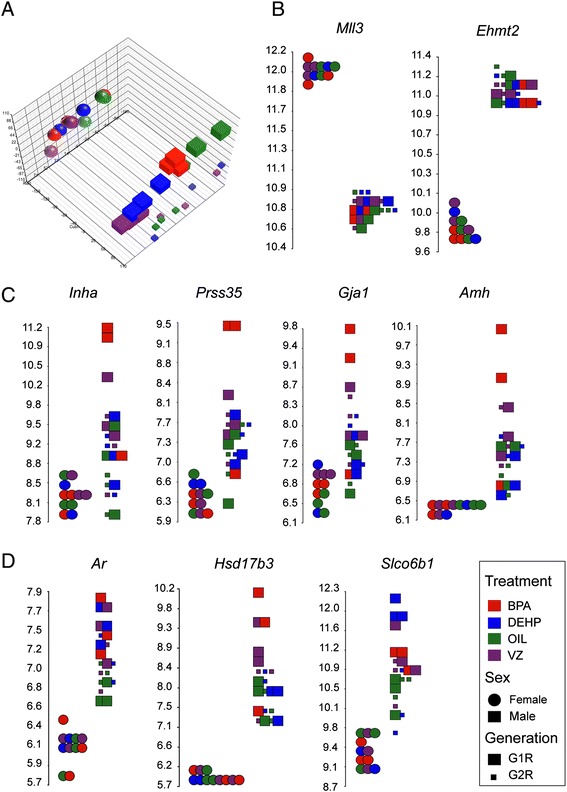
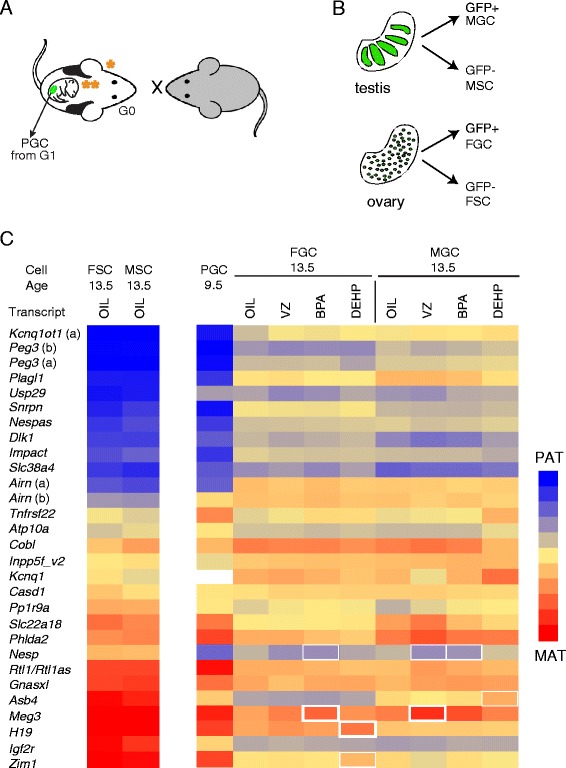
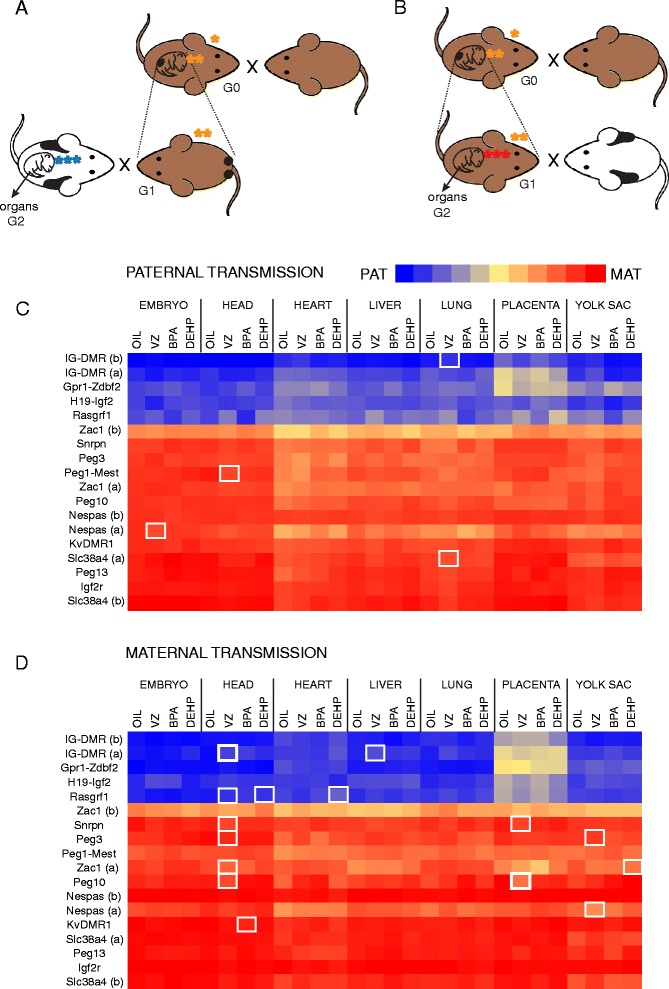
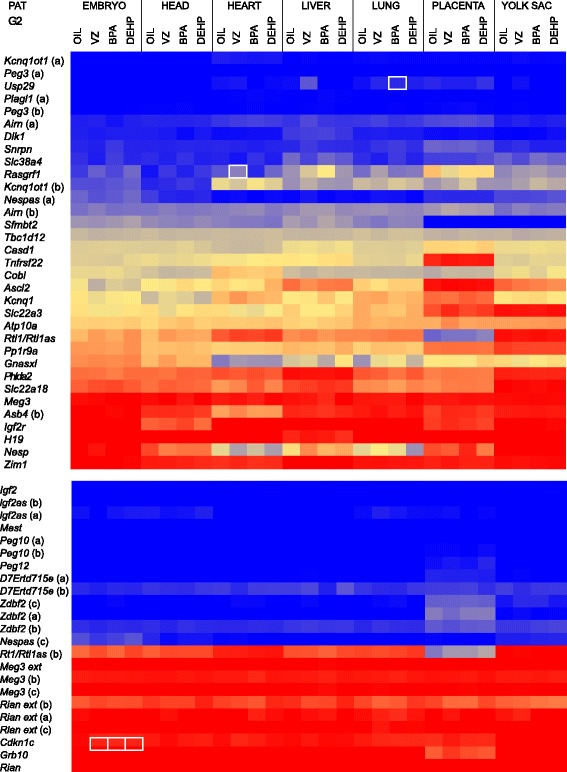
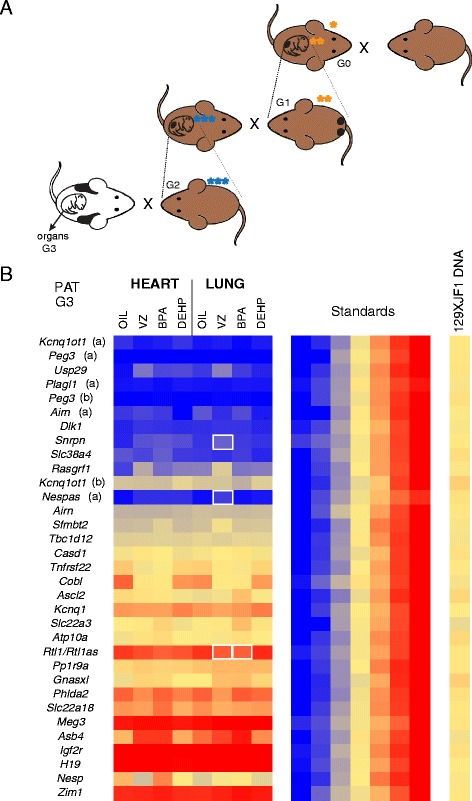
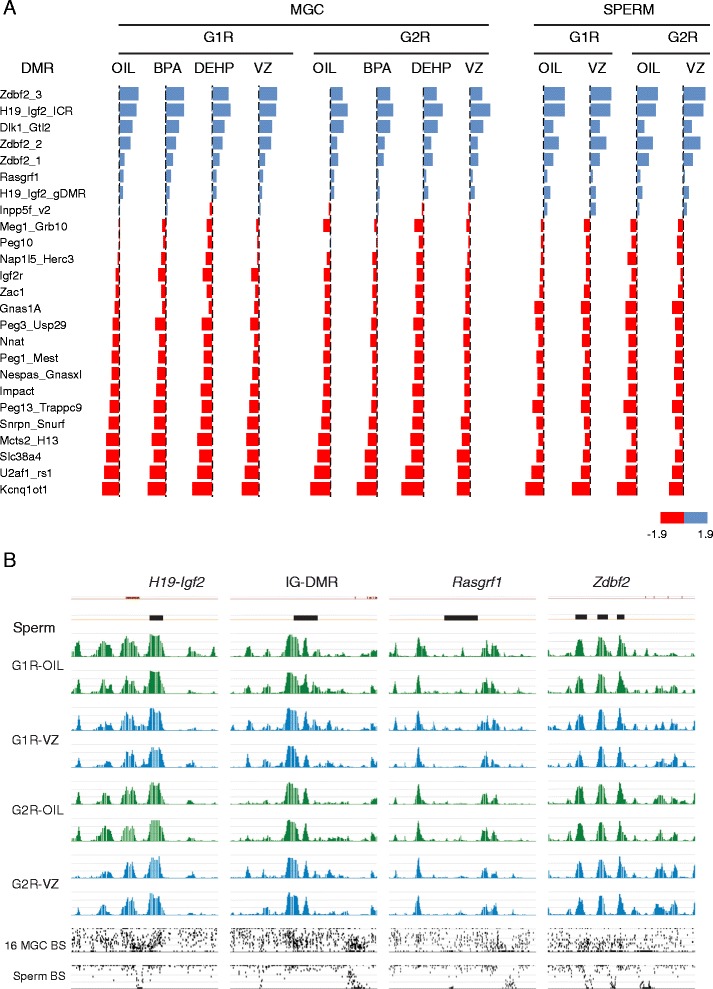
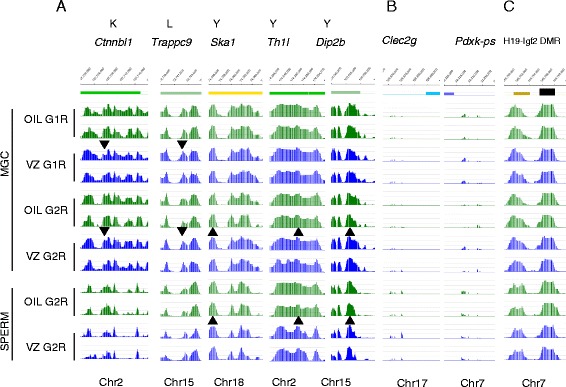
Here, we treat gestating female mice with vinclozolin, bisphenol A, or di-(2-ethylhexyl)phthalate during the time when global de novo DNA methylation and imprint establishment occurs in the germ cells of the G1 male fetus. We map genome-wide features in purified G1 and G2 prospermatogonia, in order to detect immediate and persistent epigenetic aberrations, respectively. We detect changes in transcription and methylation in the G1 germline immediately after endocrine-disrupting chemicals exposure, but changes do not persist into the G2 germline. Additional analysis of genomic imprints shows no persistent aberrations in DNA methylation at the differentially methylated regions of imprinted genes between the G1 and G2 prospermatogonia, or in the allele-specific transcription of imprinted genes between the G2 and G3 soma.
Our results suggest that endocrine-disrupting chemicals exert direct epigenetic effects in exposed fetal germ cells, which are corrected by reprogramming events in the next generation. Avoiding transgenerational inheritance of environmentally-caused epigenetic aberrations may have played an evolutionary role in the development of dual waves of global epigenome reprogramming in mammals.
据报道,孕期接触环境内分泌干扰化学物会导致跨代遗传的生殖缺陷。我们推测,为了影响孙代,内分泌干扰化学物必须改变子宫内暴露的G1雄性胎儿生殖细胞的表观基因组。此外,为了影响曾孙代,这种异常必须在未暴露的G2孙代的生殖细胞中持续存在。
在此,我们在G1雄性胎儿生殖细胞发生全基因组从头DNA甲基化和印记建立期间,用乙烯菌核利、双酚A或邻苯二甲酸二(2-乙基己基)酯处理妊娠雌性小鼠。我们绘制了纯化的G1和G2精原细胞的全基因组特征图谱,以便分别检测即时和持续的表观遗传异常。我们在内分泌干扰化学物暴露后立即检测到G1生殖系中的转录和甲基化变化,但这些变化并未持续到G2生殖系。对基因组印记的进一步分析表明,G1和G2精原细胞之间印记基因差异甲基化区域的DNA甲基化,或G2和G3体细胞之间印记基因的等位基因特异性转录,均无持续异常。
我们的结果表明,内分泌干扰化学物在暴露的胎儿生殖细胞中发挥直接的表观遗传效应,这些效应会在下一代通过重编程事件得到纠正。避免环境引起的表观遗传异常的跨代遗传,可能在哺乳动物全基因组表观基因组重编程双波的发展中起到了进化作用。