Sharp Gemma C, Lawlor Debbie A, Richmond Rebecca C, Fraser Abigail, Simpkin Andrew, Suderman Matthew, Shihab Hashem A, Lyttleton Oliver, McArdle Wendy, Ring Susan M, Gaunt Tom R, Davey Smith George, Relton Caroline L
MRC Integrative Epidemiology Unit at the University of Bristol, Bristol, UK, School of Social and Community Medicine, University of Bristol, Bristol, UK and
MRC Integrative Epidemiology Unit at the University of Bristol, Bristol, UK, School of Social and Community Medicine, University of Bristol, Bristol, UK and.
Int J Epidemiol. 2015 Aug;44(4):1288-304. doi: 10.1093/ije/dyv042. Epub 2015 Apr 8.
Evidence suggests that in utero exposure to undernutrition and overnutrition might affect adiposity in later life. Epigenetic modification is suggested as a plausible mediating mechanism.
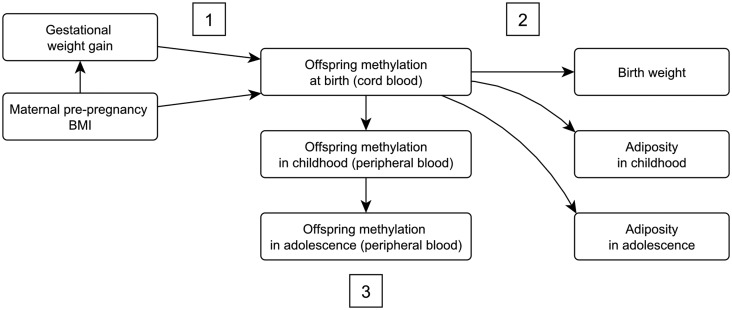
We used multivariable linear regression and a negative control design to examine offspring epigenome-wide DNA methylation in relation to maternal and offspring adiposity in 1018 participants.
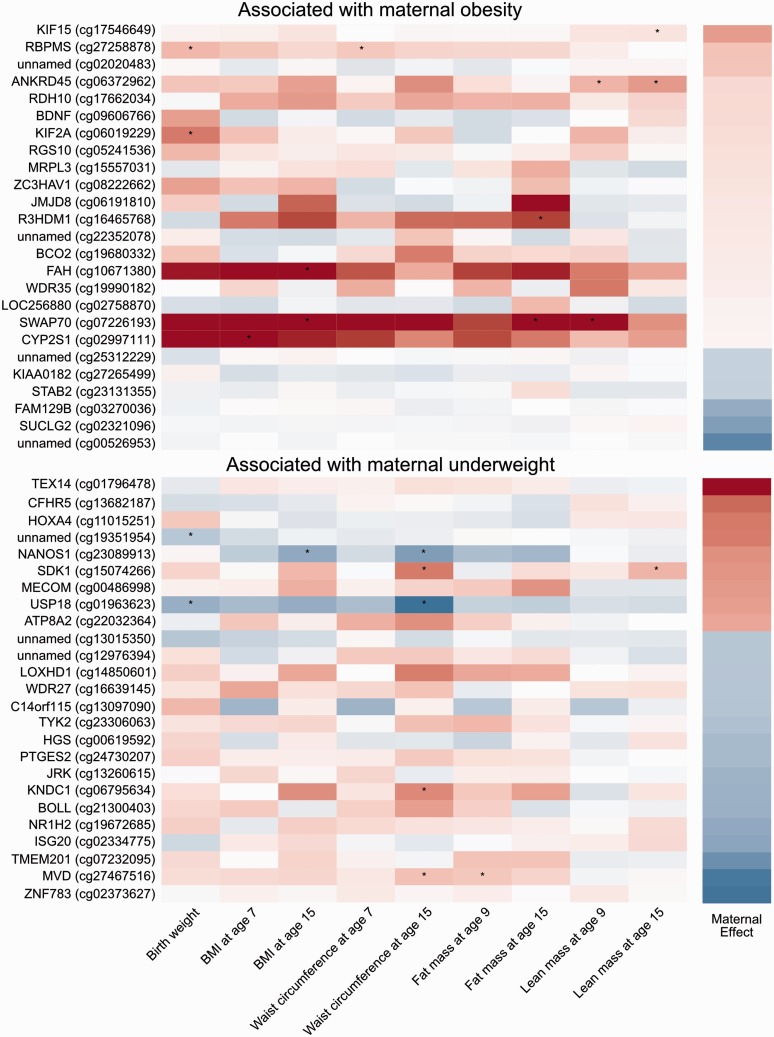
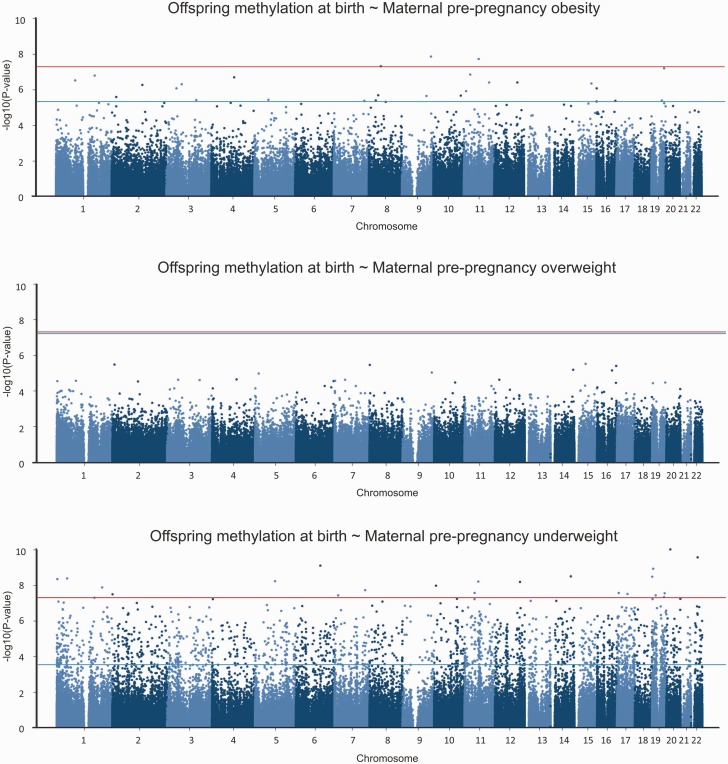
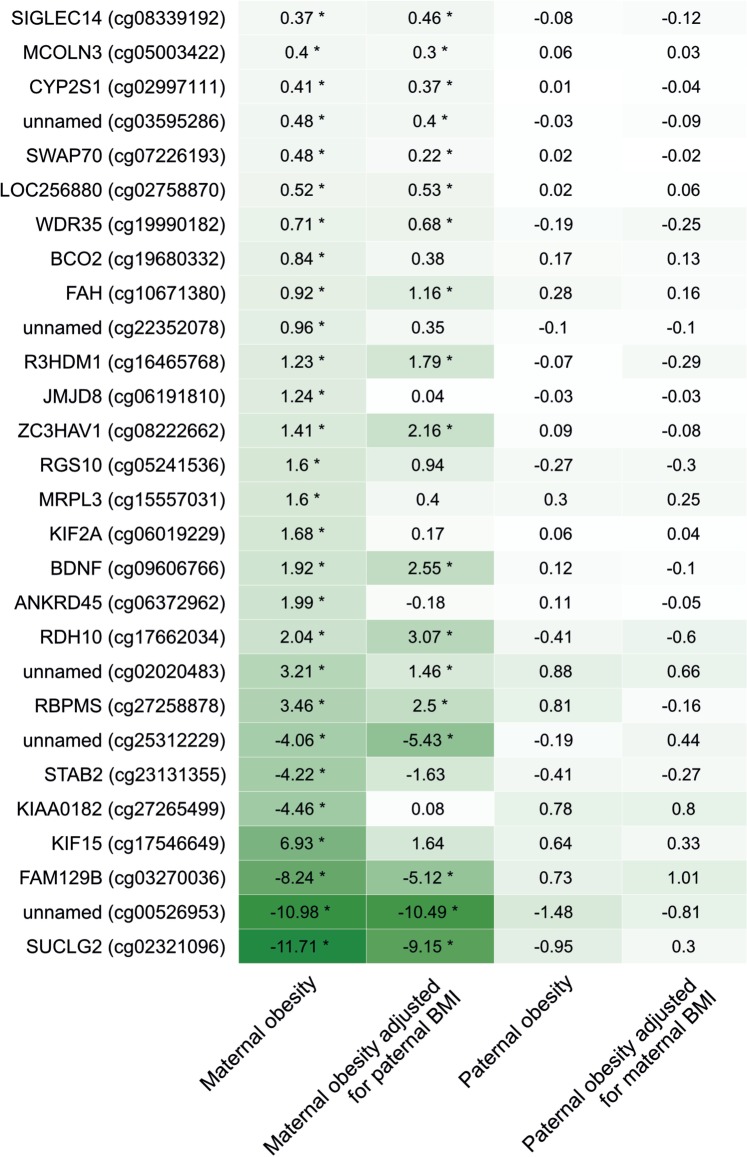
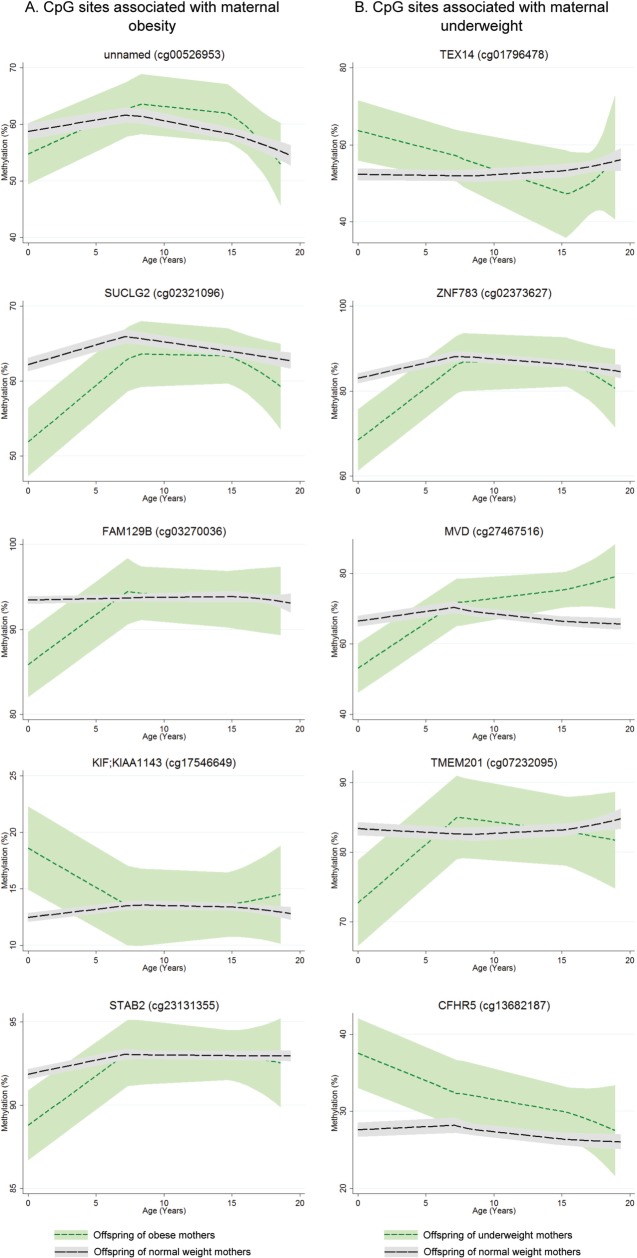
Compared with neonatal offspring of normal weight mothers, 28 and 1621 CpG sites were differentially methylated in offspring of obese and underweight mothers, respectively [false discovert rate (FDR)-corrected P-value < 0.05), with no overlap in the sites that maternal obesity and underweight relate to. A positive association, where higher methylation is associated with a body mass index (BMI) outside the normal range, was seen at 78.6% of the sites associated with obesity and 87.9% of the sites associated with underweight. Associations of maternal obesity with offspring methylation were stronger than associations of paternal obesity, supporting an intrauterine mechanism. There were no consistent associations of gestational weight gain with offspring DNA methylation. In general, sites that were hypermethylated in association with maternal obesity or hypomethylated in association with maternal underweight tended to be positively associated with offspring adiposity, and sites hypomethylated in association with maternal obesity or hypermethylated in association with maternal underweight tended to be inversely associated with offspring adiposity.
Our data suggest that both maternal obesity and, to a larger degree, underweight affect the neonatal epigenome via an intrauterine mechanism, but weight gain during pregnancy has little effect. We found some evidence that associations of maternal underweight with lower offspring adiposity and maternal obesity with greater offspring adiposity may be mediated via increased DNA methylation.
有证据表明,子宫内营养不良和营养过剩的暴露可能会影响成年后的肥胖状况。表观遗传修饰被认为是一种合理的中介机制。
我们使用多变量线性回归和阴性对照设计,在1018名参与者中研究后代全基因组DNA甲基化与母体和后代肥胖的关系。
与正常体重母亲的新生儿后代相比,肥胖和体重过轻母亲的后代分别有28个和1621个CpG位点甲基化存在差异[错误发现率(FDR)校正P值<0.05],母体肥胖和体重过轻相关的位点没有重叠。在与肥胖相关的位点中,78.6%以及与体重过轻相关的位点中,87.9%观察到正向关联,即较高的甲基化与正常范围外的体重指数(BMI)相关。母体肥胖与后代甲基化的关联强于父体肥胖,支持子宫内机制。孕期体重增加与后代DNA甲基化没有一致的关联。一般来说,与母体肥胖相关的高甲基化位点或与母体体重过轻相关的低甲基化位点往往与后代肥胖呈正相关,而与母体肥胖相关的低甲基化位点或与母体体重过轻相关的高甲基化位点往往与后代肥胖呈负相关。
我们的数据表明,母体肥胖以及在更大程度上体重过轻,通过子宫内机制影响新生儿表观基因组,但孕期体重增加影响不大。我们发现一些证据表明,母体体重过轻与后代较低肥胖程度以及母体肥胖与后代较高肥胖程度之间的关联可能通过DNA甲基化增加来介导。