Moreira Eduardo Freitas, Boscolo Danilo, Viana Blandina Felipe
Zoology Department, Federal University of Bahia, UFBA, Salvador, Bahia, Brazil.
Faculty of Philosophy, Sciences and Literature of Ribeirão Preto, University of São Paulo, Ribeirão Preto, FFCLRP-USP, São Paulo, Brazil.
PLoS One. 2015 Apr 9;10(4):e0123628. doi: 10.1371/journal.pone.0123628. eCollection 2015.
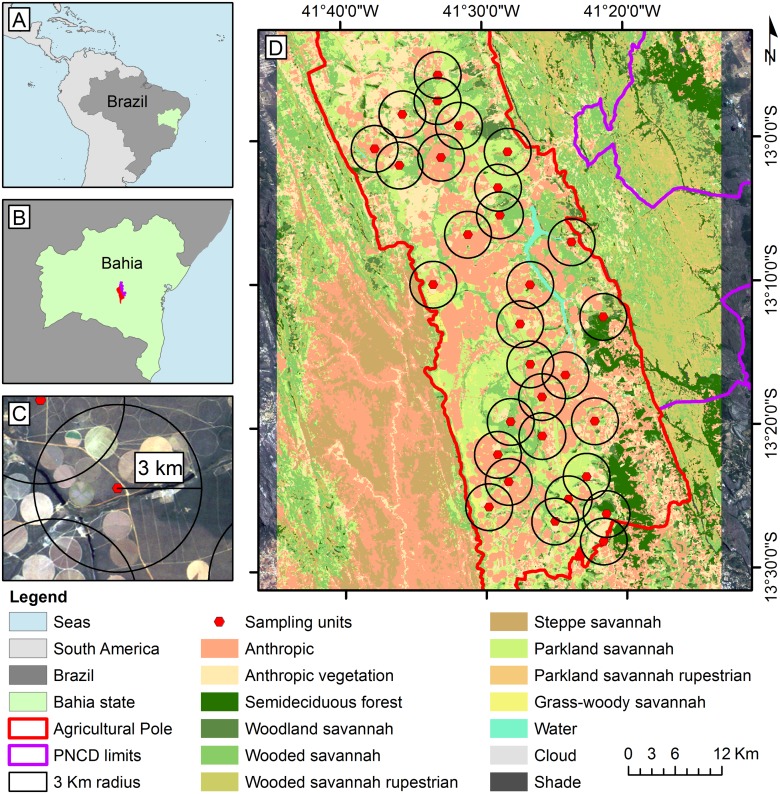
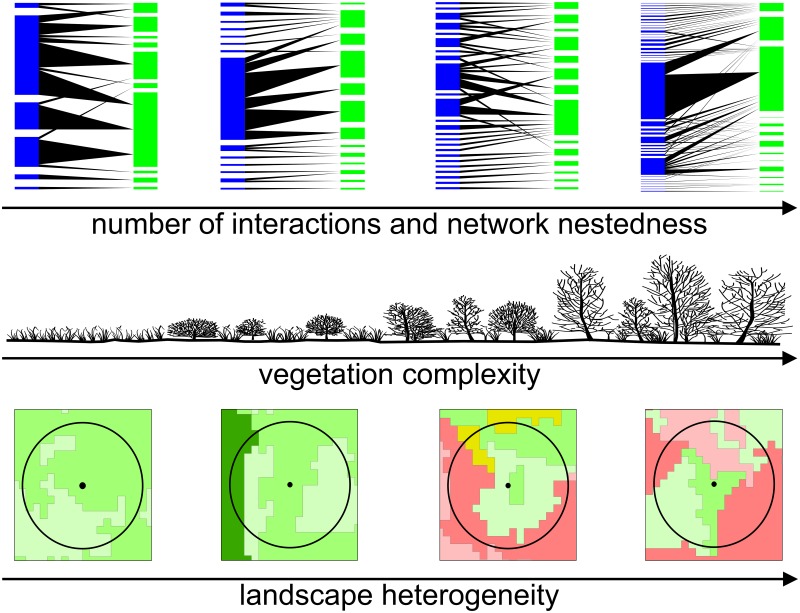
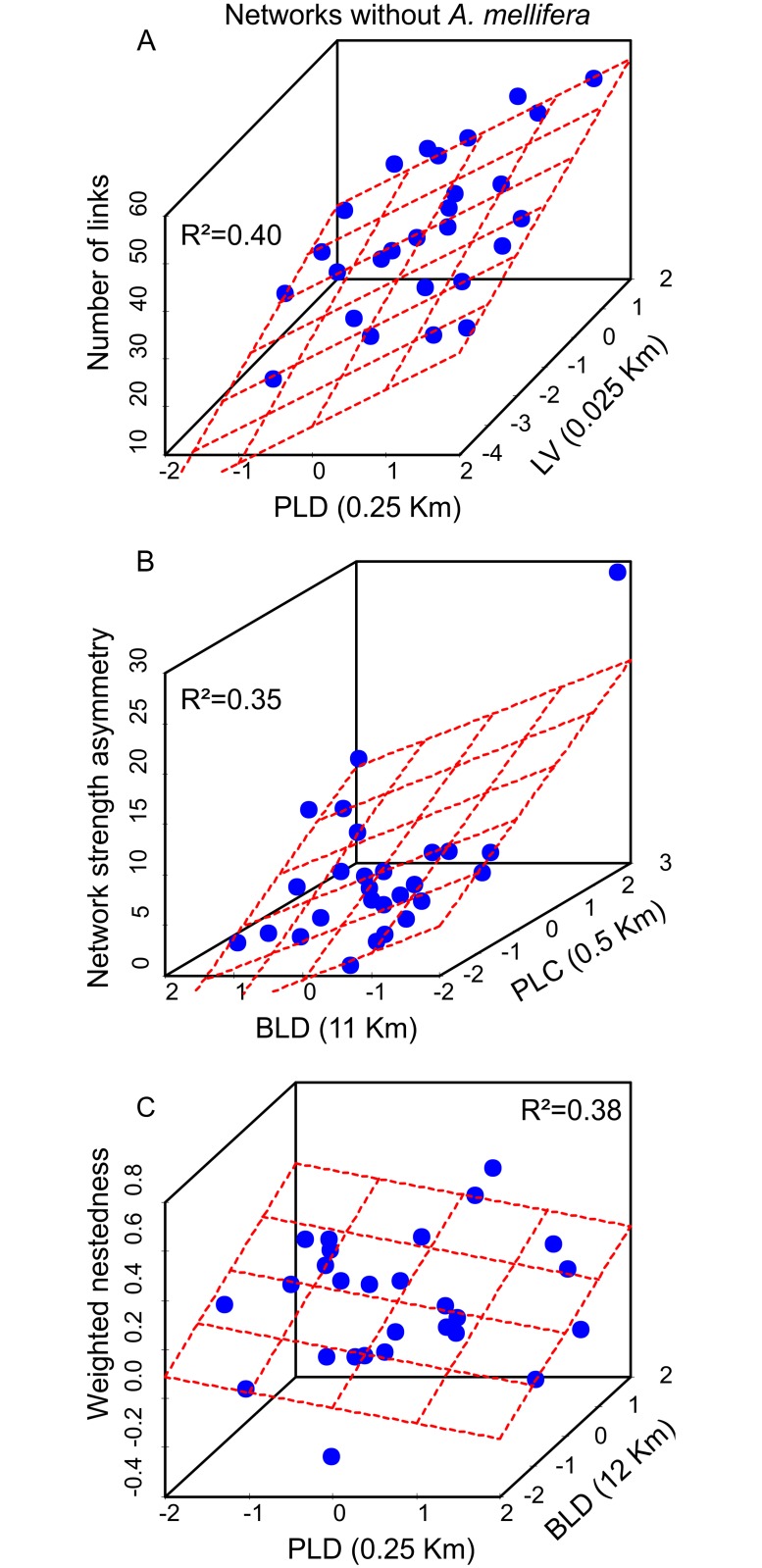
Mutualistic plant-pollinator interactions play a key role in biodiversity conservation and ecosystem functioning. In a community, the combination of these interactions can generate emergent properties, e.g., robustness and resilience to disturbances such as fluctuations in populations and extinctions. Given that these systems are hierarchical and complex, environmental changes must have multiple levels of influence. In addition, changes in habitat quality and in the landscape structure are important threats to plants, pollinators and their interactions. However, despite the importance of these phenomena for the understanding of biological systems, as well as for conservation and management strategies, few studies have empirically evaluated these effects at the network level. Therefore, the objective of this study was to investigate the influence of local conditions and landscape structure at multiple scales on the characteristics of plant-pollinator networks. This study was conducted in agri-natural lands in Chapada Diamantina, Bahia, Brazil. Pollinators were collected in 27 sampling units distributed orthogonally along a gradient of proportion of agriculture and landscape diversity. The Akaike information criterion was used to select models that best fit the metrics for network characteristics, comparing four hypotheses represented by a set of a priori candidate models with specific combinations of the proportion of agriculture, the average shape of the landscape elements, the diversity of the landscape and the structure of local vegetation. The results indicate that a reduction of habitat quality and landscape heterogeneity can cause species loss and decrease of networks nestedness. These structural changes can reduce robustness and resilience of plant-pollinator networks what compromises the reproductive success of plants, the maintenance of biodiversity and the pollination service stability. We also discuss the possible explanations for these relationships and the implications for landscape planning in agricultural areas.
互利共生的植物 - 传粉者相互作用在生物多样性保护和生态系统功能中起着关键作用。在一个群落中,这些相互作用的组合可以产生涌现特性,例如对诸如种群波动和灭绝等干扰的稳健性和恢复力。鉴于这些系统具有层级性和复杂性,环境变化必定具有多层次的影响。此外,栖息地质量和景观结构的变化是对植物、传粉者及其相互作用的重要威胁。然而,尽管这些现象对于理解生物系统以及保护和管理策略很重要,但很少有研究在网络层面实证评估这些影响。因此,本研究的目的是调查多尺度的局部条件和景观结构对植物 - 传粉者网络特征的影响。本研究在巴西巴伊亚州迪亚曼蒂纳高地的农业自然土地上进行。沿着农业比例和景观多样性梯度正交分布的27个采样单元中收集传粉者。使用赤池信息准则来选择最适合网络特征指标的模型,比较由一组先验候选模型代表的四个假设,这些模型具有农业比例、景观要素的平均形状、景观多样性和当地植被结构的特定组合。结果表明,栖息地质量和景观异质性的降低会导致物种丧失和网络嵌套性下降。这些结构变化会降低植物 - 传粉者网络的稳健性和恢复力,从而损害植物的繁殖成功率、生物多样性的维持以及传粉服务的稳定性。我们还讨论了这些关系的可能解释以及对农业地区景观规划的影响。