Sobus Jon R, DeWoskin Robert S, Tan Yu-Mei, Pleil Joachim D, Phillips Martin Blake, George Barbara Jane, Christensen Krista, Schreinemachers Dina M, Williams Marc A, Hubal Elaine A Cohen, Edwards Stephen W
National Exposure Research Laboratory, U.S. Environmental Protection Agency (EPA), Research Triangle Park, North Carolina, USA.
Environ Health Perspect. 2015 Oct;123(10):919-27. doi: 10.1289/ehp.1409177. Epub 2015 Apr 10.
Each year, the U.S. NHANES measures hundreds of chemical biomarkers in samples from thousands of study participants. These biomarker measurements are used to establish population reference ranges, track exposure trends, identify population subsets with elevated exposures, and prioritize research needs. There is now interest in further utilizing the NHANES data to inform chemical risk assessments.
This article highlights a) the extent to which U.S. NHANES chemical biomarker data have been evaluated, b) groups of chemicals that have been studied, c) data analysis approaches and challenges, and d) opportunities for using these data to inform risk assessments.
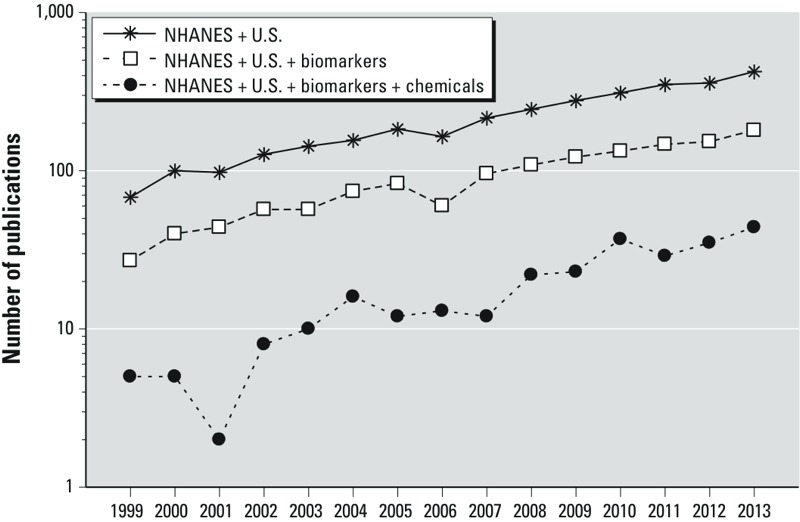
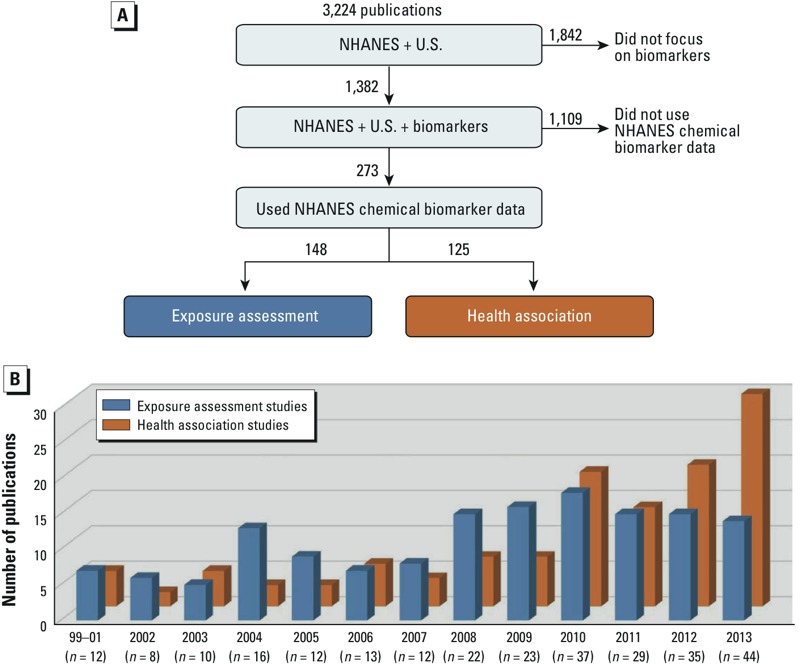
A literature search (1999-2013) was performed to identify publications in which U.S. NHANES data were reported. Manual curation identified only the subset of publications that clearly utilized chemical biomarker data. This subset was evaluated for chemical groupings, data analysis approaches, and overall trends.
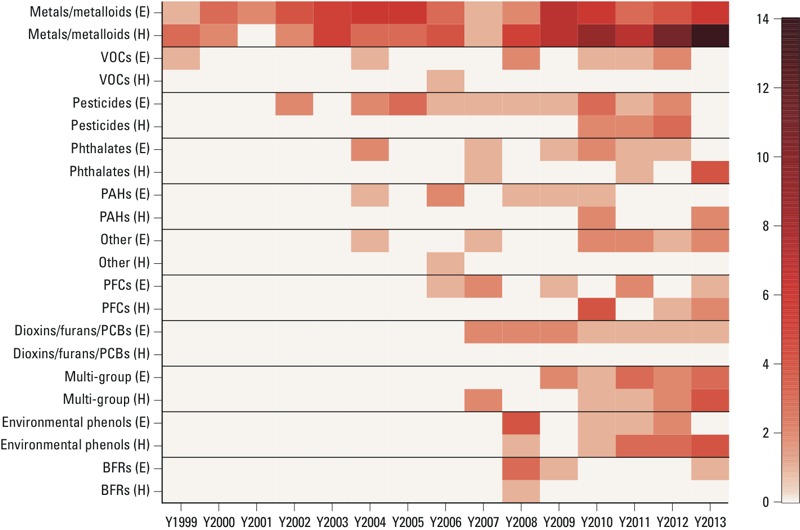
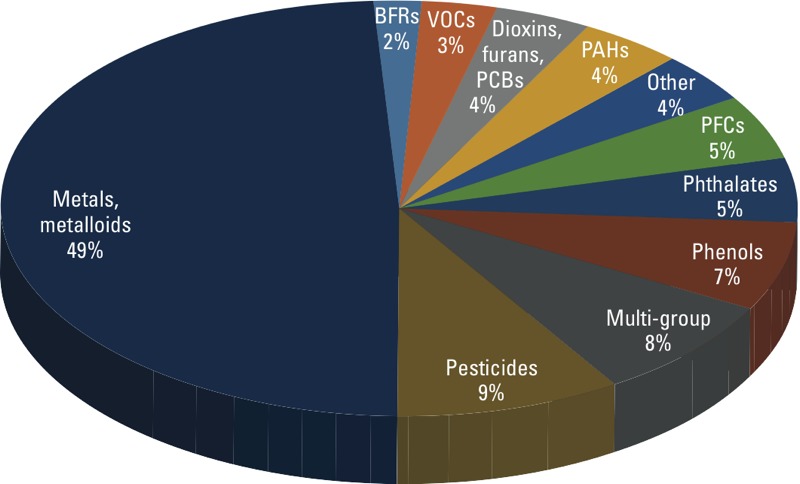
A small percentage of the sampled NHANES-related publications reported on chemical biomarkers (8% yearly average). Of 11 chemical groups, metals/metalloids were most frequently evaluated (49%), followed by pesticides (9%) and environmental phenols (7%). Studies of multiple chemical groups were also common (8%). Publications linking chemical biomarkers to health metrics have increased dramatically in recent years. New studies are addressing challenges related to NHANES data interpretation in health risk contexts.
This article demonstrates growing use of NHANES chemical biomarker data in studies that can impact risk assessments. Best practices for analysis and interpretation must be defined and adopted to allow the full potential of NHANES to be realized.
美国国家健康与营养检查调查(NHANES)每年都会对数以千计研究参与者的样本进行数百种化学生物标志物的测量。这些生物标志物测量数据用于建立人群参考范围、追踪暴露趋势、识别暴露水平升高的人群亚组以及确定研究需求的优先级。目前人们有兴趣进一步利用NHANES数据为化学风险评估提供信息。
本文重点介绍了a)美国NHANES化学生物标志物数据的评估程度,b)已研究的化学物质组,c)数据分析方法和挑战,以及d)利用这些数据为风险评估提供信息的机会。
进行了一项文献检索(1999 - 2013年),以确定报告美国NHANES数据的出版物。人工筛选仅确定了明确使用化学生物标志物数据的出版物子集。对该子集进行了化学分组、数据分析方法和总体趋势的评估。
与NHANES相关的抽样出版物中,只有一小部分报告了化学生物标志物(年平均8%)。在11个化学组中,金属/类金属被评估的频率最高(49%),其次是农药(9%)和环境酚类(7%)。对多个化学组的研究也很常见(8%)。近年来,将化学生物标志物与健康指标联系起来的出版物大幅增加。新的研究正在应对健康风险背景下与NHANES数据解释相关的挑战。
本文表明,NHANES化学生物标志物数据在可能影响风险评估的研究中的使用正在增加。必须定义并采用分析和解释的最佳实践,以充分发挥NHANES的潜力。