Galioto Rachel, Alosco Michael L, Spitznagel Mary Beth, Strain Gladys, Devlin Michael, Cohen Ronald, Crosby Ross D, Mitchell James E, Gunstad John
a Department of Psychology , Kent State University , Kent , OH , USA.
J Clin Exp Neuropsychol. 2015;37(4):402-13. doi: 10.1080/13803395.2015.1023264. Epub 2015 Apr 15.
Obesity is associated with cognitive impairment, and bariatric surgery has been shown to improve cognitive functioning. Rapid improvements in glycemic control are common after bariatric surgery and likely contribute to these cognitive gains. We examined whether improvements in glucose regulation are associated with better cognitive function following bariatric surgery.
A total of 85 adult bariatric surgery patients underwent computerized cognitive testing and fasting blood draw for glucose, insulin, and glycated hemoglobin (HbA1c) at baseline and 12 months postoperatively.
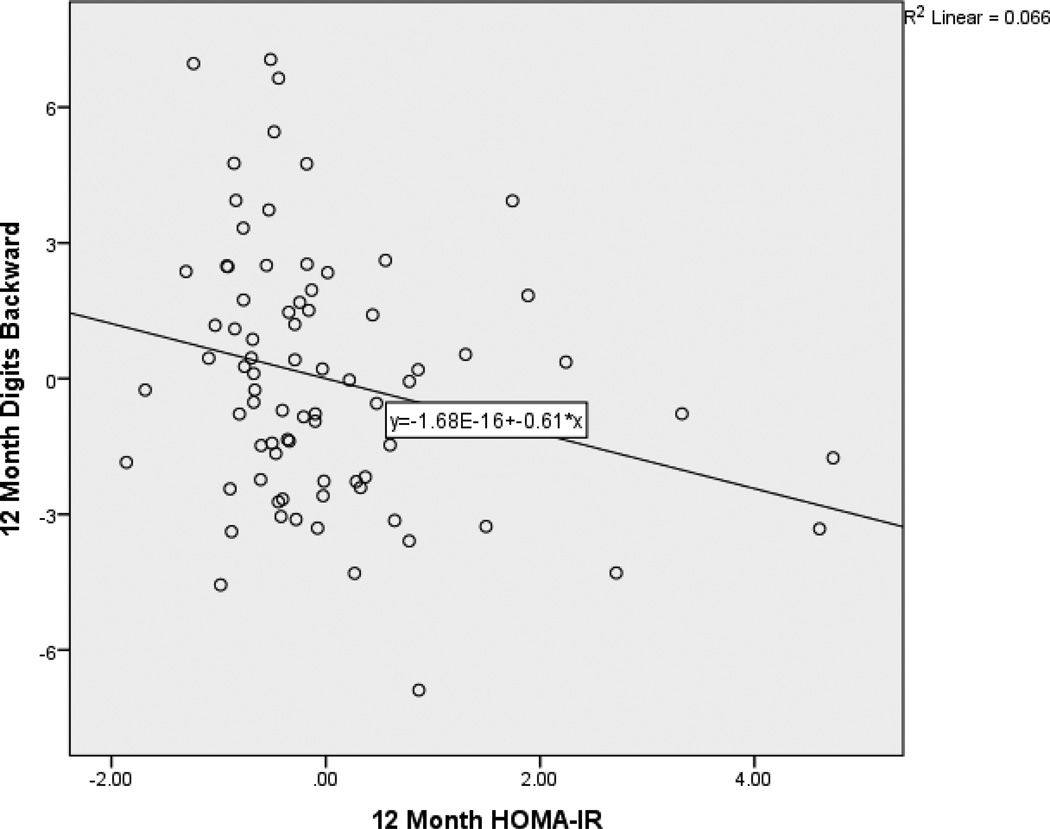
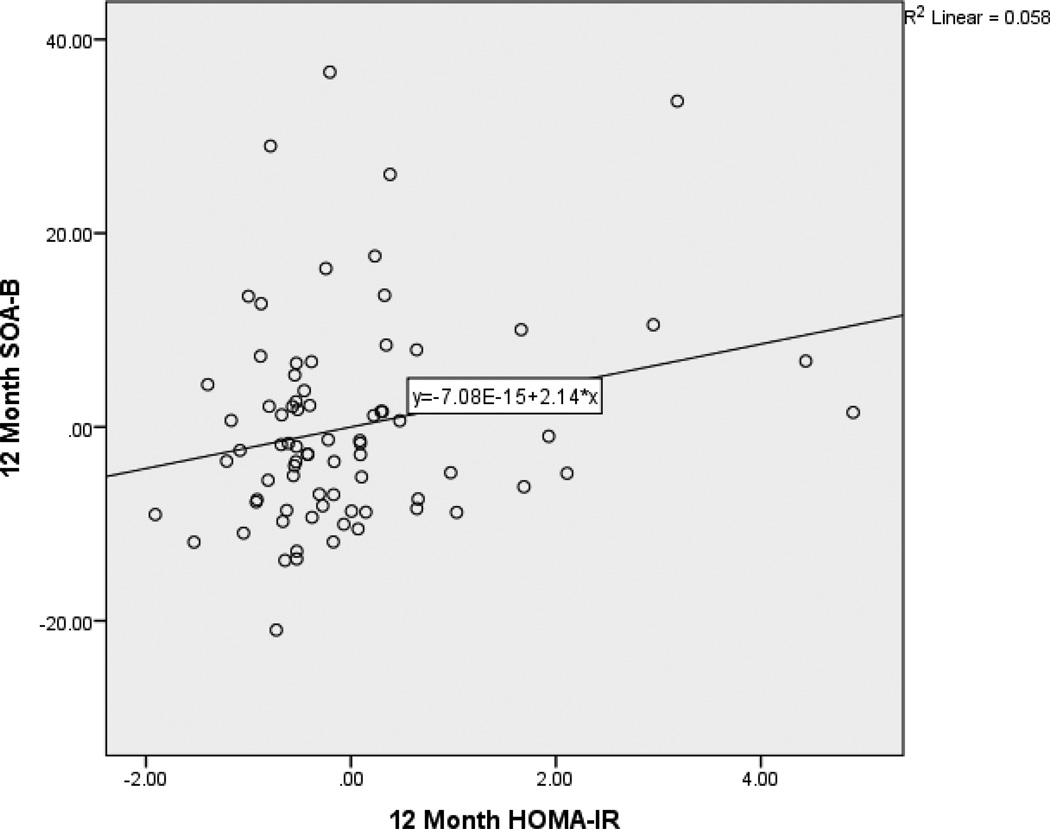
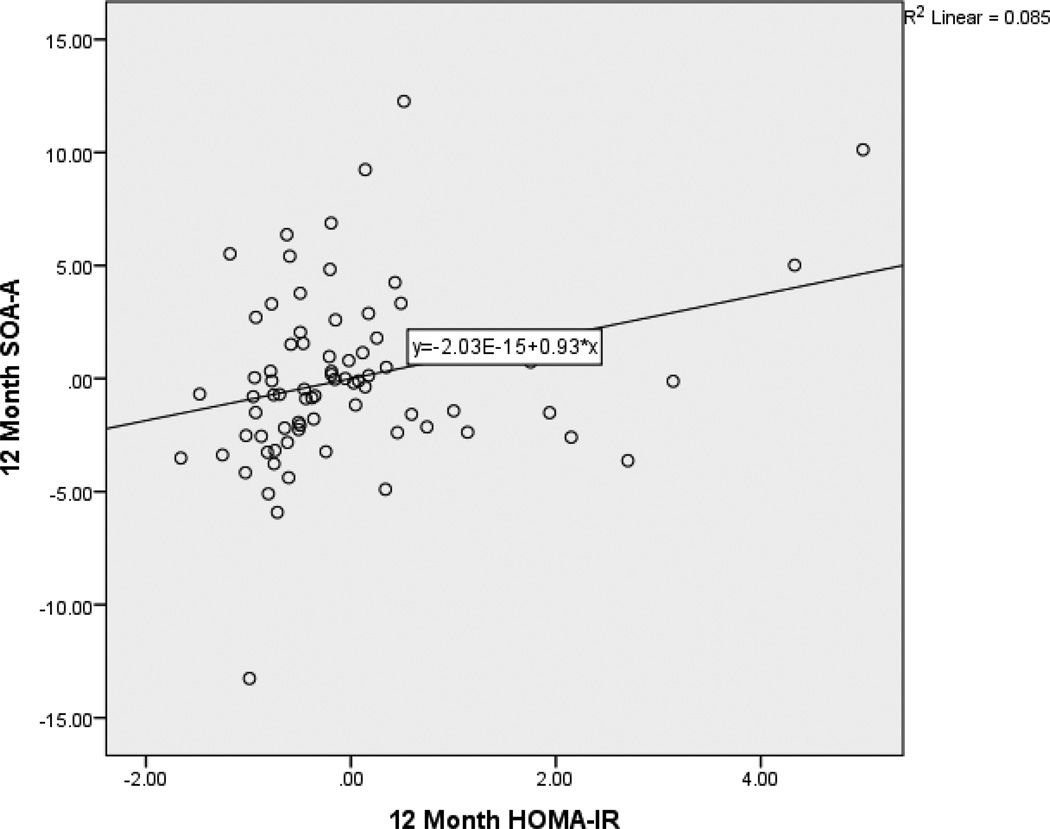
Significant improvements in both cognitive function and glycemic control were observed among patients. After controlling for baseline factors, 12-month homeostatic model assessment of insulin resistance HOMA-IR predicted 12-month digits backward (β = -.253, p < .05), switching of attention-A (β = .156, p < .05), and switching of attention-B (β = -.181, p < .05). Specifically, as HOMA-IR decreased over time, working memory, psychomotor speed, and cognitive flexibility improved. Decreases in HbA1c were not associated with postoperative cognitive improvements. After controlling for baseline cognitive test performance, changes in body mass index (BMI) were also not associated with 12-month cognitive function.
Small effects of improved glycemic control on improved aspects of attention and executive function were observed following bariatric surgery among severely obese individuals. Future research is needed to identify the underlying mechanisms for the neurocognitive benefits of these procedures.
肥胖与认知障碍有关,而减肥手术已被证明可改善认知功能。减肥手术后血糖控制迅速改善,这可能是这些认知改善的原因。我们研究了减肥手术后葡萄糖调节的改善是否与更好的认知功能相关。
共有85名成年减肥手术患者在基线和术后12个月接受了计算机化认知测试,并进行了空腹血糖、胰岛素和糖化血红蛋白(HbA1c)检测。
患者的认知功能和血糖控制均有显著改善。在控制基线因素后,12个月的胰岛素抵抗稳态模型评估(HOMA-IR)可预测12个月的倒背数字(β = -.253,p <.05)、注意力转换-A(β =.156,p <.05)和注意力转换-B(β = -.181,p <.05)。具体而言,随着HOMA-IR随时间下降,工作记忆、心理运动速度和认知灵活性得到改善。HbA1c的降低与术后认知改善无关。在控制基线认知测试表现后,体重指数(BMI)的变化也与12个月的认知功能无关。
在严重肥胖个体中,减肥手术后观察到血糖控制改善对注意力和执行功能改善方面有微小影响。需要进一步研究以确定这些手术对神经认知有益的潜在机制。