Widmann Philipp, Reverter Antonio, Weikard Rosemarie, Suhre Karsten, Hammon Harald M, Albrecht Elke, Kuehn Christa
Leibniz Institute for Farm Animal Biology, Institute for Genome Biology, Genome Physiology Unit, Dummerstorf, Germany.
CSIRO Agriculture Flagship, Brisbane, Australia.
PLoS One. 2015 Apr 15;10(4):e0124574. doi: 10.1371/journal.pone.0124574. eCollection 2015.
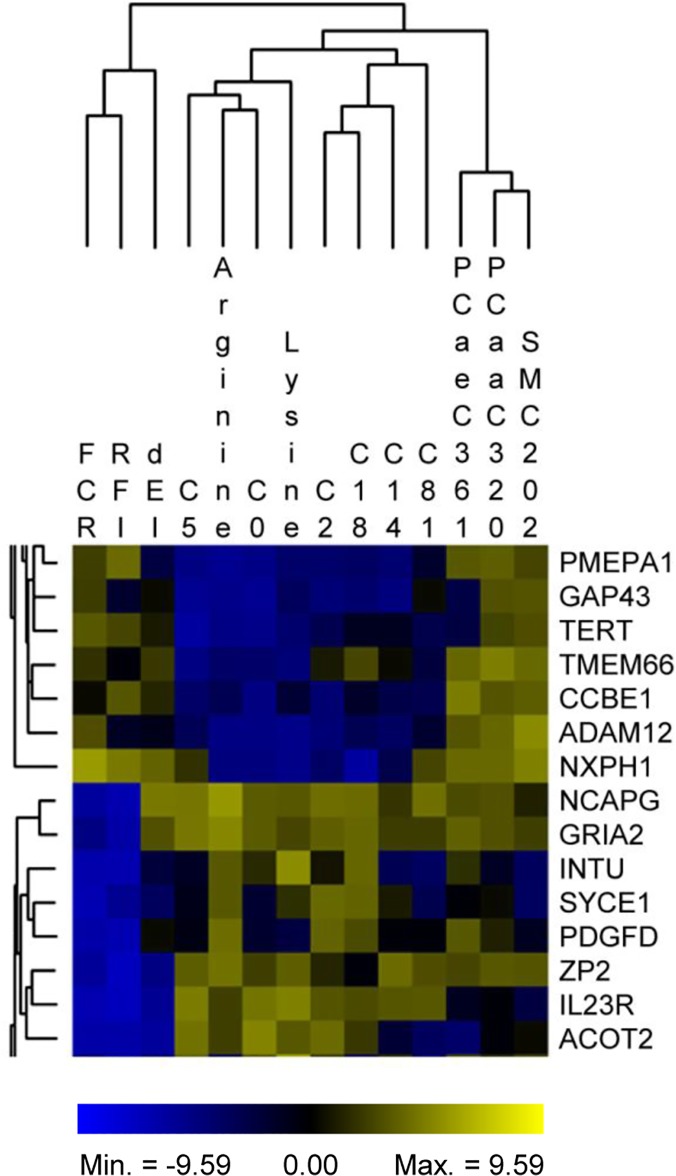
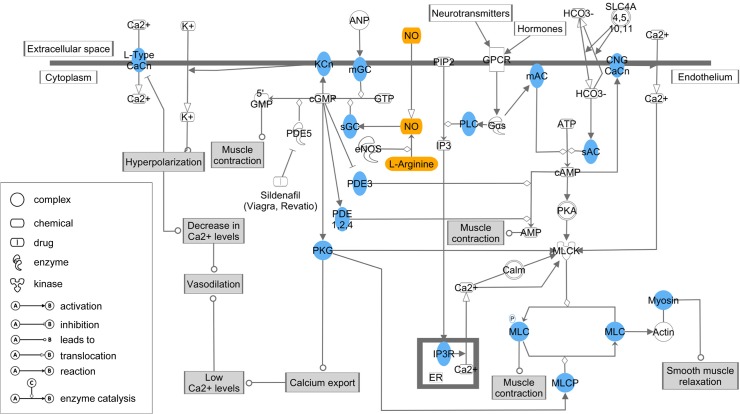
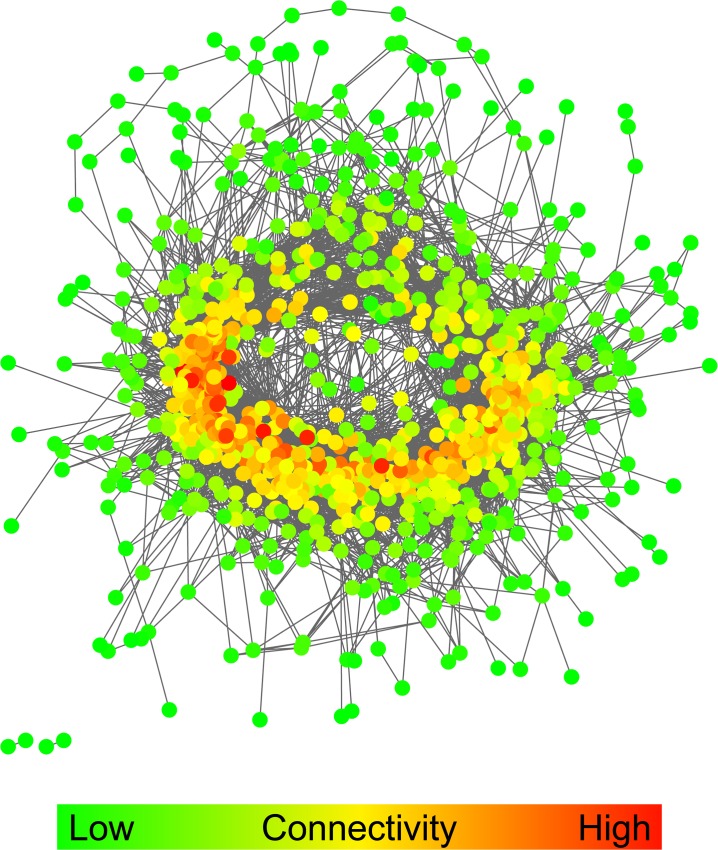
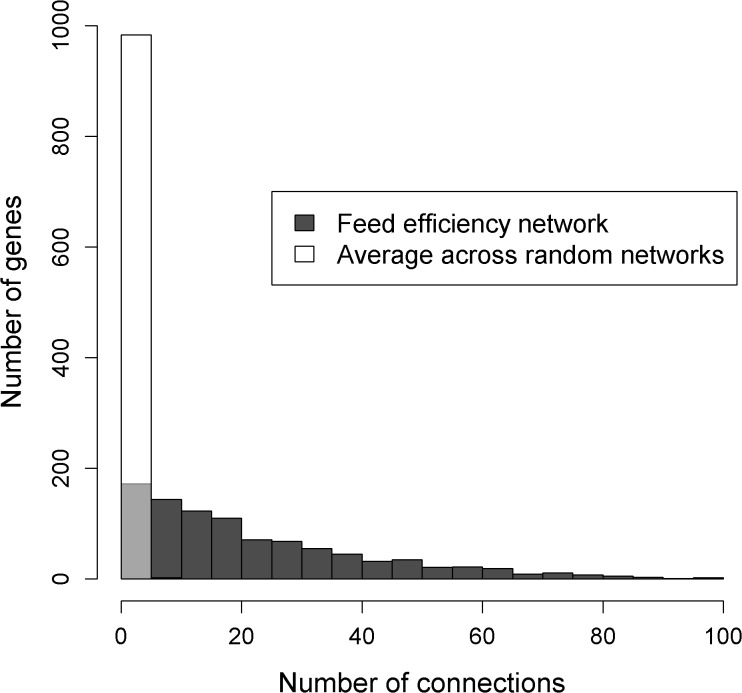
Feed efficiency is a paramount factor for livestock economy. Previous studies had indicated a substantial heritability of several feed efficiency traits. In our study, we investigated the genetic background of residual feed intake, a commonly used parameter of feed efficiency, in a cattle resource population generated from crossing dairy and beef cattle. Starting from a whole genome association analysis, we subsequently performed combined phenotype-metabolome-genome analysis taking a systems biology approach by inferring gene networks based on partial correlation and information theory approaches. Our data about biological processes enriched with genes from the feed efficiency network suggest that genetic variation in feed efficiency is driven by genetic modulation of basic processes relevant to general cellular functions. When looking at the predicted upstream regulators from the feed efficiency network, the Tumor Protein P53 (TP53) and Transforming Growth Factor beta 1 (TGFB1) genes stood out regarding significance of overlap and number of target molecules in the data set. These results further support the hypothesis that TP53 is a major upstream regulator for genetic variation of feed efficiency. Furthermore, our data revealed a significant effect of both, the Non-SMC Condensin I Complex, Subunit G (NCAPG) I442M (rs109570900) and the Growth /differentiation factor 8 (GDF8) Q204X (rs110344317) loci, on residual feed intake and feed conversion. For both loci, the growth promoting allele at the onset of puberty was associated with a negative, but favorable effect on residual feed intake. The elevated energy demand for increased growth triggered by the NCAPG 442M allele is obviously not fully compensated for by an increased efficiency in converting feed into body tissue. As a consequence, the individuals carrying the NCAPG 442M allele had an additional demand for energy uptake that is reflected by the association of the allele with increased daily energy intake as observed in our study.
饲料效率是畜牧经济的一个至关重要的因素。先前的研究表明几种饲料效率性状具有较高的遗传力。在我们的研究中,我们调查了由奶牛和肉牛杂交产生的牛资源群体中残余采食量(一种常用的饲料效率参数)的遗传背景。从全基因组关联分析开始,我们随后采用系统生物学方法,通过基于偏相关和信息论方法推断基因网络,进行了联合表型 - 代谢组 - 基因组分析。我们关于饲料效率网络中富集基因的生物学过程的数据表明,饲料效率的遗传变异是由与一般细胞功能相关的基本过程的遗传调控驱动的。当查看饲料效率网络中预测的上游调节因子时,肿瘤蛋白P53(TP53)和转化生长因子β1(TGFB1)基因在数据集中的重叠显著性和靶分子数量方面表现突出。这些结果进一步支持了TP53是饲料效率遗传变异的主要上游调节因子这一假设。此外,我们的数据揭示了非SMC凝聚素I复合物亚基G(NCAPG)I442M(rs109570900)和生长/分化因子8(GDF8)Q204X(rs110344317)位点对残余采食量和饲料转化率均有显著影响。对于这两个位点,青春期开始时促进生长的等位基因与残余采食量呈负相关,但具有有利影响。由NCAPG 442M等位基因引发的生长增加所带来的能量需求升高显然没有被饲料转化为身体组织效率的提高完全补偿。因此,携带NCAPG 442M等位基因的个体对能量摄取有额外需求,正如我们在研究中观察到的该等位基因与每日能量摄入量增加之间的关联所反映的那样。