Sur Abhinav, Pradhan Biswaranjan, Banerjee Arka, Aich Palok
School of Biological Sciences, National Institute of Science Education and Research, Bhubaneswar, India.
PLoS One. 2015 Apr 15;10(4):e0123905. doi: 10.1371/journal.pone.0123905. eCollection 2015.
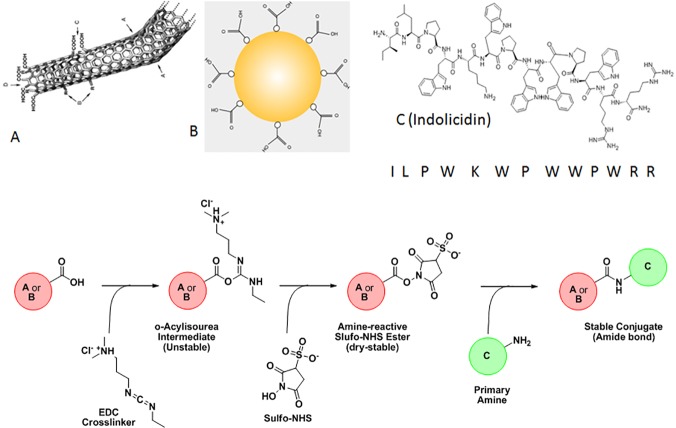
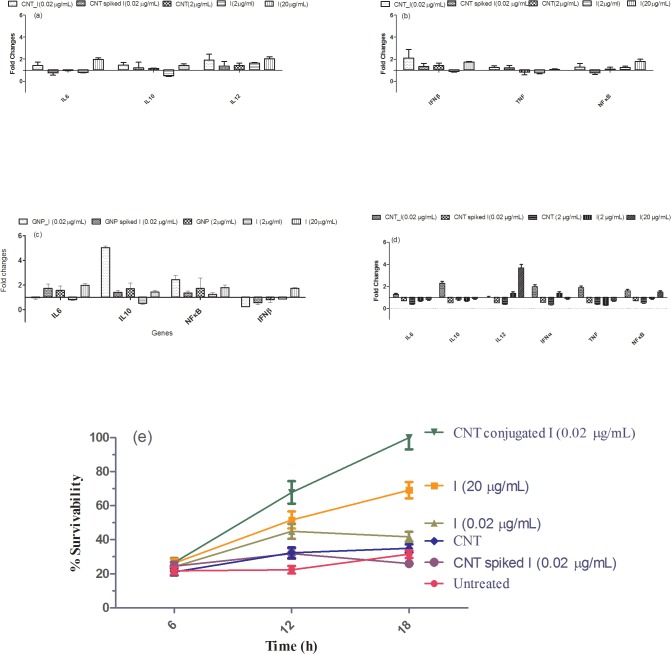
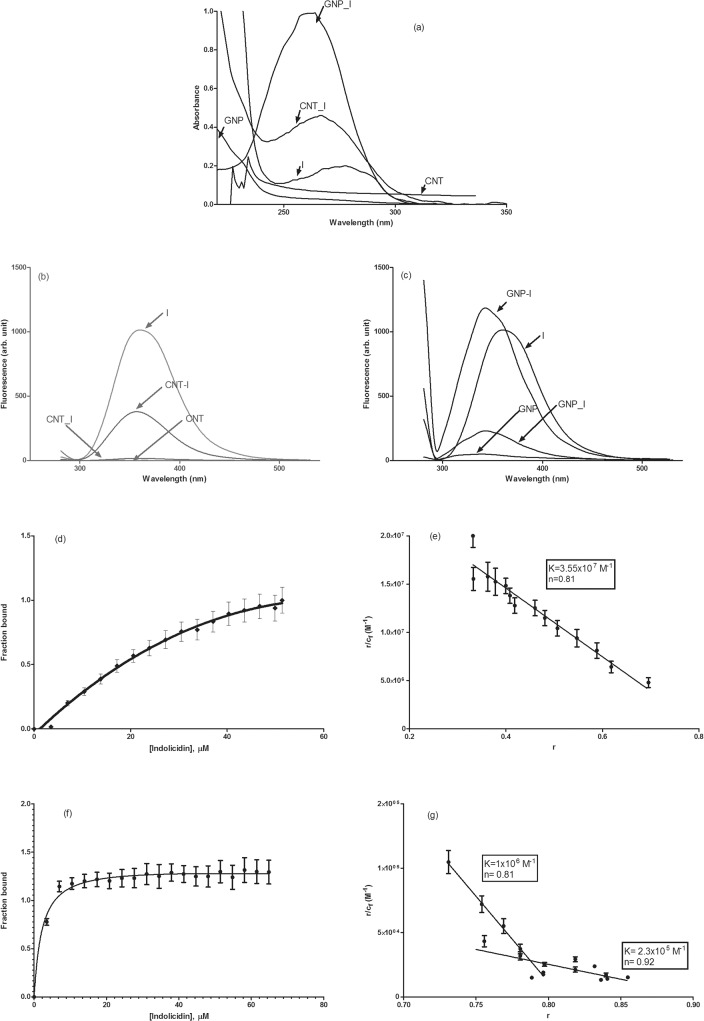
Antibiotic resistance is concern of today's world. Search for alternative molecules, for treatment and immune stimulation, remains at the forefront. One such group of biomolecules with promise, along the line of immune stimulation or therapy, is host defense peptide (HDP). These molecules, however, are required at a higher dose to be effective which leads to high cost. To alleviate such problems, an aid can be used to achieve similar efficacy but at a smaller effective dose of the immune stimulant. We hypothesised that by conjugating HDPs with carbon nanotubes and/or gold nanoparticles, it would be possible to stimulate a protective immune response in host system at a lower dosage of HDP. In this report, we characterized, using biophysical methodologies, conjugation of Indolicidin, as a representative of HDP. We further established efficacy of peptide-nanomaterial conjugates in activating innate immunity and protecting against pathogen infection in vitro at a significantly small dose.
抗生素耐药性是当今世界关注的问题。寻找用于治疗和免疫刺激的替代分子仍然处于前沿。在免疫刺激或治疗领域,一类有前景的生物分子是宿主防御肽(HDP)。然而,这些分子需要更高的剂量才能有效,这导致成本高昂。为了缓解此类问题,可以使用一种辅助手段来实现相似的功效,但只需使用较小有效剂量的免疫刺激剂。我们假设,通过将HDP与碳纳米管和/或金纳米颗粒结合,有可能在较低剂量的HDP下刺激宿主系统产生保护性免疫反应。在本报告中,我们使用生物物理方法对作为HDP代表的吲哚抗菌肽的结合进行了表征。我们进一步证实了肽 - 纳米材料结合物在体外以显著小的剂量激活先天免疫和抵御病原体感染的功效。