Hussain Muhammad Barkaat, Hannan Abdul, Akhtar Naeem, Fayyaz Ghulam Qadir, Imran Muhammad, Saleem Sidrah, Qureshi Imtiaz Ahmed
Department of Microbiology, Faculty of Medicine, King Abdul Aziz University, Rabigh Branch, 21589, Saudi Arabia.
Department of Microbiology, University of Health Sciences Lahore, Khayaban-e-Jamia Punjab, Lahore, 54600, Pakistan.
BMC Complement Altern Med. 2015 Feb 26;15:32. doi: 10.1186/s12906-015-0549-z.
The development of resistance to conventional anti-typhoid drugs and the recent emergence of fluoroquinolone resistance have made it very difficult and expensive to treat typhoid fever. As the therapeutic strategies become even more limited, it is imperative to investigate non-conventional modalities. In this context, honey is a potential candidate for combating antimicrobial resistance because it contains a broad repertoire of antibacterial compounds which act synergistically at multiple sites, thus making it less likely that the bacteria will become resistant. The in vitro antibacterial activity of 100 unifloral honey samples against a blood culture isolate of multi-drug resistant (MDR) Salmonella typhi were investigated.
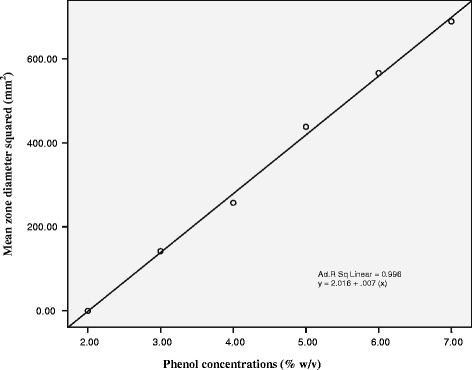
All honey samples were evaluated for both total (acidity, osmolarity, hydrogen peroxide and non-peroxide activity) and plant derived non-peroxide antibacterial activity by agar well diffusion assay at 50% and 25% dilution in sterile distilled water and 25% in catalase solution. Manuka (Unique Manuka Factor-21) honey was used for comparison. The phenol equivalence of each honey sample from 2% to 7% (w/v) phenol was obtained from regression analysis. The antibacterial potential of each honey sample was expressed as its equivalent phenol concentration. The honey samples which showed antibacterial activity equivalent to or greater than manuka honey were considered therapeutically active honeys.
Nineteen honey samples (19%) displayed higher hydrogen peroxide related antibacterial activity (16-20% phenol), which is more than that of manuka honey (21-UMF). A total of 30% of the honey samples demonstrated antibacterial activity between 11 and 15% phenol similar to that of manuka honey while 51% of the honey samples did not exhibit any zone of inhibition against MDR-S. typhi at 50% (w/v) dilution. None of the indigenous honey samples displayed non-peroxide antibacterial activity. Only manuka honey showed non-peroxide antibacterial activity at 25% dilution (w/v) in catalase solution.
The honey samples which displayed antibacterial activity equal to or greater than manuka honey may be useful in the clinical conditions where higher hydrogen peroxide related antibacterial activity is required. Manuka honey, which is known to possess non-peroxide antibacterial activity, warrants further evaluation in a suitable typhoid animal model.
对传统抗伤寒药物耐药性的发展以及近期氟喹诺酮耐药性的出现,使得治疗伤寒热变得非常困难且成本高昂。随着治疗策略变得更加有限,研究非常规治疗方法势在必行。在此背景下,蜂蜜是对抗抗菌药物耐药性的潜在候选者,因为它含有多种抗菌化合物,这些化合物在多个位点协同作用,从而降低细菌产生耐药性的可能性。研究了100份单花蜂蜜样本对多重耐药(MDR)伤寒沙门氏菌血培养分离株的体外抗菌活性。
通过琼脂孔扩散法,在无菌蒸馏水中以50%和25%的稀释度以及在过氧化氢酶溶液中以25%的稀释度,对所有蜂蜜样本的总抗菌活性(酸度、渗透压、过氧化氢和非过氧化物活性)和植物源非过氧化物抗菌活性进行评估。麦卢卡(独特麦卢卡因子-21)蜂蜜用作对照。通过回归分析得出每个蜂蜜样本在2%至7%(w/v)苯酚范围内的苯酚当量。每个蜂蜜样本的抗菌潜力以其等效苯酚浓度表示。抗菌活性等同于或高于麦卢卡蜂蜜的蜂蜜样本被视为具有治疗活性的蜂蜜。
19份蜂蜜样本(19%)表现出较高的与过氧化氢相关的抗菌活性(16 - 20%苯酚),高于麦卢卡蜂蜜(21 - UMF)。总共30%的蜂蜜样本在11%至15%苯酚之间表现出与麦卢卡蜂蜜相似的抗菌活性,而51%的蜂蜜样本在50%(w/v)稀释度下对多重耐药伤寒沙门氏菌未表现出任何抑菌圈。没有本土蜂蜜样本表现出非过氧化物抗菌活性。只有麦卢卡蜂蜜在过氧化氢酶溶液中以25%(w/v)稀释度时表现出非过氧化物抗菌活性。
抗菌活性等同于或高于麦卢卡蜂蜜的蜂蜜样本可能在需要较高过氧化氢相关抗菌活性的临床情况下有用。已知具有非过氧化物抗菌活性的麦卢卡蜂蜜,值得在合适的伤寒动物模型中进一步评估。