Hawe Penelope, Bond Lyndal, Ghali Laura M, Perry Rosemary, Davison Colleen M, Casey David M, Butler Helen, Webster Cynthia M, Scholz Bert
O'Brien Institute of Public Health, University of Calgary, 3280 Hospital Drive NW, Calgary, AB, T2N 4N6, Canada.
The Australian Prevention Partnership Centre and Menzies Centre for Health Policy, University of Sydney, Sydney, NSW, 2006, Australia.
BMC Public Health. 2015 Mar 19;15:265. doi: 10.1186/s12889-015-1538-3.
Whole school, ethos-changing interventions reduce risk behaviours in middle adolescence, more than curriculum-based approaches. Effects on older ages are not known. We set out to replicate one of these interventions, Australia's Gatehouse Project, in a rural Canadian high school.
A guided, whole school change process sought to make students feel more safe, connected, and valued by: changes in teaching practices, orientation processes, professional development of staff, recognition and reward mechanisms, elevating student voice, and strategies to involve greater proactivity and participation. We conducted risk behaviour surveys in grades 10 to 12 before the intervention and 2 years afterwards, and social network analyses with the staff. Changes in health and health risk behaviours were assessed using chi-square. Interactions between the intervention and gender and between the intervention and school engagement were assessed using interaction terms in logistic regression models. Changes in the density of relationships among staff were tested with methods analogous to paired t-tests.
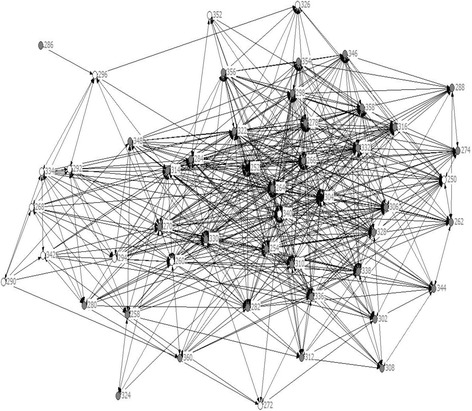
Like Gatehouse, there was no statistically significant reduction in depressive symptoms or bullying, though the trend was in that direction. Among girls, there was a statistically significant decrease in low school engagement (45% relative reduction), and decreases in drinking (46% relative reduction), unprotected sex (61% relative reduction) and poor health (relative reduction of 73%). The reduction in drinking matched the national trend. Reductions in unprotected sex and poor health went against the national trend. We found no statistically significant changes for boys. The effects coincided with statistically significant increases in the densities of staff networks, indicating that part of the mechanism may be through relationships at school.
A non-specific, risk protective intervention in the social environment of the school had a significant impact on a cluster of risk behaviours for girls. Results were remarkably like reports from similar school environment interventions elsewhere, albeit with different behaviours being affected. It may be that this type of intervention activates change processes that interact highly with context, impacting different risks differently, according to the prevalence, salience and distribution of the risk and the interconnectivity of relationships between staff and students. This requires further exploration.
与基于课程的方法相比,全校性的、改变风气的干预措施能更有效地减少青少年中期的危险行为。其对年龄较大学生的影响尚不清楚。我们着手在加拿大一所农村高中复制其中一项干预措施,即澳大利亚的盖特豪斯项目。
一个有指导的全校变革过程旨在通过以下方式让学生感到更安全、更有归属感和更受重视:改变教学实践、迎新流程、教职工的专业发展、认可和奖励机制、提升学生的话语权,以及采取策略让学生更积极主动地参与。我们在干预前和干预后两年对10至12年级的学生进行了危险行为调查,并对教职工进行了社交网络分析。使用卡方检验评估健康和健康危险行为的变化。在逻辑回归模型中使用交互项评估干预与性别之间以及干预与学校参与度之间的相互作用。使用类似于配对t检验的方法测试教职工之间关系密度的变化。
与盖特豪斯项目一样,抑郁症状或欺凌行为虽有下降趋势,但在统计学上没有显著降低。在女生中,学校参与度低(相对降低45%)、饮酒(相对降低46%)、无保护性行为(相对降低61%)和健康状况差(相对降低73%)在统计学上有显著下降。饮酒量的下降与全国趋势相符。无保护性行为和健康状况差的下降与全国趋势相反。我们发现男生没有统计学上的显著变化。这些影响与教职工网络密度的显著增加同时出现,表明部分机制可能是通过学校中的人际关系。
在学校社会环境中进行的非特定的、风险保护干预对女生的一系列危险行为产生了重大影响。结果与其他地方类似学校环境干预的报告非常相似,尽管受影响的行为不同。可能是这种类型的干预激活了与背景高度相互作用的变革过程,根据风险的流行程度、显著性和分布以及教职工与学生之间关系的相互关联性,对不同风险产生不同影响。这需要进一步探索。