UMR1027, Université de Toulouse, UPS, Inserm, Toulouse, France.
Cresco, Université de Toulouse, UPS, Toulouse, France.
Implement Sci. 2019 Apr 2;14(1):35. doi: 10.1186/s13012-019-0880-8.
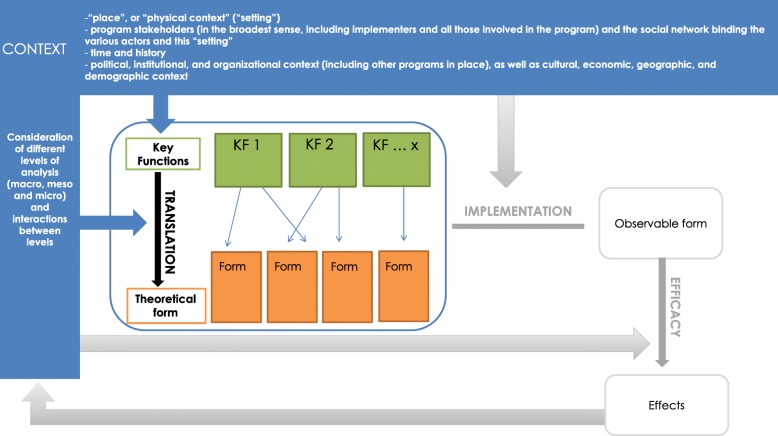
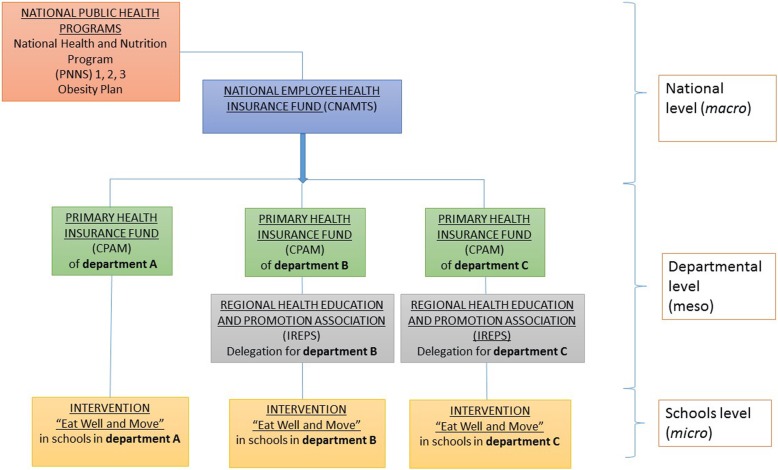
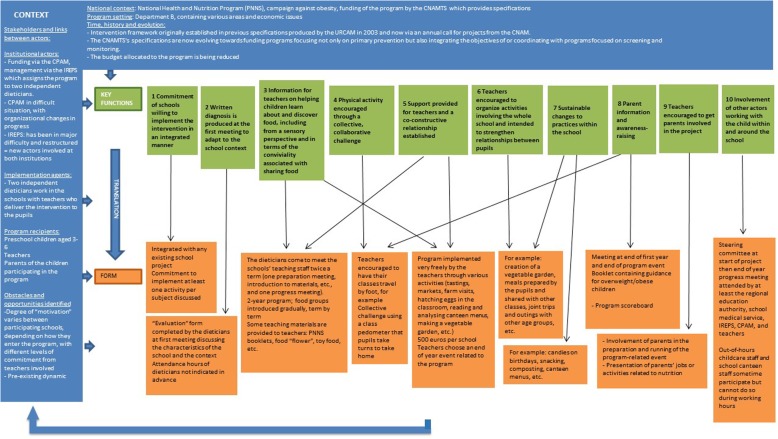
The processes at play in the implementation of one program in different contexts are complex and not yet well understood. In order to facilitate both the analysis and transfer of interventions, a "key functions/implementation/context" (FIC) model was developed to structure the description of public health interventions by distinguishing their potentially transferable dimensions (their "key functions") from those associated with their translation within a specific context (their "form"). It was used to describe and compare preschool preventative nutrition interventions routinely implemented across three territories, in accordance with same national specifications.
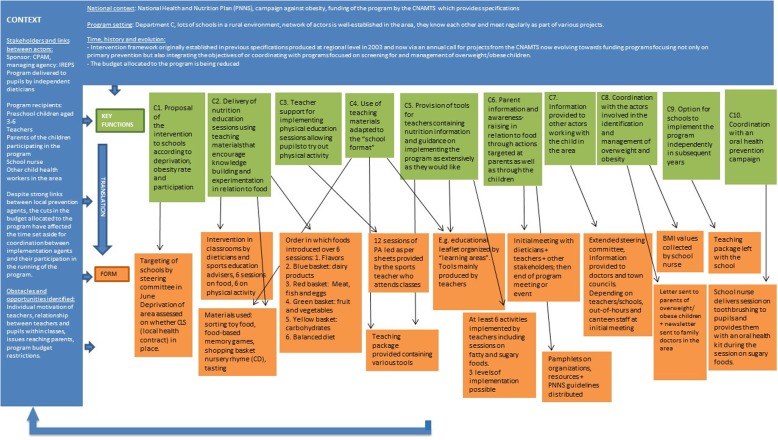
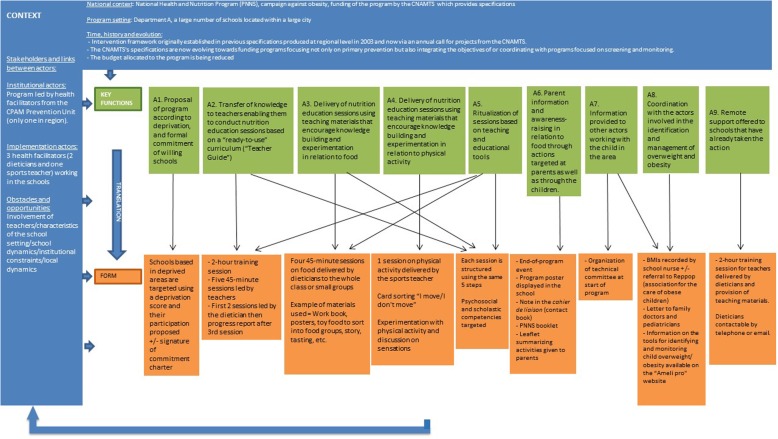
The interventions were independently described by researchers and intervention's implementers using the FIC model, during several workshops. Their key functions were then classified into 12 themes and compared to assess the extent to which the three interventions were similar.
Despite being produced from the same set of specifications and having similar objectives, the key functions of the interventions in the three departments mostly reflected the same major themes, they did not overlap and were in some cases very different. In one of the three departments, the intervention was markedly different from those of the other two departments. The historical context of the interventions and the specificities of the local actors appear highly determinant of the key functions described.
For the interventions that we studied, some of the key functions varied greatly and translated different concepts of health education and modes of intervention to the population. It now seems vital to improve the description of interventions on the ground in order to highlight the key functions on which they are based, which still often remain implicit. The FIC model could be used to complement other models and theories focusing on the description of the implementation process, its determinants or its evaluation. Its interest is to provide a structure for joint reflection by various actors on the transferable aspects of an intervention, its form and its interactions with the context, in order ultimately to analyse or to improve its potential transferability.
在不同背景下实施一个项目所涉及的过程是复杂的,目前还没有得到很好的理解。为了便于分析和转移干预措施,开发了一种“关键功能/实施/背景”(FIC)模型,通过区分其潜在可转移维度(其“关键功能”)和与其在特定背景下翻译相关的维度(其“形式”)来对公共卫生干预措施进行描述。该模型用于描述和比较根据相同国家规范在三个地区常规实施的学前预防营养干预措施。
研究人员和干预措施实施者在多次研讨会上使用 FIC 模型独立描述干预措施。然后将它们的关键功能分为 12 个主题进行比较,以评估三个干预措施的相似程度。
尽管这些干预措施是根据同一套规范制定的,且具有相似的目标,但三个部门的干预措施的关键功能主要反映了相同的主要主题,它们并没有重叠,在某些情况下差异很大。在三个部门中的一个部门,干预措施与其他两个部门明显不同。干预措施的历史背景和当地参与者的特殊性似乎是描述的关键功能的高度决定因素。
对于我们研究的干预措施,其中一些关键功能差异很大,向公众传达了不同的健康教育理念和干预模式。现在看来,至关重要的是要改进实地干预措施的描述,以突出它们所依据的关键功能,这些功能仍然常常是隐含的。FIC 模型可以用来补充其他模型和理论,重点描述实施过程、其决定因素或其评估。它的意义在于为各个参与者就干预措施的可转移方面、其形式及其与背景的相互作用提供一个共同思考的结构,最终对其潜在可转移性进行分析或改进。