Voumard Rachel, Berthod Delphine, Rambaud-Althaus Clotilde, D'Acremont Valérie, Genton Blaise
Travel Clinic, Department of Ambulatory Care and Community Medicine, University of Lausanne, Rue du Bugnon 44, Lausanne, 1011, Switzerland.
Infectious Diseases Service, Department of Medicine, Centre Hospitalier Universitaire Vaudois and University of Lausanne, Lausanne, Switzerland.
Malar J. 2015 Apr 1;14:139. doi: 10.1186/s12936-015-0654-y.
The considerable malaria decline in several countries challenges the strategy of chemoprophylaxis for travellers visiting moderate- to low-risk areas. An international consensus on the best strategy is lacking. It is essential to include travellers' opinions in the decision process. The preference of travellers regarding malaria prevention for moderate- to low-risk areas, related to their risk perception, as well as the reasons for their choices were investigated.
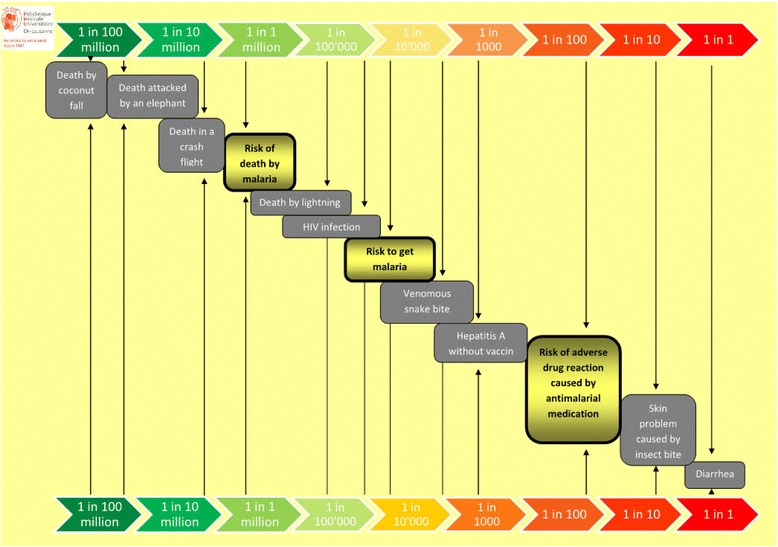
Prior to pre-travel consultation in the Travel Clinic, a self-administered questionnaire was given to travellers visiting moderate- to low-risk malaria areas. Four preventive options were proposed to the traveller, i.e., bite prevention only, chemoprophylaxis, stand-by emergency treatment alone, and stand-by emergency treatment with rapid diagnostic test. The information was accompanied by a risk scale for incidence of malaria, anti-malarial adverse drug reactions and other travel-related risks, inspired by Paling palettes from the Risk Communication Institute.
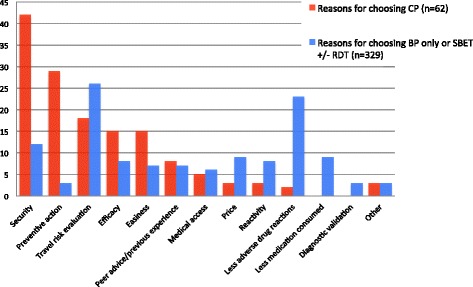
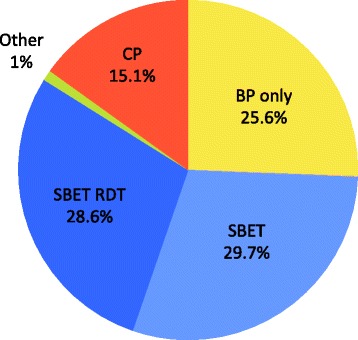
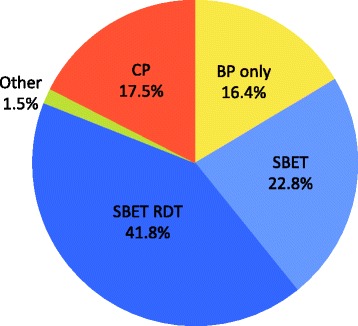
A total of 391 travellers were included from December 2012 to December 2013. Fifty-nine (15%) opted for chemoprophylaxis, 116 (30%) for stand-by emergency treatment, 112 (29%) for stand-by emergency treatment with rapid diagnostic test, 100 (26%) for bite prevention only, and four (1%) for other choices. Travellers choosing chemoprophylaxis justified their choice for security reasons (42%), better preventive action (29%), higher efficacy (15%) and easiness (15%). The reasons for choosing stand-by treatment or bite prevention only were less medication consumed (29%), less adverse drug reactions (23%) and lower price (9%). Those who chose chemoprophylaxis were more likely to have used it in the past (OR = 3.0 (CI 1.7-5.44)), but were not different in terms of demographic, travel characteristics or risk behaviour.
When travelling to moderate- to low-risk malaria areas, 85% of interviewees chose not to take chemoprophylaxis as malaria prevention, although most guidelines recommend it. They had coherent reasons for their choice. New recommendations should include shared decision-making to take into account travellers' preferences.
一些国家疟疾发病率显著下降,这对前往中低风险地区的旅行者的化学预防策略提出了挑战。目前缺乏关于最佳策略的国际共识。在决策过程中纳入旅行者的意见至关重要。本研究调查了旅行者对中低风险地区疟疾预防的偏好,及其风险认知,以及做出选择的原因。
在旅行诊所进行旅行前咨询之前,向前往中低风险疟疾地区的旅行者发放了一份自填式问卷。向旅行者提出了四种预防方案,即仅防蚊叮咬、化学预防、仅备用紧急治疗以及备用紧急治疗并进行快速诊断检测。这些信息还附带了一个疟疾发病率、抗疟药物不良反应及其他旅行相关风险的风险量表,该量表受风险沟通研究所的Paling调色板启发而制定。
2012年12月至2013年12月共纳入391名旅行者。59人(15%)选择化学预防,116人(30%)选择备用紧急治疗,112人(29%)选择备用紧急治疗并进行快速诊断检测,1