Kong Rong, Zhang Er-bao, Yin Dan-dan, You Liang-hui, Xu Tong-peng, Chen Wen-ming, Xia Rui, Wan Li, Sun Ming, Wang Zhao-xia, De Wei, Zhang Zhi-hong
Clinical Medical Examination Center, Northern Jiangsu People's Hospital, Yangzhou, Jiangsu, PR China.
Department of Biochemistry and Molecular Biology, Nanjing Medical University, Nanjing, Jiangsu, PR China.
Mol Cancer. 2015 Apr 12;14:82. doi: 10.1186/s12943-015-0355-8.
Mounting evidence indicates that long noncoding RNAs (lncRNAs) could play a pivotal role in cancer biology. However, the overall biological role and clinical significance of PVT1 in gastric carcinogenesis remains largely unknown.
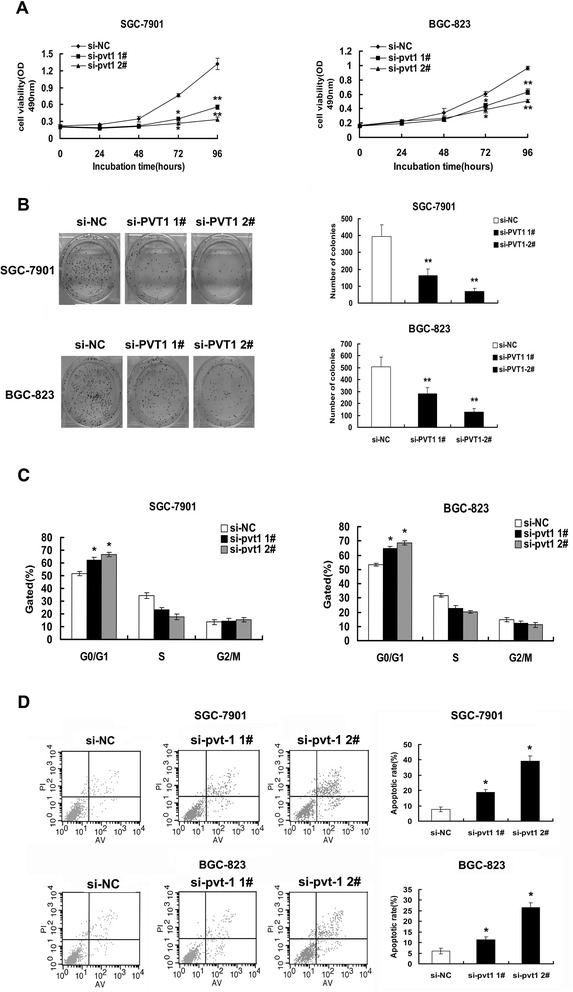
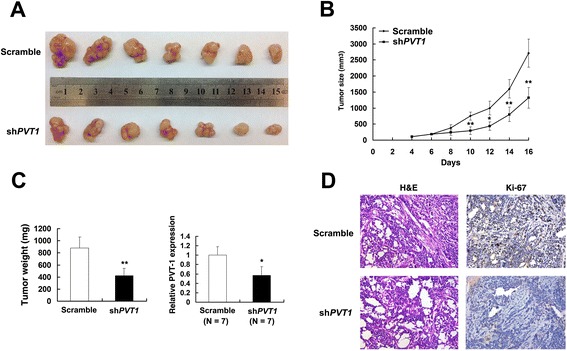
Expression of PVT1 was analyzed in 80 GC tissues and cell lines by qRT-PCR. The effect of PVT1 on proliferation was evaluated by MTT and colony formation assays, and cell apoptosis was evaluated by Flow-cytometric analysis. GC cells transfected with shPVT1 were injected into nude mice to study the effect of PVT1 on tumorigenesis in vivo. RIP was performed to confirm the interaction between PVT1 and EZH2. ChIP was used to study the promoter region of related genes.
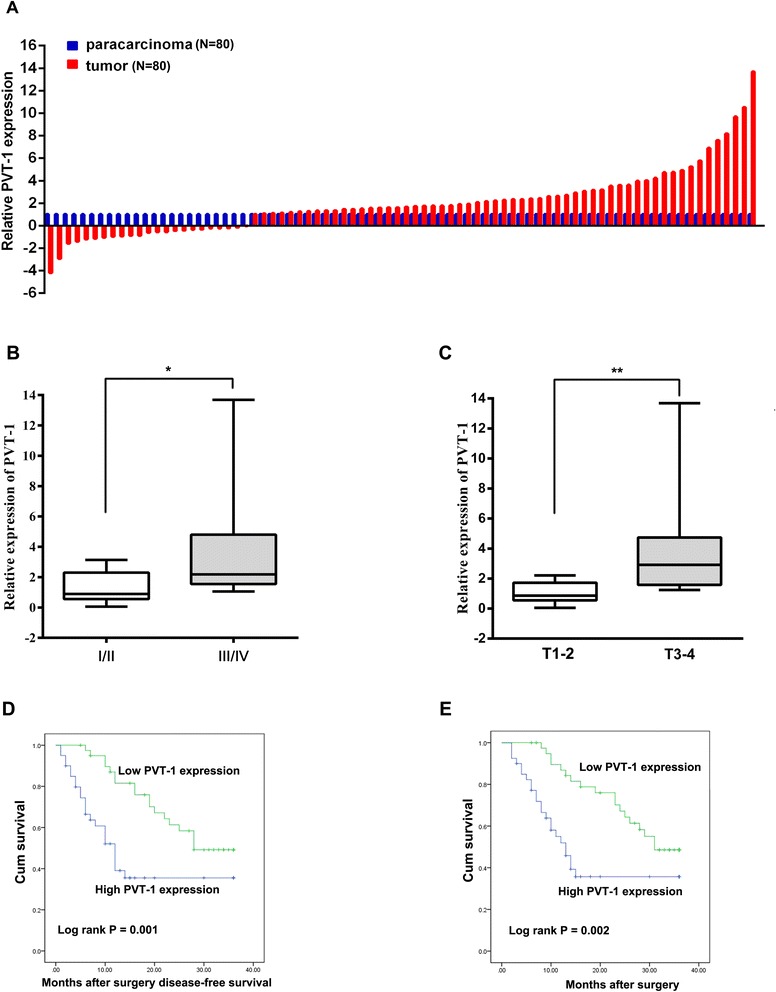
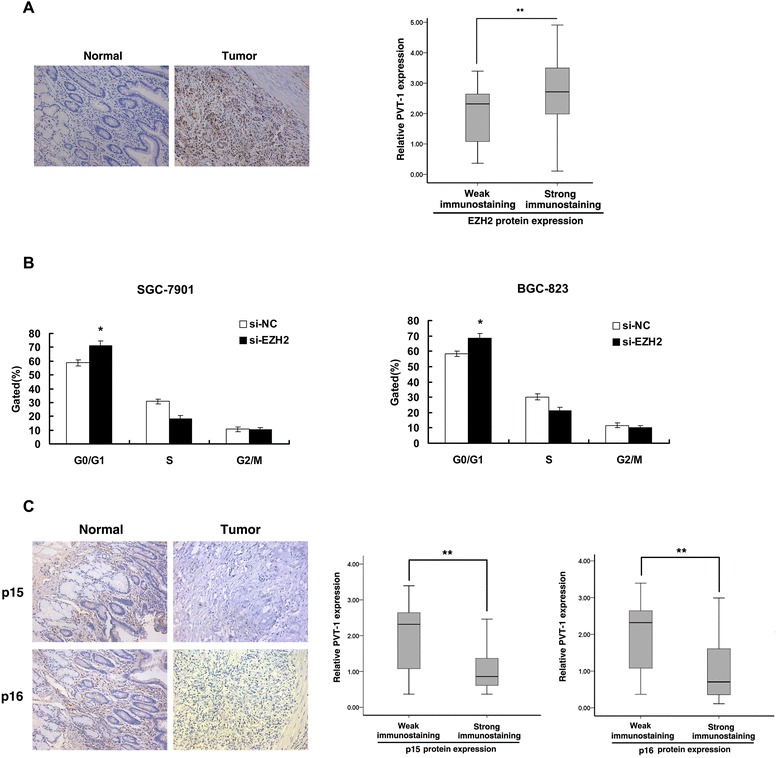
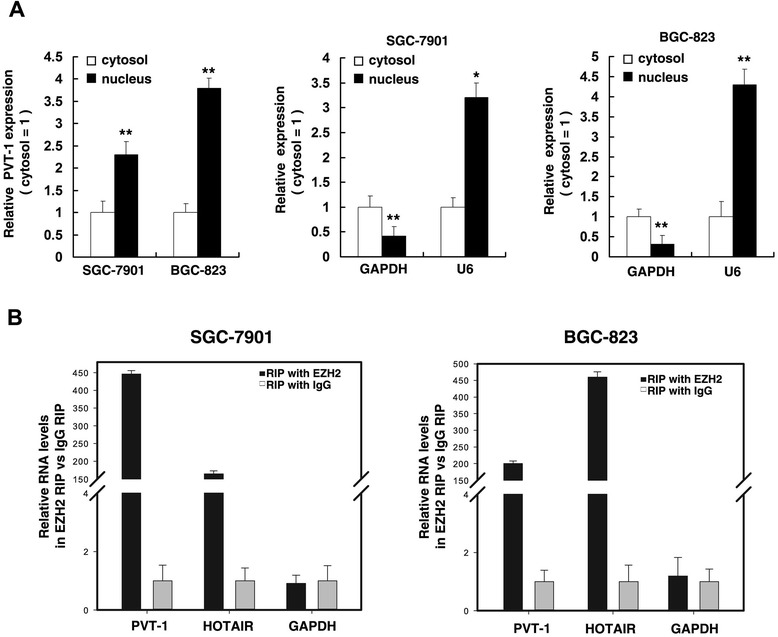
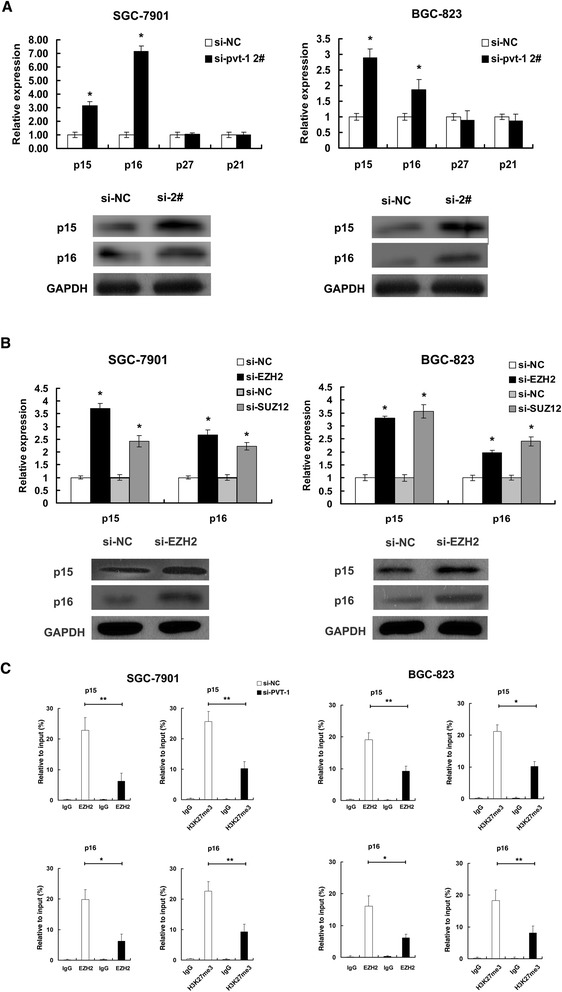
The higher expression of PVT1 was significantly correlated with deeper invasion depth and advanced TNM stage. Multivariate analyses revealed that PVT1 expression served as an independent predictor for overall survival (p = 0.031). Further experiments demonstrated that PVT1 knockdown significantly inhibited the proliferation both in vitro and in vivo. Importantly, we also showed that PVT1 played a key role in G1 arrest. Moreover, we further confirmed that PVT1 was associated with enhancer of zeste homolog 2 (EZH2) and that this association was required for the repression of p15 and p16. To our knowledge, this is the first report showed that the role and the mechanism of PVT1 in the progression of gastric cancer.
Together, these results suggest that lncRNA PVT1 may serve as a candidate prognostic biomarker and target for new therapies in human gastric cancer.
越来越多的证据表明,长链非编码RNA(lncRNAs)在癌症生物学中可能发挥关键作用。然而,PVT1在胃癌发生中的整体生物学作用和临床意义仍 largely 未知。
通过qRT-PCR分析80例胃癌组织和细胞系中PVT1的表达。通过MTT和集落形成试验评估PVT1对增殖的影响,通过流式细胞术分析评估细胞凋亡。将转染shPVT1的胃癌细胞注射到裸鼠体内,以研究PVT1对体内肿瘤发生的影响。进行RIP以证实PVT1与EZH2之间的相互作用。使用ChIP研究相关基因的启动子区域。
PVT1的高表达与更深的浸润深度和晚期TNM分期显著相关。多变量分析显示,PVT1表达是总生存期的独立预测因子(p = 0.031)。进一步的实验表明,PVT1敲低在体外和体内均显著抑制增殖。重要的是,我们还表明PVT1在G1期阻滞中起关键作用。此外,我们进一步证实PVT1与zeste同源物2增强子(EZH2)相关,并且这种关联是抑制p15和p16所必需的。据我们所知,这是第一份显示PVT1在胃癌进展中的作用和机制的报告。
总之,这些结果表明lncRNA PVT1可能作为人类胃癌的候选预后生物标志物和新疗法的靶点。