Chen Claire Lifan, Mahjoubfar Ata, Jalali Bahram
Department of Electrical Engineering, University of California Los Angeles, Los Angeles, California, United States of America; California NanoSystems Institute, Los Angeles, California, United States of America.
Department of Electrical Engineering, University of California Los Angeles, Los Angeles, California, United States of America; California NanoSystems Institute, Los Angeles, California, United States of America; Department of Bioengineering, University of California Los Angeles, Los Angeles, California, United States of America.
PLoS One. 2015 Apr 23;10(4):e0125106. doi: 10.1371/journal.pone.0125106. eCollection 2015.
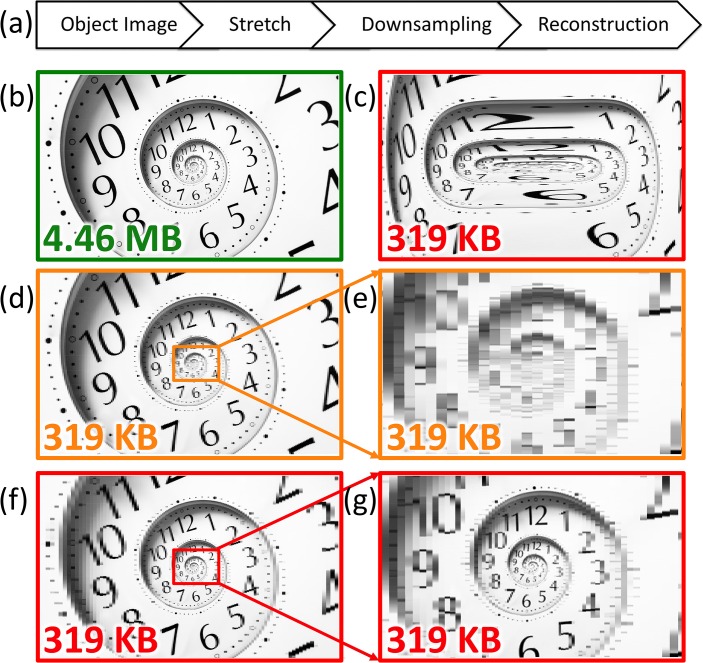
Time stretch imaging offers real-time image acquisition at millions of frames per second and subnanosecond shutter speed, and has enabled detection of rare cancer cells in blood with record throughput and specificity. An unintended consequence of high throughput image acquisition is the massive amount of digital data generated by the instrument. Here we report the first experimental demonstration of real-time optical image compression applied to time stretch imaging. By exploiting the sparsity of the image, we reduce the number of samples and the amount of data generated by the time stretch camera in our proof-of-concept experiments by about three times. Optical data compression addresses the big data predicament in such systems.
时间拉伸成像能够以每秒数百万帧的速度和亚纳秒级的快门速度进行实时图像采集,并已实现以创纪录的通量和特异性检测血液中的罕见癌细胞。高通量图像采集带来的一个意外后果是仪器产生的大量数字数据。在此,我们报告了将实时光学图像压缩应用于时间拉伸成像的首次实验演示。通过利用图像的稀疏性,我们在概念验证实验中将时间拉伸相机生成的样本数量和数据量减少了约三倍。光学数据压缩解决了此类系统中的大数据困境。