Kaup Markus, Dammann Christoph Heinrich, Schäfer Edgar, Dammaschke Till
Department of Operative Dentistry, Westphalian Wilhelms-University, Albert-Schweitzer-Campus 1, building W 30, 48149, Münster, Germany.
Central Interdisciplinary Ambulance in the School of Dentistry, Albert-Schweitzer-Campus 1, building W 30, 48149, Münster, Germany.
Head Face Med. 2015 Apr 19;11:14. doi: 10.1186/s13005-015-0071-z.
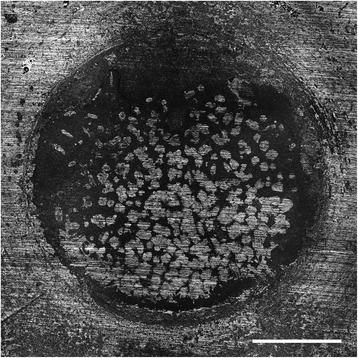
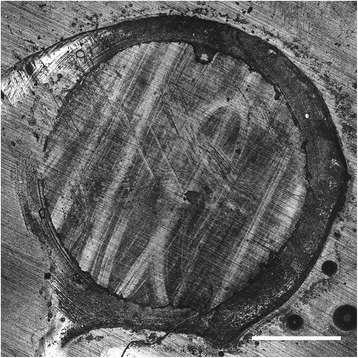
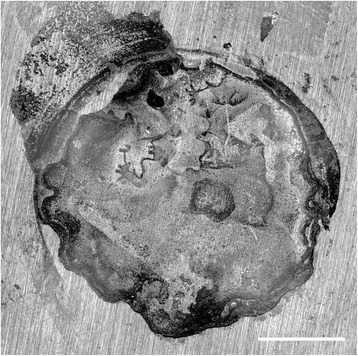
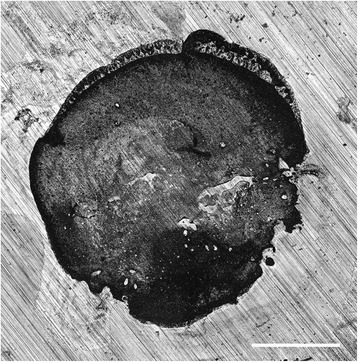
The aim of this study was to compare the shear bond strength of Biodentine, ProRoot MTA (MTA), glass ionomer cement (GIC) and composite resin (CR) on dentine.
120 extracted human third molars were embedded in cold-cured-resin and grinned down to the dentine. For each material 30 specimens were produced in standardised height and width and the materials were applied according to manufacturers´ instructions on the dentine samples. Only in the CR group a self-etching dentine-adhesive was used. In all other groups the dentine was not pre-treated. All specimens were stored at 37.5 °C and 100% humidity for 2d, 7d and 14d. With a testing device the shear bond strength was determined (separation of the specimens from the dentine surface). The statistical evaluation was performed using ANOVA and Tukey-test (p < 0.05).
At all observation periods the CR showed the significant highest shear bond strength (p < 0.05). After 2d significant differences in the shear bond strength were detectable between all tested materials, whereby CR had the highest and MTA the lowest values (p < 0.05). After 7d and 14d the shear bond strengths of MTA and Biodentine increased significantly compared to the 2d investigation period (p < 0.05). Biodentine showed a significantly higher shear bond strength than MTA (p < 0.05), while the difference between Biodentine and GIC was not significant (p > 0.05).
After 7d Biodentine showed comparable shear bond values than GIC, whereas the shear bond values for MTA were significantly lower even after 14d. The adhesion of Biodentine to dentine surface seams to be superior compared to that of MTA.
本研究的目的是比较生物活性玻璃陶瓷(Biodentine)、ProRoot 矿物三氧化物凝聚体(MTA)、玻璃离子水门汀(GIC)和复合树脂(CR)在牙本质上的剪切粘结强度。
将120颗拔除的人类第三磨牙嵌入冷固化树脂中,并打磨至牙本质。针对每种材料制作30个标准化高度和宽度的样本,并按照制造商的说明将材料应用于牙本质样本上。仅在CR组中使用了自酸蚀牙本质粘结剂。在所有其他组中,牙本质未进行预处理。所有样本在37.5°C和100%湿度下储存2天、7天和14天。使用测试装置测定剪切粘结强度(样本与牙本质表面分离)。采用方差分析和Tukey检验进行统计学评估(p < 0.05)。
在所有观察期内,CR显示出显著最高的剪切粘结强度(p < 0.05)。2天后,所有测试材料之间的剪切粘结强度存在显著差异,其中CR值最高,MTA值最低(p < 0.05)。与2天的观察期相比,7天和14天后MTA和生物活性玻璃陶瓷的剪切粘结强度显著增加(p < 0.05)。生物活性玻璃陶瓷显示出比MTA显著更高的剪切粘结强度(p < 0.05),而生物活性玻璃陶瓷和GIC之间的差异不显著(p > 0.05)。
7天后,生物活性玻璃陶瓷显示出与GIC相当的剪切粘结值,而即使在14天后,MTA的剪切粘结值仍显著较低。与MTA相比,生物活性玻璃陶瓷与牙本质表面的粘结似乎更优。