Al-Subari Karema, Al-Baddai Saad, Tomé Ana Maria, Volberg Gregor, Hammwöhner Rainer, Lang Elmar W
Department of Biology, Institute of Biophysics, University of Regensburg, Regensburg, Germany; Department of Linguistics, Literature and Culture, Institute of Information Science, University of Regensburg, Regensburg, Germany.
Department of Electrical Engineering, Telecommunication and Informatics, Institut of Electrical Engineering and Electronics, Universidade de Aveiro, Aveiro, Portugal.
PLoS One. 2015 Apr 24;10(4):e0119489. doi: 10.1371/journal.pone.0119489. eCollection 2015.
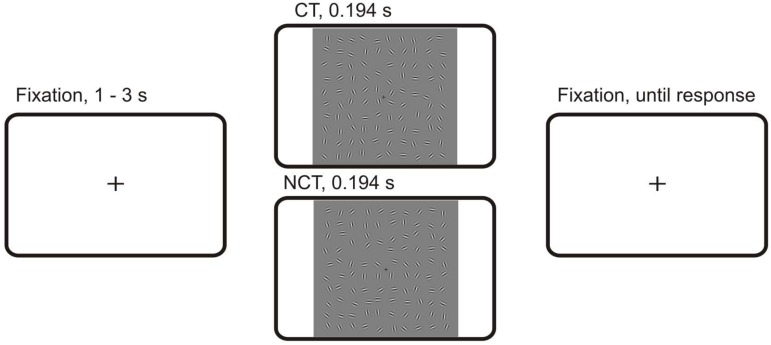
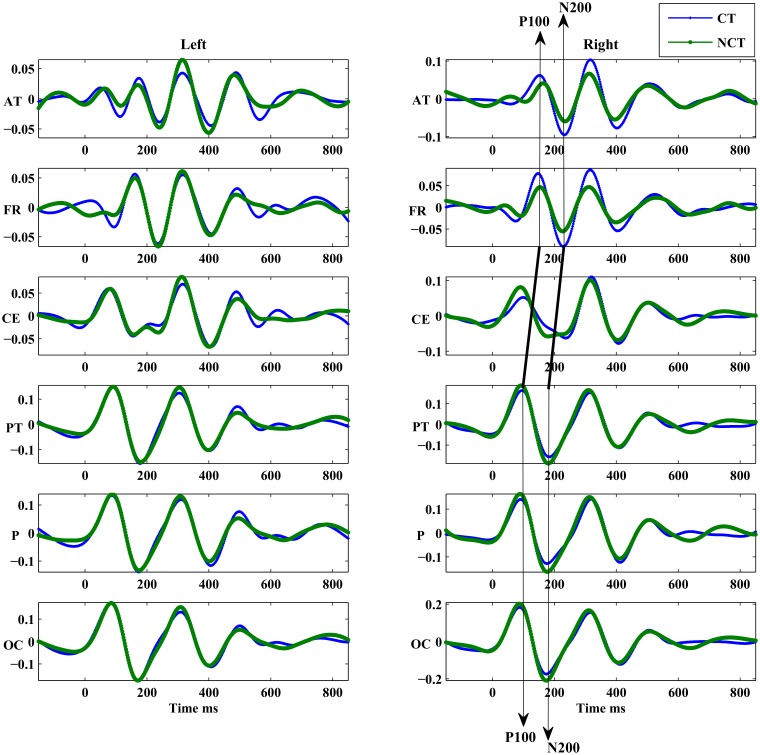
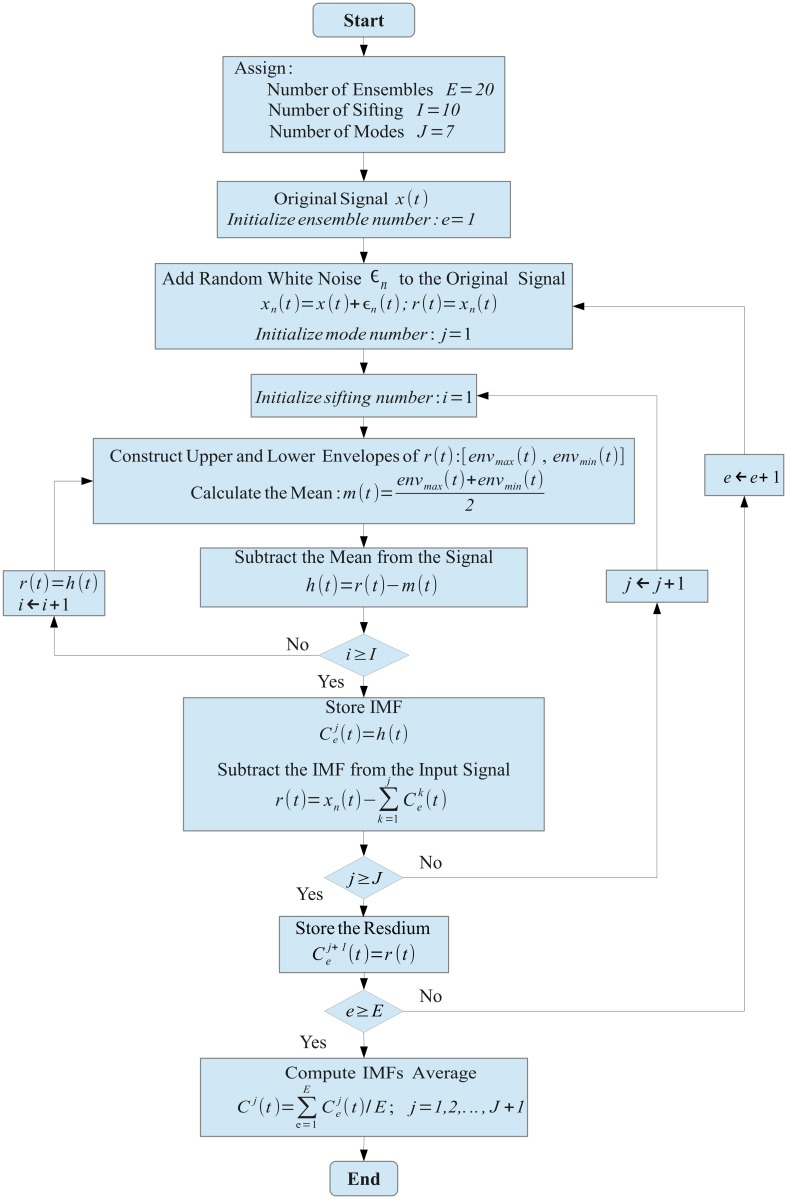
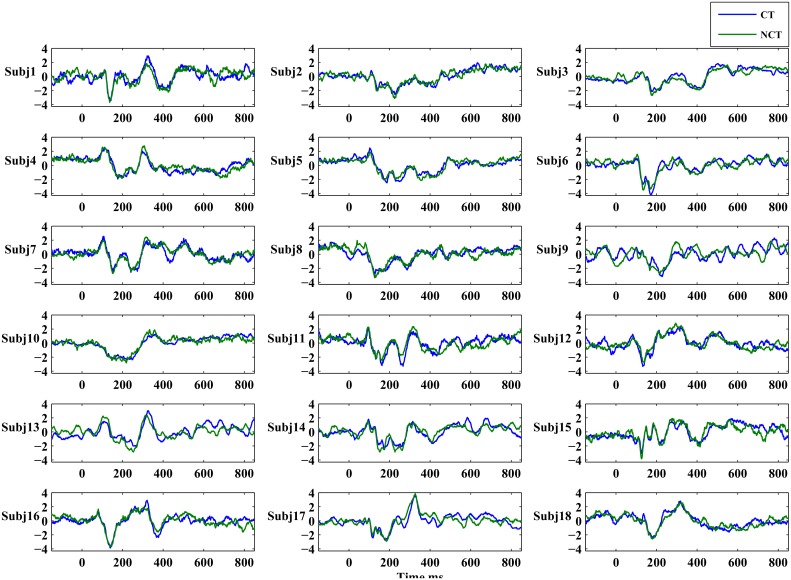
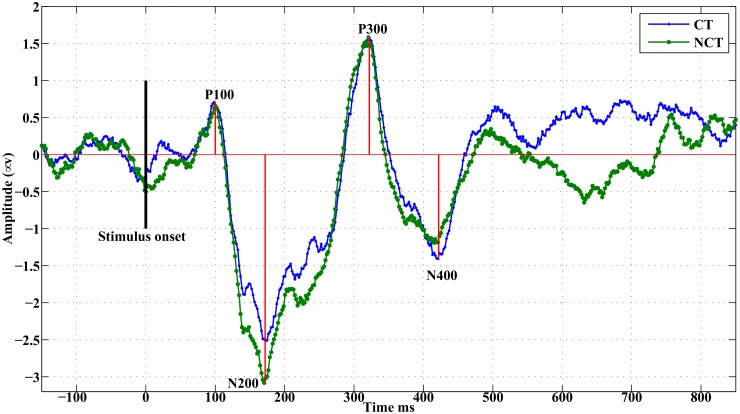
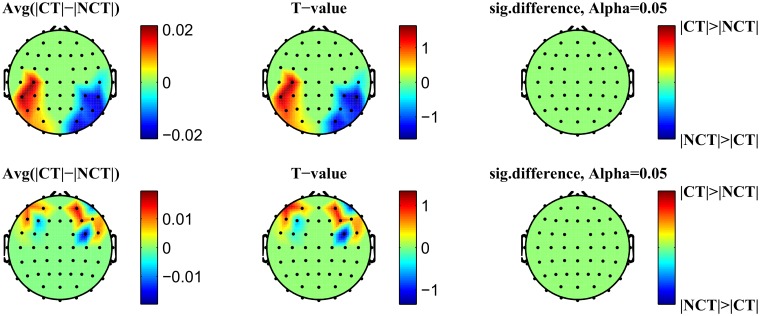
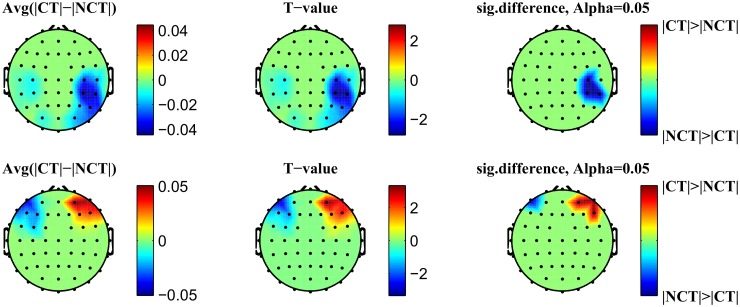
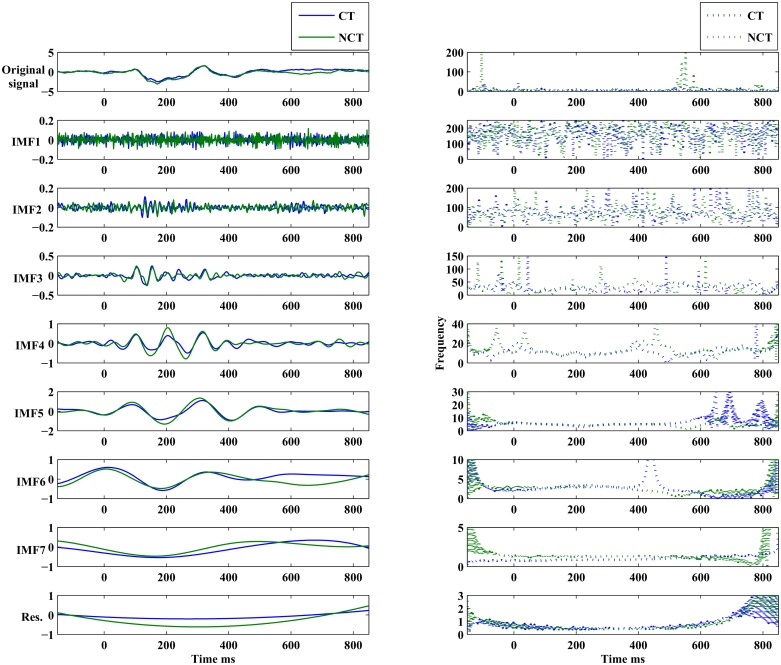
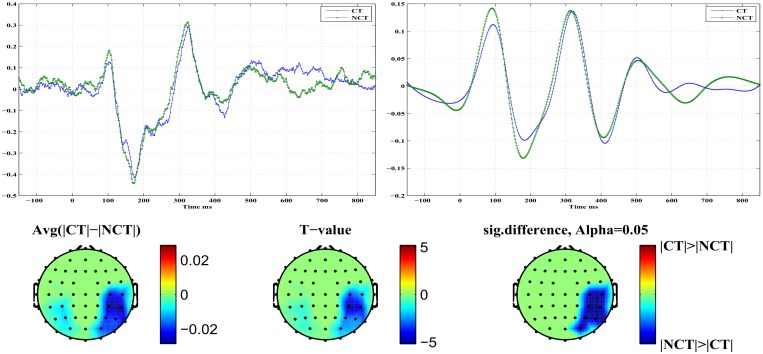
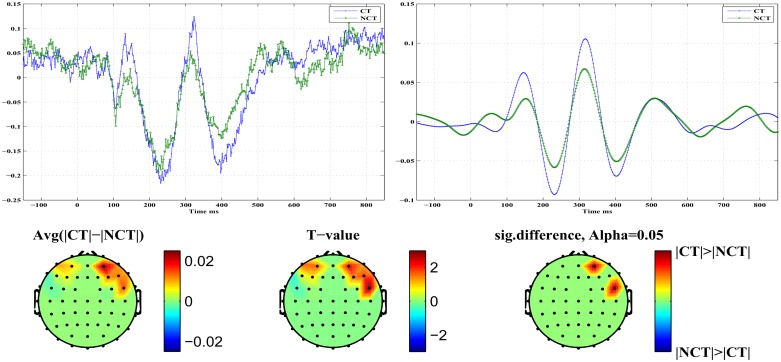
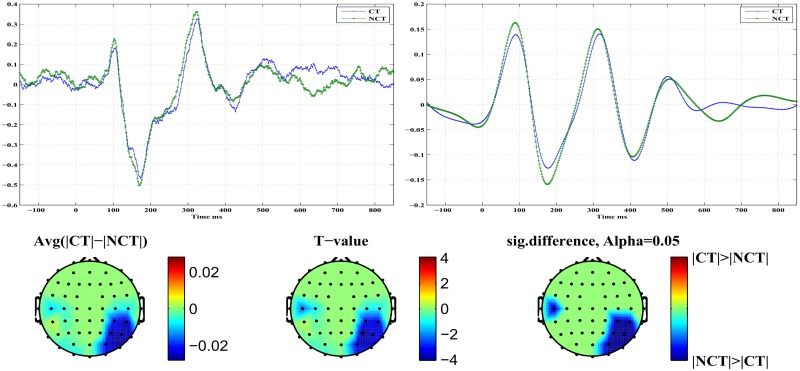
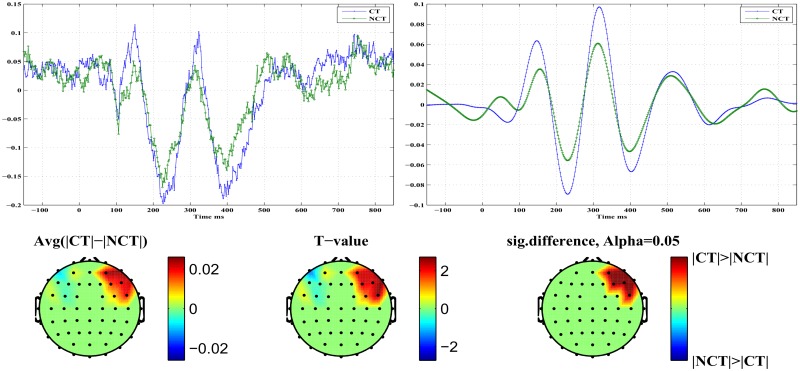
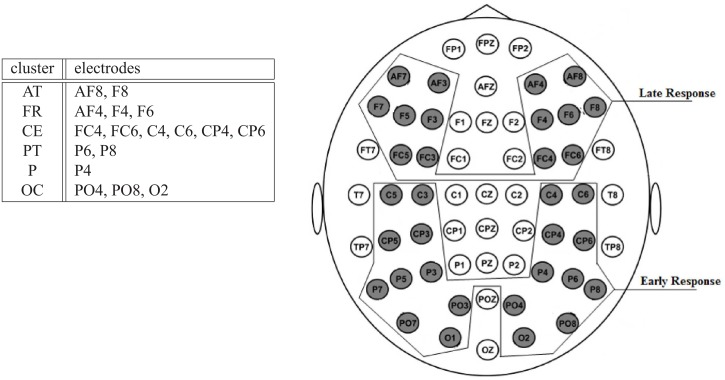
We discuss a data-driven analysis of EEG data recorded during a combined EEG/fMRI study of visual processing during a contour integration task. The analysis is based on an ensemble empirical mode decomposition (EEMD) and discusses characteristic features of event related modes (ERMs) resulting from the decomposition. We identify clear differences in certain ERMs in response to contour vs noncontour Gabor stimuli mainly for response amplitudes peaking around 100 [ms] (called P100) and 200 [ms] (called N200) after stimulus onset, respectively. We observe early P100 and N200 responses at electrodes located in the occipital area of the brain, while late P100 and N200 responses appear at electrodes located in frontal brain areas. Signals at electrodes in central brain areas show bimodal early/late response signatures in certain ERMs. Head topographies clearly localize statistically significant response differences to both stimulus conditions. Our findings provide an independent proof of recent models which suggest that contour integration depends on distributed network activity within the brain.
我们讨论了在一项脑电图/功能磁共振成像(EEG/fMRI)联合研究中记录的脑电图(EEG)数据的数据分析,该研究是关于轮廓整合任务期间的视觉处理。该分析基于总体经验模态分解(EEMD),并讨论了分解产生的事件相关模式(ERM)的特征。我们发现,对于轮廓与非轮廓Gabor刺激,某些ERM存在明显差异,主要体现在刺激开始后分别在约100毫秒(称为P100)和200毫秒(称为N200)达到峰值的响应幅度上。我们观察到,位于大脑枕叶区域的电极出现早期P100和N200响应,而位于额叶脑区的电极出现晚期P100和N200响应。在某些ERM中,位于大脑中央区域电极的信号显示出早期/晚期双峰响应特征。头部地形图清楚地定位了两种刺激条件下具有统计学意义的响应差异。我们的研究结果为最近的模型提供了独立的证据,这些模型表明轮廓整合依赖于大脑内的分布式网络活动。