Amani Jafar, Ahmadpour Askary, Imani Fooladi Abbas Ali, Nazarian Shahram
Applied Microbiology Research Center, Baqiyatallah University of Medical Sciences, Tehran, Iran.
Applied Microbiology Research Center, Baqiyatallah University of Medical Sciences, Tehran, Iran.
Braz J Infect Dis. 2015 May-Jun;19(3):278-84. doi: 10.1016/j.bjid.2015.02.008. Epub 2015 Apr 21.
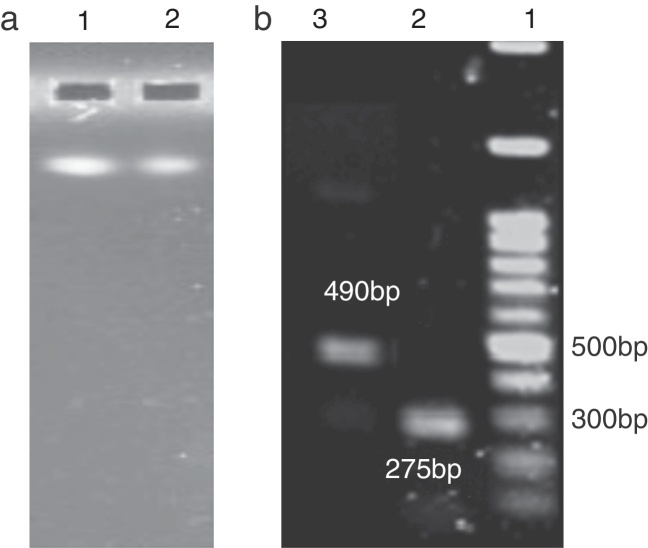
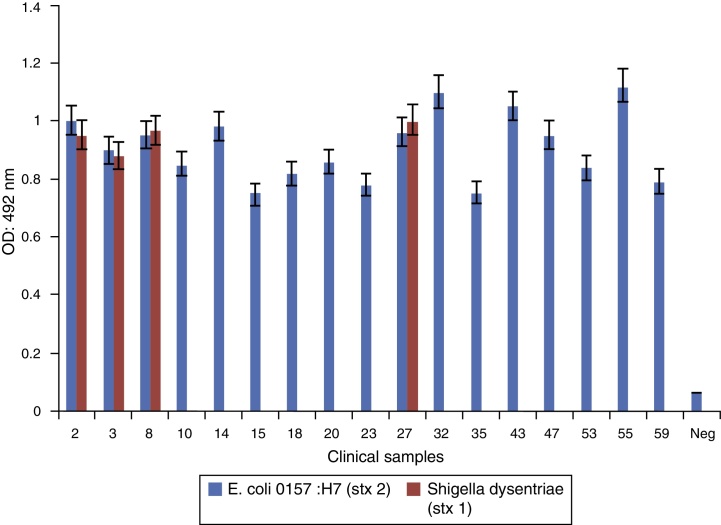
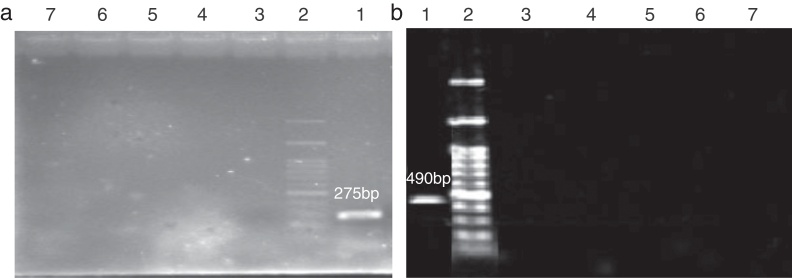
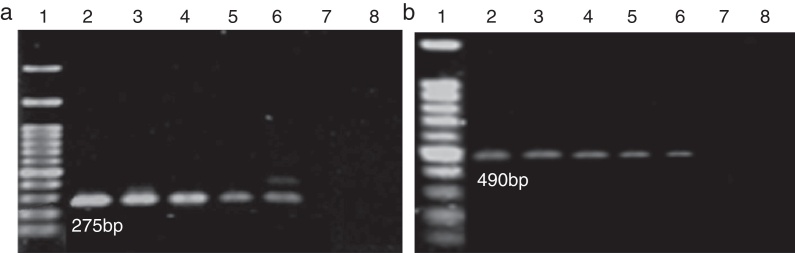
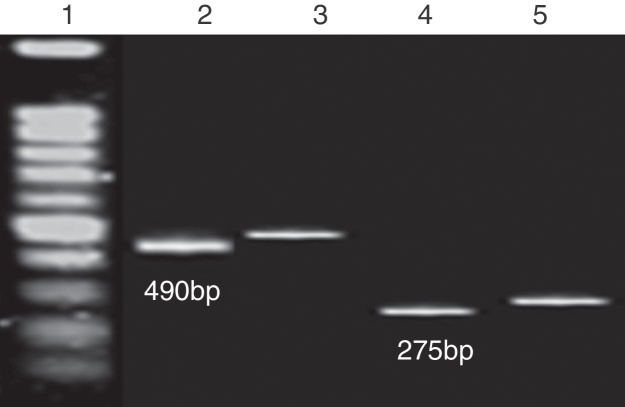
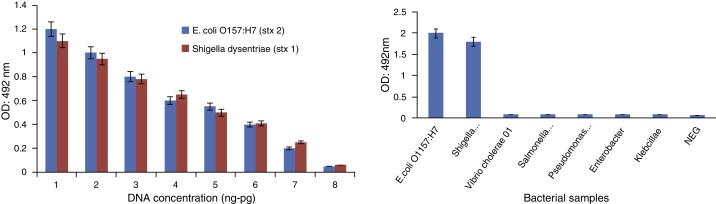
Shiga toxin producing bacteria are potential causes of serious human disease such as hemorrhagic colitis, severe inflammations of ileocolonic regions of gastrointestinal tract, thrombocytopenia, septicemia, malignant disorders in urinary ducts, hemolytic uremic syndrome (HUS). Shiga toxin 1 (stx1), shiga toxin 2 (stx2), or a combination of both are responsible for most clinical symptoms of these diseases. A lot of methods have been developed so far to detect shiga toxins such as cell culture, ELISA, and RFPLA, but due to high costs and labor time in addition to low sensitivity, they have not received much attention. In this study, PCR-ELISA method was used to detect genes encoding shiga toxins1 and 2 (stx1 and stx2). To detect stx1 and stx2 genes, two primer pairs were designed for Multiplex-PCR then PCR-ELISA. PCR products (490 and 275, respectively) were subsequently verified by sequencing. Sensitivity and specificity of PCR-ELISA method were determined by using genome serial dilution and Enterobacteria strains. PCR-ELISA method used in this study proved to be a rapid and precise approach to detect different types of shiga toxins and can be used to detect bacterial genes encoding shiga toxins.
产志贺毒素细菌是导致人类严重疾病的潜在病因,如出血性结肠炎、胃肠道回结肠区域的严重炎症、血小板减少症、败血症、尿道恶性疾病、溶血性尿毒综合征(HUS)。志贺毒素1(stx1)、志贺毒素2(stx2)或两者的组合是这些疾病大多数临床症状的病因。到目前为止,已经开发了许多检测志贺毒素的方法,如细胞培养、酶联免疫吸附测定(ELISA)和限制性片段长度多态性分析(RFPLA),但由于成本高、耗时且灵敏度低,它们并未受到太多关注。在本研究中,采用聚合酶链反应-酶联免疫吸附测定(PCR-ELISA)方法检测编码志贺毒素1和2(stx1和stx2)的基因。为了检测stx1和stx2基因,设计了两对引物用于多重聚合酶链反应(Multiplex-PCR),然后进行PCR-ELISA。随后通过测序验证PCR产物(分别为490和275)。通过使用基因组系列稀释和肠杆菌菌株来确定PCR-ELISA方法的灵敏度和特异性。本研究中使用的PCR-ELISA方法被证明是一种快速、精确的检测不同类型志贺毒素的方法,可用于检测编码志贺毒素的细菌基因。