Louis Julien, Schaal Karine, Bieuzen François, Le Meur Yann, Filliard Jean-Robert, Volondat Marielle, Brisswalter Jeanick, Hausswirth Christophe
Research Department, Sport Expertise and Performance (SEP) Laboratory, French National Institute of Sport, Expertise and Performance (INSEP), Paris, France.
Research Department, Sport Expertise and Performance (SEP) Laboratory, French National Institute of Sport, Expertise and Performance (INSEP), Paris, France; Sports Performance Laboratory, Sports Medicine Program, University of California Davis, Sacramento, California, United States of America.
PLoS One. 2015 Apr 27;10(4):e0124776. doi: 10.1371/journal.pone.0124776. eCollection 2015.
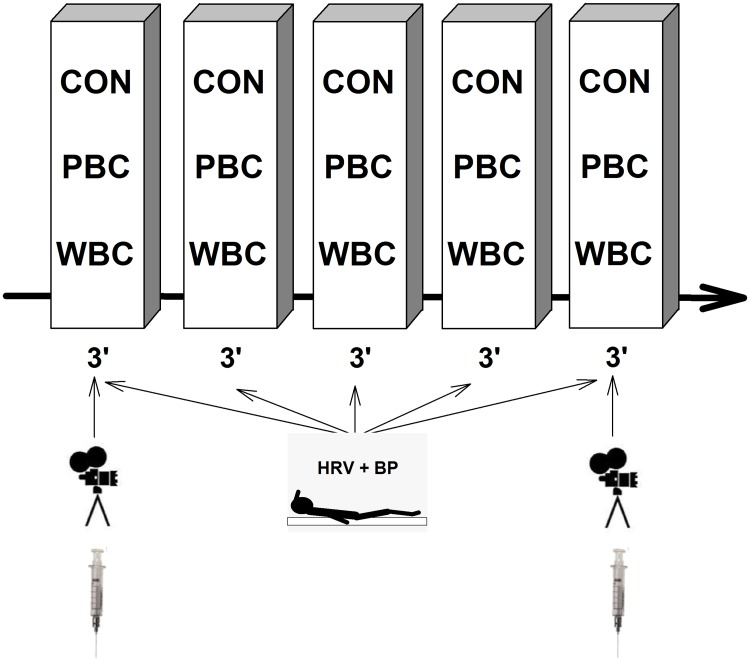
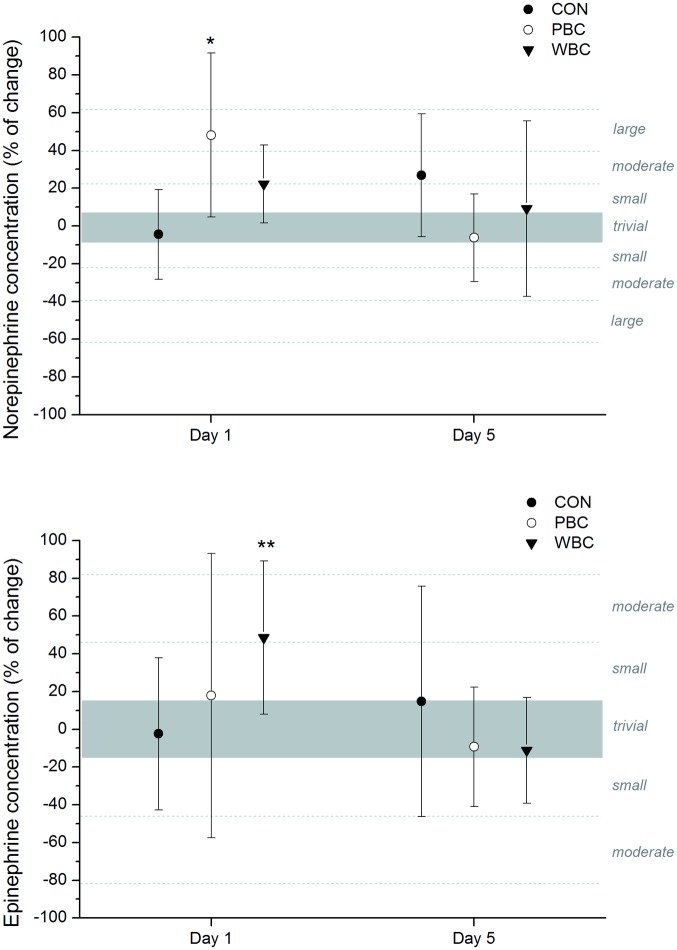
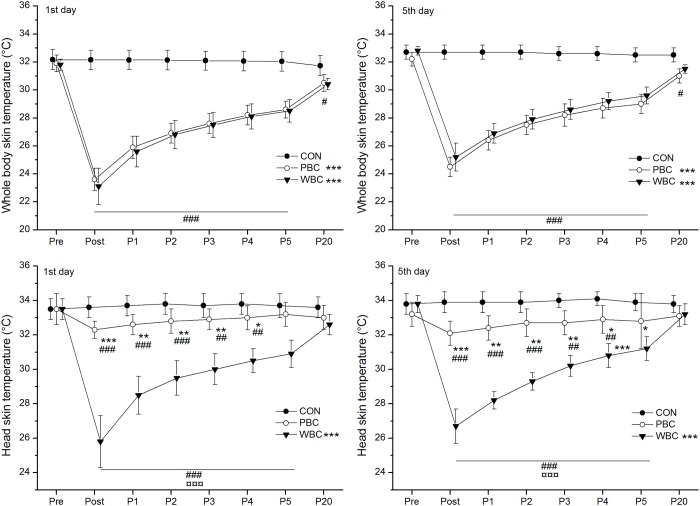
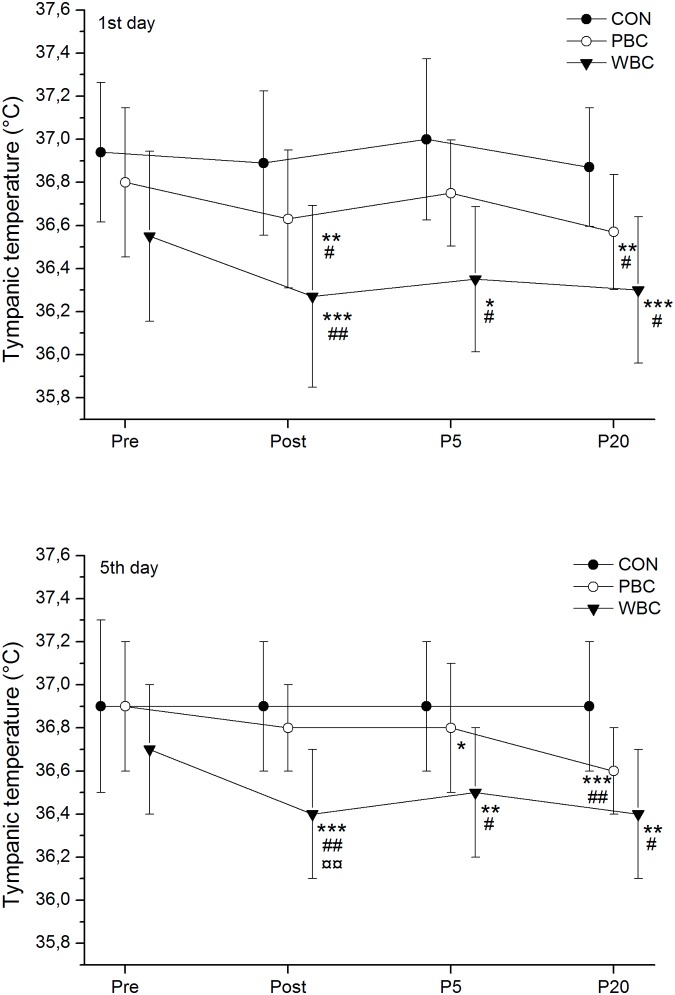
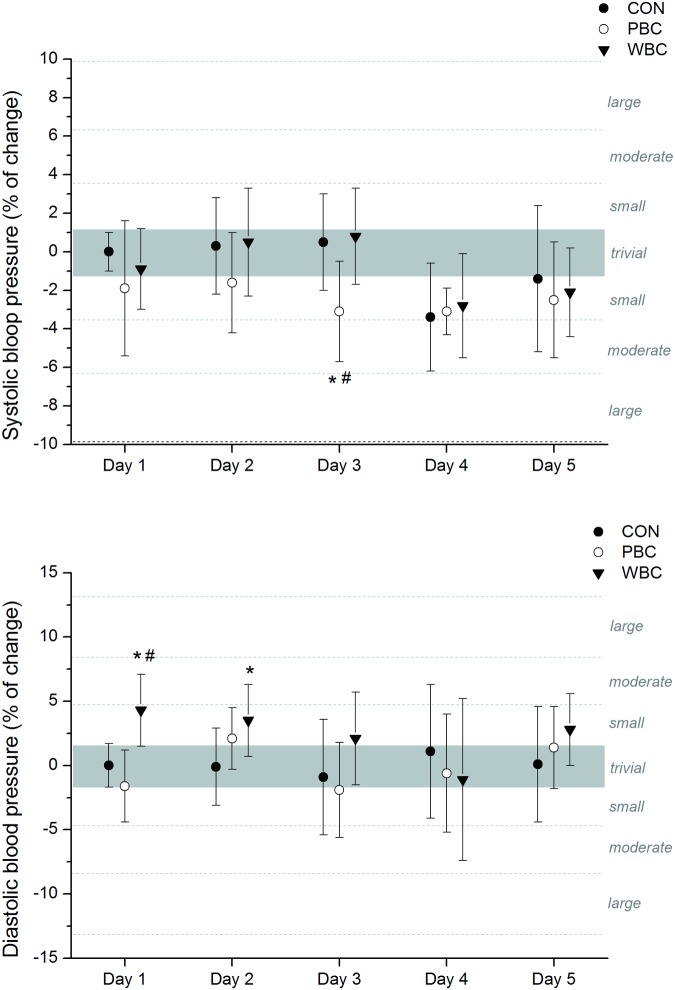
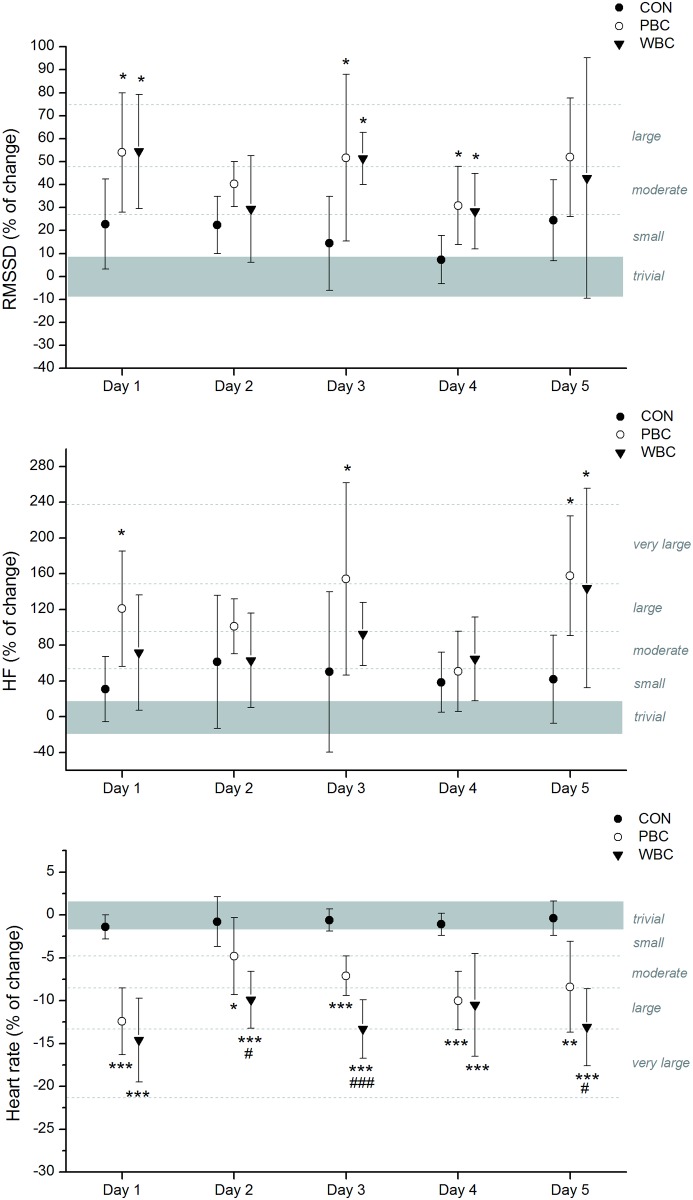
Recent research on whole-body cryotherapy has hypothesized a major responsibility of head cooling in the physiological changes classically reported after a cryostimulation session. The aim of this experiment was to verify this hypothesis by studying the influence of exposing the head to cold during whole-body cryostimulation sessions, on the thermal response and the autonomic nervous system (ANS). Over five consecutive days, two groups of 10 participants performed one whole-body cryostimulation session daily, in one of two different systems; one exposing the whole-body to cold (whole-body cryostimulation, WBC), and the other exposing the whole-body except the head (partial-body cryostimulation, PBC).10 participants constituted a control group (CON) not receiving any cryostimulation. In order to isolate the head-cooling effect on recorded variables, it was ensured that the WBC and PBC systems induced the same decrease in skin temperature for all body regions (mean decrease over the 5 exposures: -8.6°C ± 1.3°C and -8.3 ± 0.7°C for WBC and PBC, respectively), which persisted up to 20-min after the sessions (P20). The WBC sessions caused an almost certain decrease in tympanic temperature from Pre to P20 (-0.28 ± 0.11°C), while it only decreased at P20 (-0.14 ± 0.05°C) after PBC sessions. Heart rate almost certainly decreased after PBC (-8.6%) and WBC (-12.3%) sessions. Resting vagal-related heart rate variability indices (the root-mean square difference of successive normal R-R intervals, RMSSD, and high frequency band, HF) were very likely to almost certainly increased after PBC (RMSSD:+49.1%, HF: +123.3%) and WBC (RMSSD: +38.8%, HF:+70.3%). Plasma norepinephrine concentration was likely increased in similar proportions after PBC and WBC, but only after the first session. Both cryostimulation techniques stimulated the ANS with a predominance of parasympathetic tone activation from the first to the fifth session and in slightly greater proportion with WBC than PBC. The main result of this study indicates that the head exposure to cold during whole-body cryostimulation may not be the main factor responsible for the effects of cryostimulation on the ANS.
近期关于全身冷冻疗法的研究推测,在冷冻刺激疗程后经典报道的生理变化中,头部降温起主要作用。本实验的目的是通过研究在全身冷冻刺激疗程中头部暴露于寒冷环境对热反应和自主神经系统(ANS)的影响,来验证这一假设。连续五天,两组各10名参与者每天在两种不同系统之一中进行一次全身冷冻刺激疗程;一组使全身暴露于寒冷环境(全身冷冻刺激,WBC),另一组使除头部外的全身暴露于寒冷环境(局部冷冻刺激,PBC)。10名参与者组成一个对照组(CON),不接受任何冷冻刺激。为了分离头部降温对记录变量的影响,确保WBC和PBC系统在所有身体部位引起相同程度的皮肤温度下降(5次暴露的平均下降幅度:WBC为-8.6°C±1.3°C,PBC为-8.3±0.7°C),且这种下降在疗程结束后持续长达20分钟(P20)。WBC疗程导致鼓膜温度从刺激前到P20几乎必然下降(-0.28±0.11°C),而PBC疗程仅在P20时下降(-0.14±0.05°C)。PBC(-8.6%)和WBC(-12.3%)疗程后心率几乎必然下降。静息时与迷走神经相关的心率变异性指标(连续正常R-R间期的均方根差,RMSSD,以及高频波段,HF)在PBC(RMSSD:+49.1%,HF:+123.3%)和WBC(RMSSD:+38.8%,HF:+70.3%)疗程后极有可能到几乎必然增加。PBC和WBC后血浆去甲肾上腺素浓度可能以相似比例增加,但仅在第一次疗程后。两种冷冻刺激技术均刺激了ANS,从第一次到第五次疗程,副交感神经张力激活占主导,且WBC的激活比例略高于PBC。本研究的主要结果表明,全身冷冻刺激期间头部暴露于寒冷环境可能不是冷冻刺激对ANS产生影响的主要因素。