Pereira Filipa, Azevedo Flávio, Carvalho Ângela, Ribeiro Gabriela F, Budde Mark W, Johansson Björn
CBMA, Campus de Gualtar, University of Minho, Braga, Portugal.
Division of Biology and Biological Engineering, California Institute of Technology, Pasadena, California, USA.
BMC Bioinformatics. 2015 May 2;16(1):142. doi: 10.1186/s12859-015-0544-x.
Recent advances in synthetic biology have provided tools to efficiently construct complex DNA molecules which are an important part of many molecular biology and biotechnology projects. The planning of such constructs has traditionally been done manually using a DNA sequence editor which becomes error-prone as scale and complexity of the construction increase. A human-readable formal description of cloning and assembly strategies, which also allows for automatic computer simulation and verification, would therefore be a valuable tool.
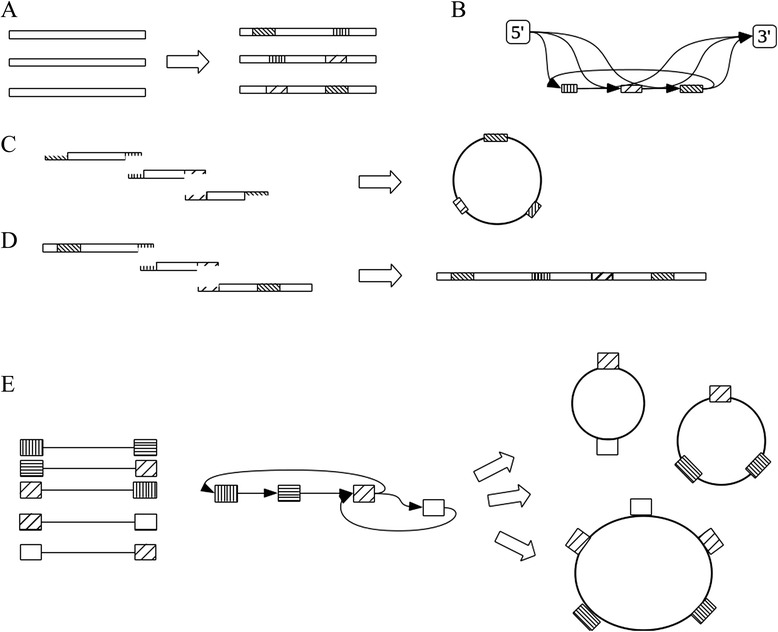
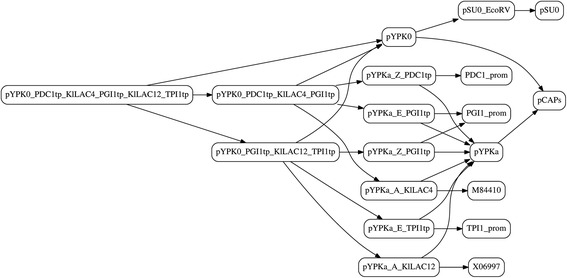
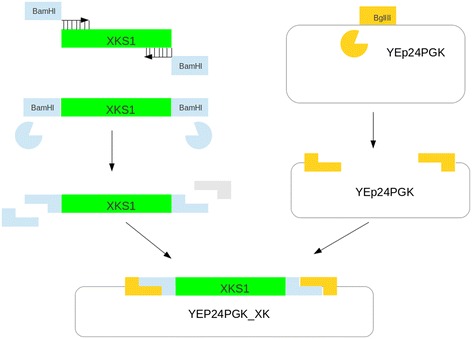
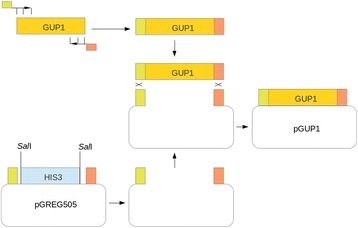
We have developed pydna, an extensible, free and open source Python library for simulating basic molecular biology DNA unit operations such as restriction digestion, ligation, PCR, primer design, Gibson assembly and homologous recombination. A cloning strategy expressed as a pydna script provides a description that is complete, unambiguous and stable. Execution of the script automatically yields the sequence of the final molecule(s) and that of any intermediate constructs. Pydna has been designed to be understandable for biologists with limited programming skills by providing interfaces that are semantically similar to the description of molecular biology unit operations found in literature.
Pydna simplifies both the planning and sharing of cloning strategies and is especially useful for complex or combinatorial DNA molecule construction. An important difference compared to existing tools with similar goals is the use of Python instead of a specifically constructed language, providing a simulation environment that is more flexible and extensible by the user.
合成生物学的最新进展提供了有效构建复杂DNA分子的工具,这些分子是许多分子生物学和生物技术项目的重要组成部分。传统上,此类构建体的设计是使用DNA序列编辑器手动完成的,随着构建规模和复杂性的增加,这种方式容易出错。因此,一种人类可读的克隆和组装策略的形式化描述,同时还能实现自动计算机模拟和验证,将是一种有价值的工具。
我们开发了pydna,这是一个可扩展、免费且开源的Python库,用于模拟基本分子生物学DNA单元操作,如限制性酶切、连接、PCR、引物设计、吉布森组装和同源重组。以pydna脚本表示的克隆策略提供了完整、明确且稳定的描述。执行该脚本会自动生成最终分子及任何中间构建体的序列。通过提供与文献中分子生物学单元操作描述在语义上相似的接口,pydna被设计为便于编程技能有限的生物学家理解。
pydna简化了克隆策略的规划和共享,对于复杂或组合式DNA分子构建尤其有用。与具有类似目标的现有工具相比,一个重要的区别在于使用Python而非专门构建的语言,从而提供了一个用户更灵活且可扩展的模拟环境。