Haque Mohammad M, Alsareii Saeed A
Department of Preventive Dental Sciences, College of Dentistry, Najran University, PO Box 1988, Najran 61441, Kingdom of Saudi Arabia. E-mail.
Saudi Med J. 2015 May;36(5):530-43. doi: 10.15537/smj.2015.5.10785.
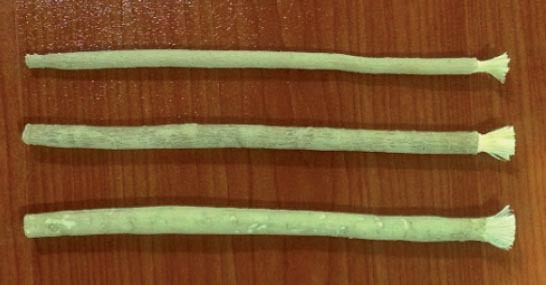
Miswak is a traditional chewing stick prepared from the roots, twigs, and stem of Salvadora persica and has been used as a natural method for tooth cleaning in many parts of the world for thousands of years. A number of scientific studies have demonstrated that the miswak (Salvadora persica) possesses antibacterial, anti-fungal, anti-viral, anti-cariogenic, and anti-plaque properties. Several studies have also claimed that miswak has anti-oxidant, analgesic, and anti-inflammatory effects. The use of a miswak has an immediate effect on the composition of saliva. Several clinical studies have confirmed that the mechanical and chemical cleansing efficacy of miswak chewing sticks are equal and at times greater than that of the toothbrush. The present article provides a review of the various therapeutic effects of Salvadora persica on oral health, which will help to elucidate the significance and importance of this indigenous oral hygiene tool.
阿拉伯树胶棒是一种由佩里扁桃的根、嫩枝和茎制成的传统咀嚼棒,数千年来在世界许多地区一直被用作牙齿清洁的天然方法。多项科学研究表明,阿拉伯树胶棒(佩里扁桃)具有抗菌、抗真菌、抗病毒、抗致龋和抗牙菌斑特性。多项研究还称,阿拉伯树胶棒具有抗氧化、止痛和抗炎作用。使用阿拉伯树胶棒对唾液成分有即时影响。多项临床研究证实,阿拉伯树胶棒的机械和化学清洁效果相同,有时甚至优于牙刷。本文综述了佩里扁桃对口腔健康的各种治疗作用,这将有助于阐明这种本土口腔卫生工具的意义和重要性。