Upshaw Michaela B, Bernier Raphael A, Sommerville Jessica A
Department of Psychology, University of Washington, USA.
Department of Psychiatry, University of Washington, USA.
Dev Sci. 2016 Mar;19(2):195-207. doi: 10.1111/desc.12308. Epub 2015 May 1.
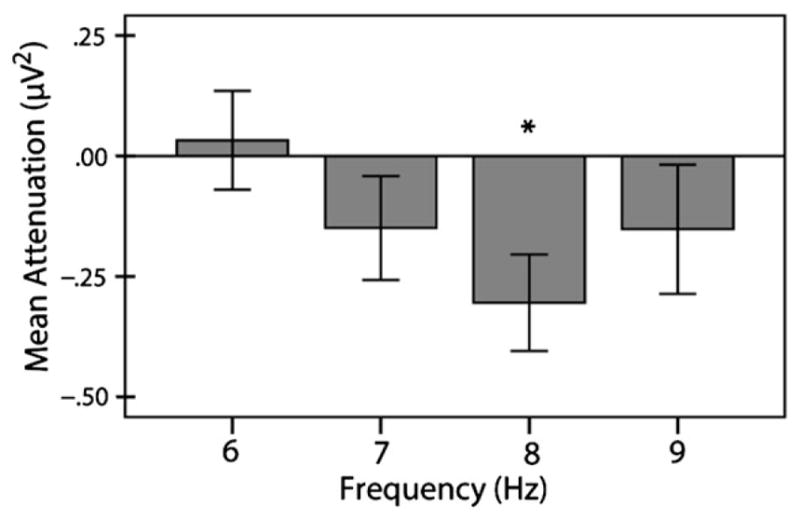
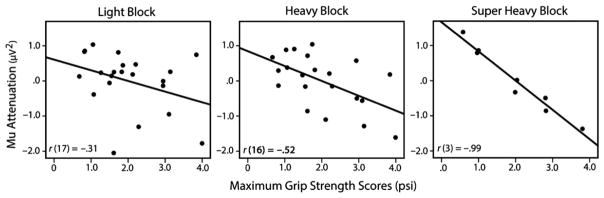
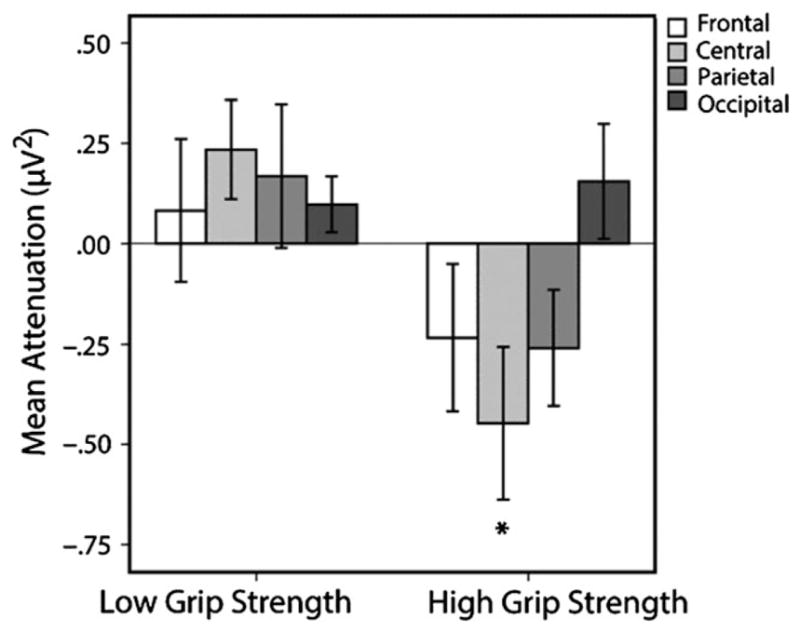
Research has established that the body is fundamentally involved in perception: bodily experience influences activation of the shared neural system underlying action perception and production during action observation, and bodily characteristics influence perception of the spatial environment. However, whether bodily characteristics influence action perception and its underlying neural system is unknown, particularly in early ontogeny. We measured grip strength in 12-month-old infants and investigated relations with mu rhythm attenuation, an electroencephalographic correlate of the neural system underlying action perception, during observation of lifting actions performed with differently weighted blocks. We found that infants with higher grip strength exhibited significant mu attenuation during observation of lifting actions, whereas infants with lower grip strength did not. Moreover, a progressively strong relation between grip strength and mu attenuation during observation of lifts was found with increased block weight. We propose that this relation is attributable to differences in infants' ability to recognize the effort associated with lifting objects of different weights, as a consequence of their developing strength. Together, our results extend the body's role in perception by demonstrating that bodily characteristics influence action perception by shaping the activation of its underlying neural system.
身体体验会影响动作观察期间动作感知与产生背后共享神经系统的激活,身体特征会影响对空间环境的感知。然而,身体特征是否会影响动作感知及其潜在的神经系统尚不清楚,尤其是在个体发育早期。我们测量了12个月大婴儿的握力,并在观察用不同重量的积木进行的举升动作时,研究了握力与μ节律衰减(动作感知背后神经系统的脑电图相关指标)之间的关系。我们发现,握力较强的婴儿在观察举升动作时表现出显著的μ节律衰减,而握力较弱的婴儿则没有。此外,随着积木重量增加,观察举升动作时握力与μ节律衰减之间的关系逐渐增强。我们认为这种关系归因于婴儿识别举起不同重量物体所需努力的能力差异,这是其力量发展的结果。总之,我们的研究结果通过证明身体特征通过塑造其潜在神经系统的激活来影响动作感知,扩展了身体在感知中的作用。