Tan Lit-Yeen, Whitfield Peter, Llorian Miriam, Monzon-Casanova Elisa, Diaz-Munoz Manuel D, Turner Martin, Smith Christopher W J
Department of Biochemistry, University of Cambridge, Tennis Court Road, Cambridge CB2 1QW, UK.
Department of Biochemistry, University of Cambridge, Tennis Court Road, Cambridge CB2 1QW, UK Laboratory of Lymphocyte Signalling and Development, The Babraham Institute, Babraham Research Campus, CB22 3AT, UK.
Nucleic Acids Res. 2015 Jun 23;43(11):5586-600. doi: 10.1093/nar/gkv429. Epub 2015 May 4.
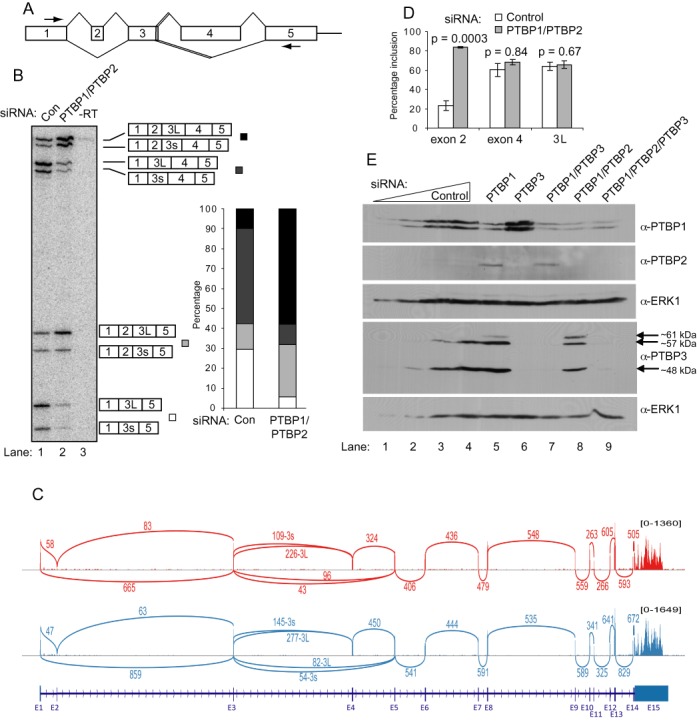
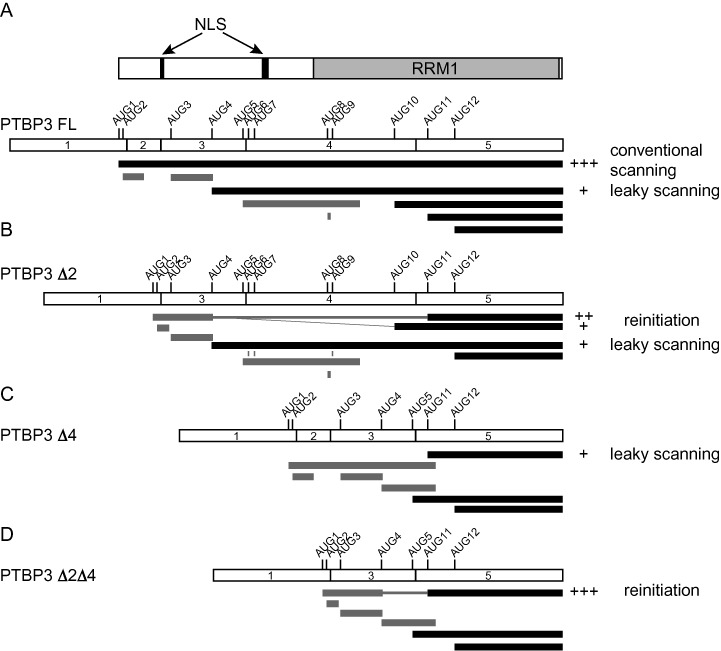
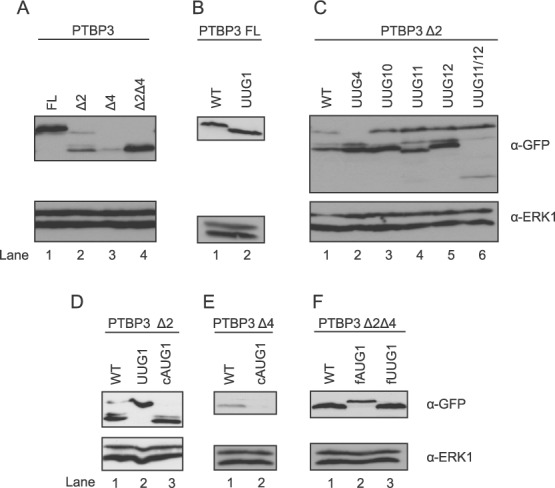
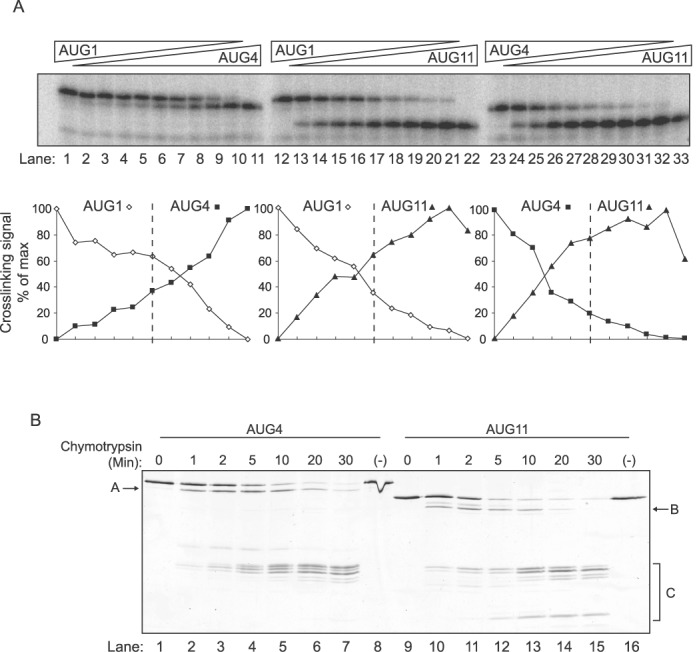
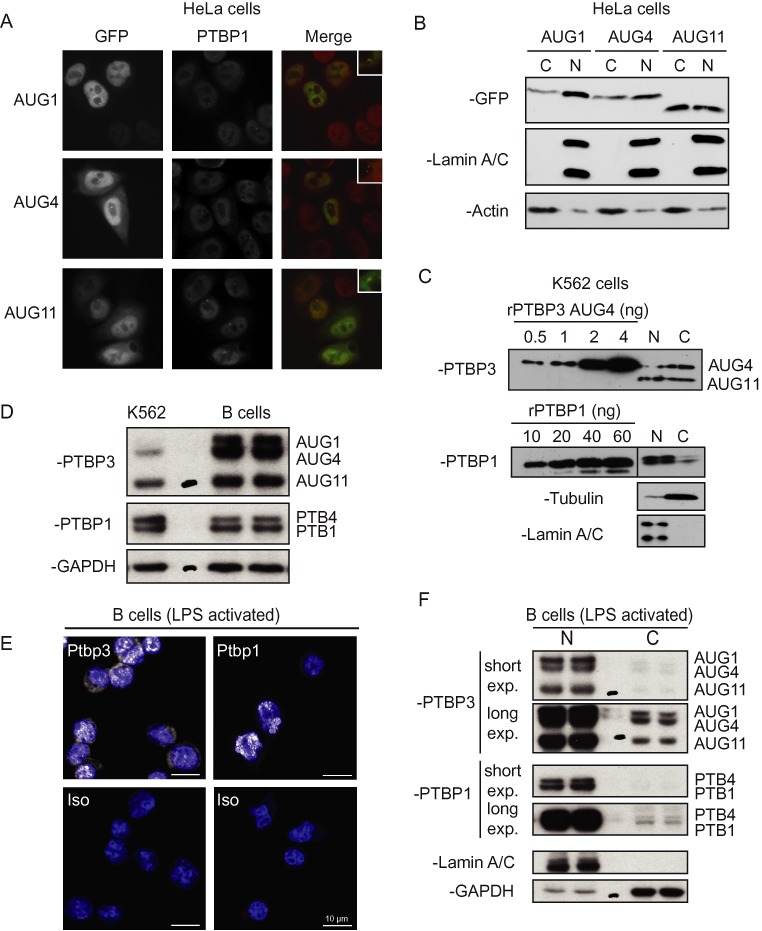
Polypyrimidine tract binding protein (PTBP1) is a widely expressed RNA binding protein that acts as a regulator of alternative splicing and of cytoplasmic mRNA functions. Vertebrates contain two closely-related paralogs with >75% amino acid sequence identity. Early replacement of PTBP1 by PTBP2 during neuronal differentiation causes a concerted set of splicing changes. By comparison, very little is known about the molecular functions or physiological roles of PTBP3, although its expression and conservation throughout the vertebrates suggest a role in haematopoietic cells. To begin to understand its functions we have characterized the mRNA and protein isoform repertoire of PTBP3. Combinatorial alternative splicing events at the 5' end of the gene allow for the generation of eight mRNA and three major protein isoforms. Individual mRNAs generate up to three protein isoforms via alternative translation initiation by re-initiation and leaky scanning using downstream AUG codons. The N-terminally truncated PTBP3 isoforms lack nuclear localization signals and/or most of the RRM1 domain and vary in their RNA binding properties and nuclear/cytoplasmic distribution, suggesting that PTBP3 may have major post-transcriptional cytoplasmic roles. Our findings set the stage for understanding the non-redundant physiological roles of PTBP3.
聚嘧啶序列结合蛋白(PTBP1)是一种广泛表达的RNA结合蛋白,它作为可变剪接和细胞质mRNA功能的调节因子发挥作用。脊椎动物含有两个密切相关的旁系同源物,氨基酸序列同一性大于75%。在神经元分化过程中,PTBP2早期替代PTBP1会导致一系列协同的剪接变化。相比之下,尽管PTBP3在整个脊椎动物中的表达和保守性表明它在造血细胞中起作用,但对其分子功能或生理作用知之甚少。为了开始了解其功能,我们对PTBP3的mRNA和蛋白质异构体库进行了表征。该基因5'端的组合可变剪接事件可产生8种mRNA和3种主要蛋白质异构体。单个mRNA通过重新起始和使用下游AUG密码子的渗漏扫描,通过可变翻译起始产生多达三种蛋白质异构体。N端截短的PTBP3异构体缺乏核定位信号和/或大部分RRM1结构域,并且其RNA结合特性和核/细胞质分布各不相同,这表明PTBP3可能在转录后细胞质中发挥主要作用。我们的研究结果为理解PTBP3的非冗余生理作用奠定了基础。