Kovalchuk Andriy, Raffaello Tommaso, Jaber Emad, Keriö Susanna, Ghimire Rajendra, Lorenz W Walter, Dean Jeffrey F D, Holopainen Jarmo K, Asiegbu Fred O
Department of Forest Sciences, University of Helsinki, P.O. Box 27, FIN-00014, Helsinki, Finland.
Department of Environmental Science, University of Eastern Finland, P.O. Box 1627, FIN-70211, Kuopio, Finland.
BMC Genomics. 2015 May 6;16(1):352. doi: 10.1186/s12864-015-1546-9.
During their lifetime, conifer trees are exposed to numerous herbivorous insects. To protect themselves against pests, trees have developed a broad repertoire of protective mechanisms. Many of the plant's defence reactions are activated upon an insect attack, and the underlying regulatory mechanisms are not entirely understood yet, in particular in conifer trees. Here, we present the results of our studies on the transcriptional response and the volatile compounds production of Scots pine (Pinus sylvestris) upon the large pine weevil (Hylobius abietis) feeding.
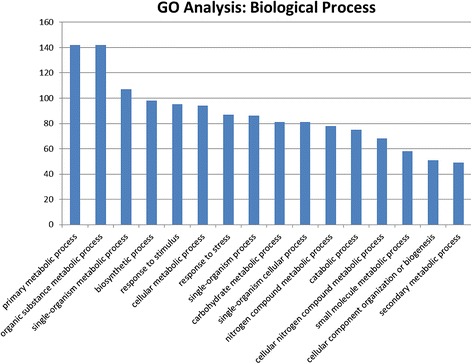
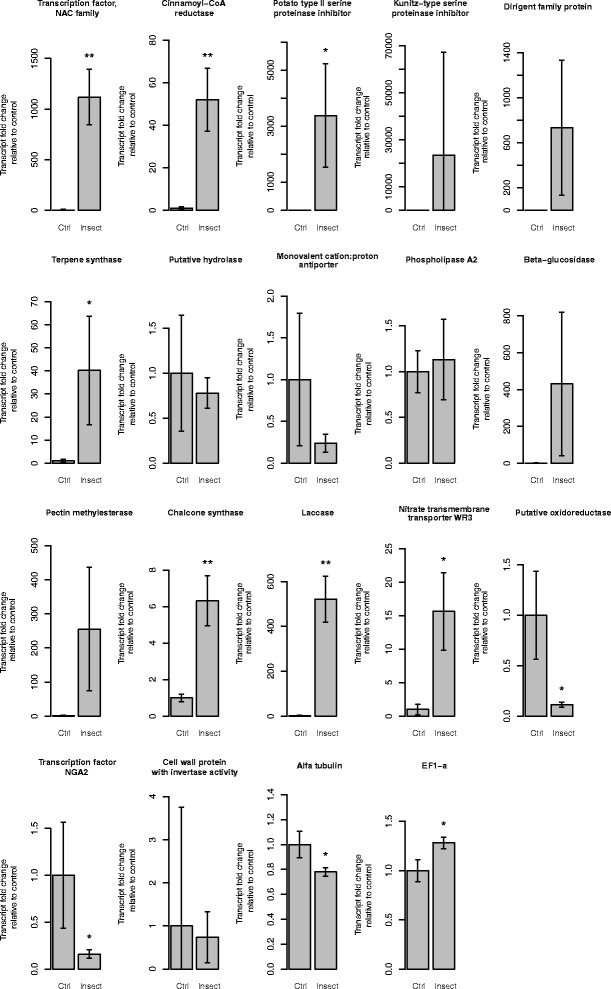
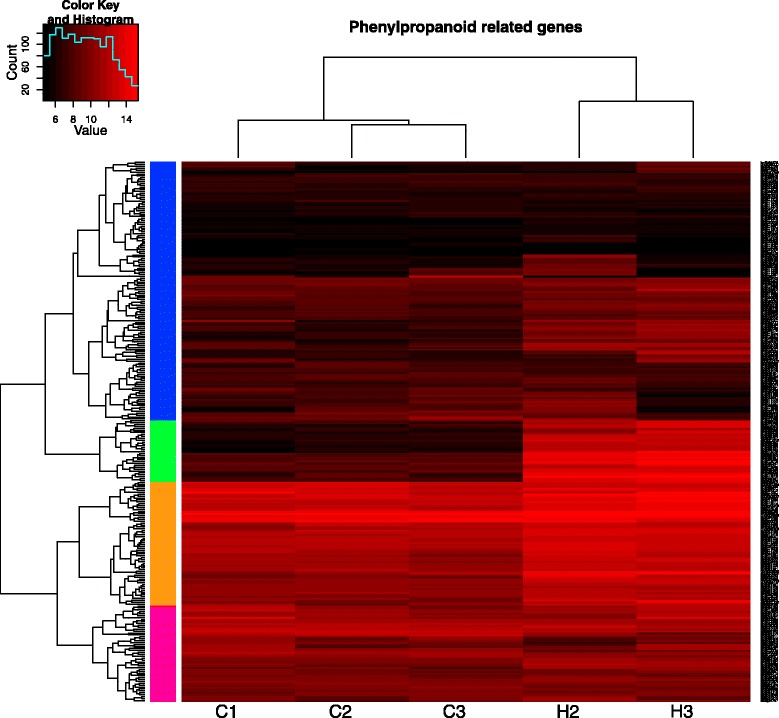
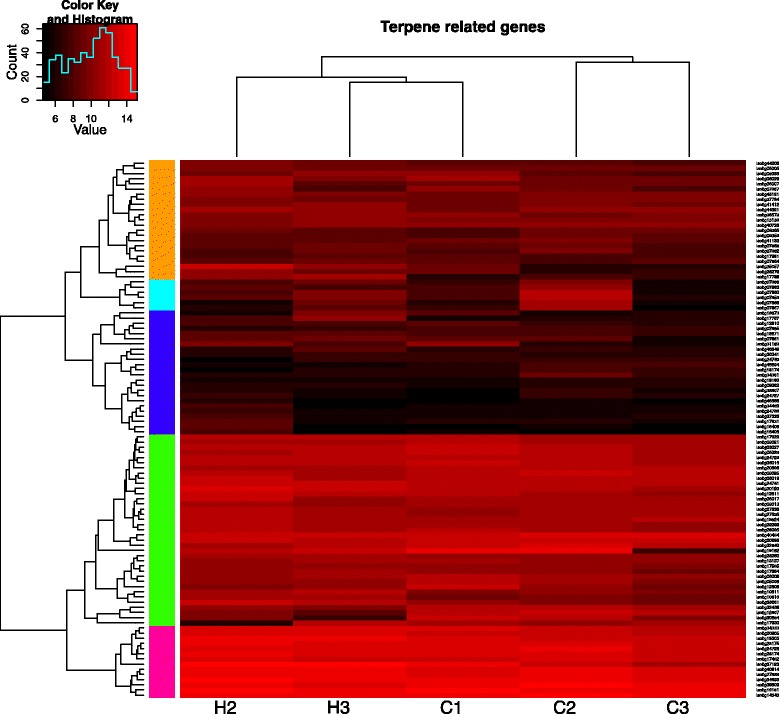
Transcriptional response of Scots pine to the weevil attack was investigated using a novel customised 36.4 K Pinus taeda microarray. The weevil feeding caused large-scale changes in the pine transcriptome. In total, 774 genes were significantly up-regulated more than 4-fold (p≤0.05), whereas 64 genes were significantly down-regulated more than 4-fold. Among the up-regulated genes, we could identify genes involved in signal perception, signalling pathways, transcriptional regulation, plant hormone homeostasis, secondary metabolism and defence responses. The weevil feeding on stem bark of pine significantly increased the total emission of volatile organic compounds from the undamaged stem bark area. The emission levels of monoterpenes and sesquiterpenes were also increased. Interestingly, we could not observe any correlation between the increased production of the terpenoid compounds and expression levels of the terpene synthase-encoding genes.
The obtained data provide an important insight into the transcriptional response of conifer trees to insect herbivory and illustrate the massive changes in the host transcriptome upon insect attacks. Moreover, many of the induced pathways are common between conifers and angiosperms. The presented results are the first ones obtained by the use of a microarray platform with an extended coverage of pine transcriptome (36.4 K cDNA elements). The platform will further facilitate the identification of resistance markers with the direct relevance for conifer tree breeding.
在其生命周期中,针叶树会遭遇众多食草昆虫。为了抵御害虫,树木进化出了一系列广泛的保护机制。许多植物的防御反应在遭受昆虫攻击时被激活,但其潜在的调控机制尚未完全明晰,尤其是在针叶树中。在此,我们展示了对欧洲赤松(Pinus sylvestris)在遭受大松树象(Hylobius abietis)取食时的转录反应和挥发性化合物产生情况的研究结果。
利用一种新型定制的36.4 K火炬松微阵列研究了欧洲赤松对松树象攻击的转录反应。松树象的取食导致松树转录组发生大规模变化。总共774个基因显著上调超过4倍(p≤0.05),而64个基因显著下调超过4倍。在上调的基因中,我们能够鉴定出参与信号感知、信号通路、转录调控、植物激素稳态、次生代谢和防御反应的基因。松树象取食松树茎干树皮显著增加了未受损茎干树皮区域挥发性有机化合物的总排放量。单萜和倍半萜的排放水平也有所增加。有趣的是,我们未观察到萜类化合物产量增加与萜烯合酶编码基因表达水平之间存在任何相关性。
所获得的数据为针叶树对昆虫食草作用的转录反应提供了重要见解,并说明了昆虫攻击后宿主转录组的巨大变化。此外,许多诱导途径在针叶树和被子植物之间是共有的。所展示的结果是首次使用具有扩展的松树转录组覆盖范围(36.4 K cDNA元件)的微阵列平台获得的。该平台将进一步促进与针叶树育种直接相关的抗性标记的鉴定。