Kalmokoff Martin, Franklin Jeff, Petronella Nicholas, Green Judy, Brooks Stephen P J
Atlantic Food and Horticulture Research Station, Agriculture and Agri-Food Canada, Kentville, Nova Scotia B4N 1J5, Canada.
Bureau of Food Surveillance and Science Integration, Food Directorate, Tunney's Pasture, Ottawa, Ontario K1A 0K9, Canada.
Nutrients. 2015 May 6;7(5):3279-99. doi: 10.3390/nu7053279.
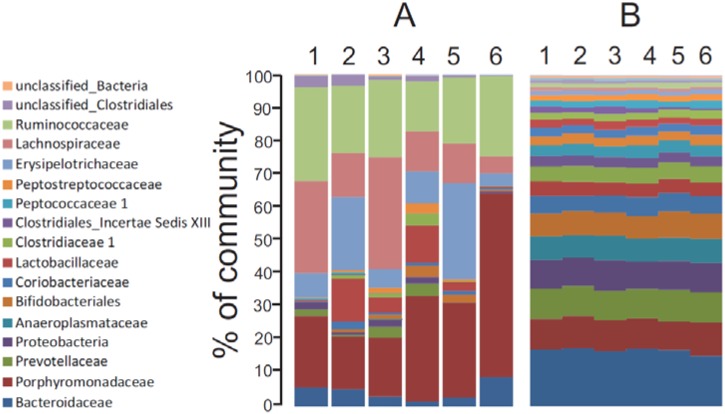
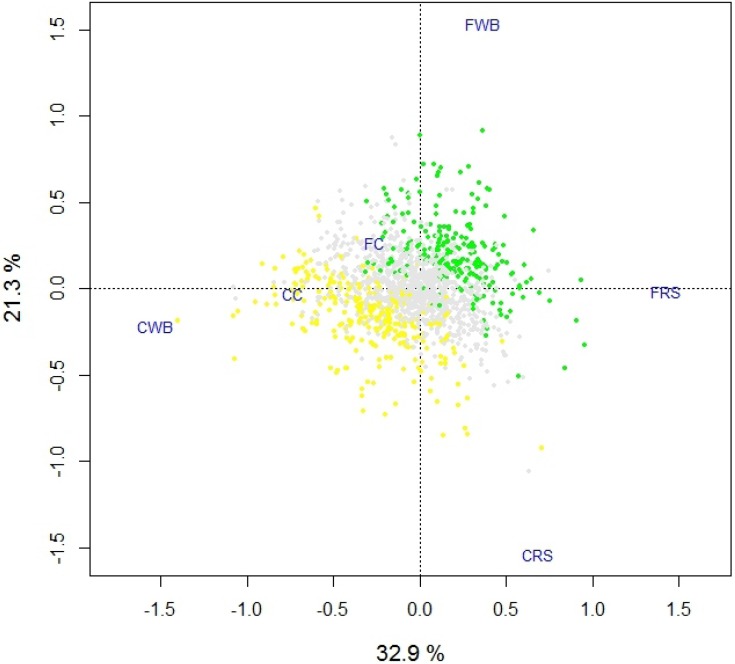
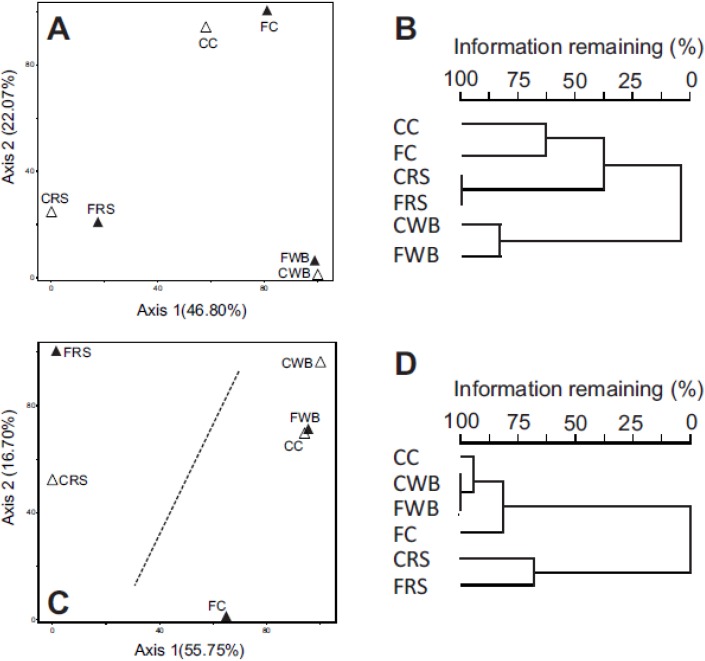
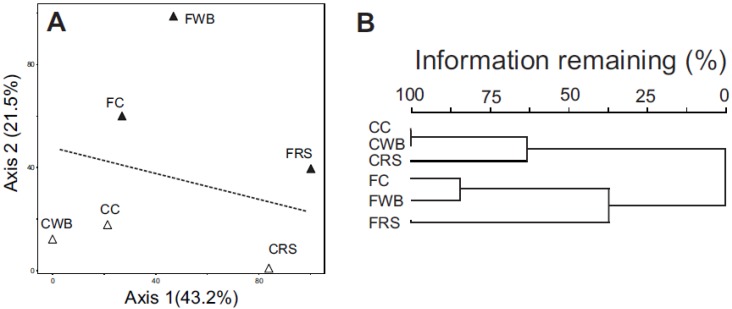
Fermentation differs between the proximal and distal gut but little is known regarding how the bacterial communities differ or how they are influenced by diet. In order to investigate this, we compared community diversity in the cecum and feces of rats by 16S rRNA gene content and DNA shot gun metagenomics after feeding purified diets containing different fermentable substrates. Gut community composition was dependent on the source of fermentable substrate included in the diet. Cecal communities were dominated by Firmicutes, and contained a higher abundance of Lachnospiraceae compared to feces. In feces, community structure was shifted by varying degrees depending on diet towards the Bacteroidetes, although this change was not always evident from 16S rRNA gene data. Multi-dimensional scaling analysis (PCoA) comparing cecal and fecal metagenomes grouped by location within the gut rather than by diet, suggesting that factors in addition to substrate were important for community change in the distal gut. Differentially abundant genes in each environment supported this shift away from the Firmicutes in the cecum (e.g., motility) towards the Bacteroidetes in feces (e.g., Bacteroidales transposons). We suggest that this phylum level change reflects a shift to ammonia as the primary source of nitrogen used to support continued microbial growth in the distal gut.
近端肠道和远端肠道的发酵情况有所不同,但对于细菌群落如何不同以及它们如何受到饮食影响,我们知之甚少。为了对此进行研究,我们在给大鼠喂食含有不同可发酵底物的纯化饮食后,通过16S rRNA基因含量和DNA鸟枪法宏基因组学比较了盲肠和粪便中的群落多样性。肠道群落组成取决于饮食中所含可发酵底物的来源。盲肠群落以厚壁菌门为主,与粪便相比,其中毛螺菌科的丰度更高。在粪便中,群落结构根据饮食不同程度地向拟杆菌门转变,尽管从16S rRNA基因数据来看,这种变化并不总是明显。比较盲肠和粪便宏基因组的多维尺度分析(PCoA)按肠道内位置而非饮食进行分组,这表明除底物外的其他因素对远端肠道的群落变化也很重要。每个环境中差异丰富的基因支持了这种从盲肠中的厚壁菌门(如运动性)向粪便中的拟杆菌门(如拟杆菌目转座子)的转变。我们认为,这种门水平的变化反映了在远端肠道中,作为支持微生物持续生长的主要氮源向氨的转变。