Friston Karl J, Frith Christopher D
The Wellcome Trust Centre for Neuroimaging, Institute of Neurology, UCL, United Kingdom.
The Wellcome Trust Centre for Neuroimaging, Institute of Neurology, UCL, United Kingdom.
Cortex. 2015 Jul;68:129-43. doi: 10.1016/j.cortex.2015.03.025. Epub 2015 Apr 15.
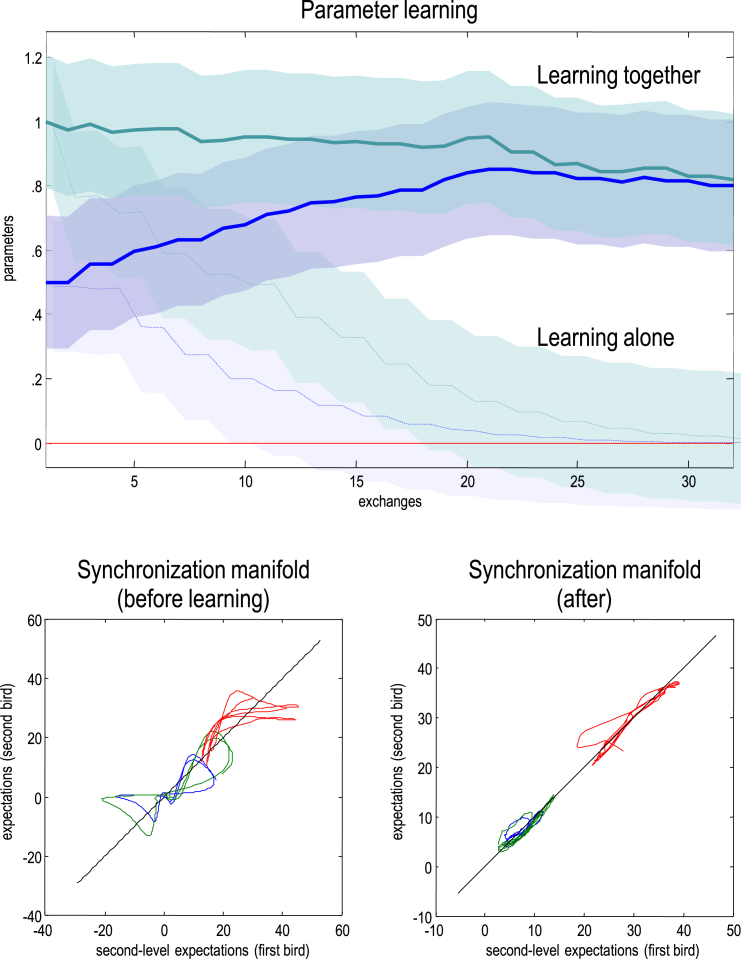
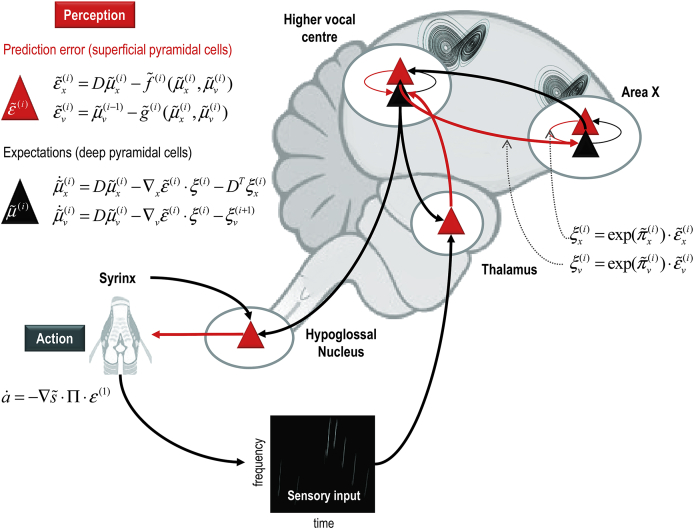
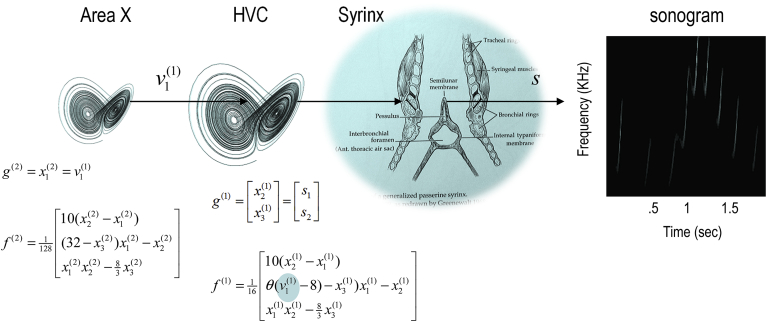
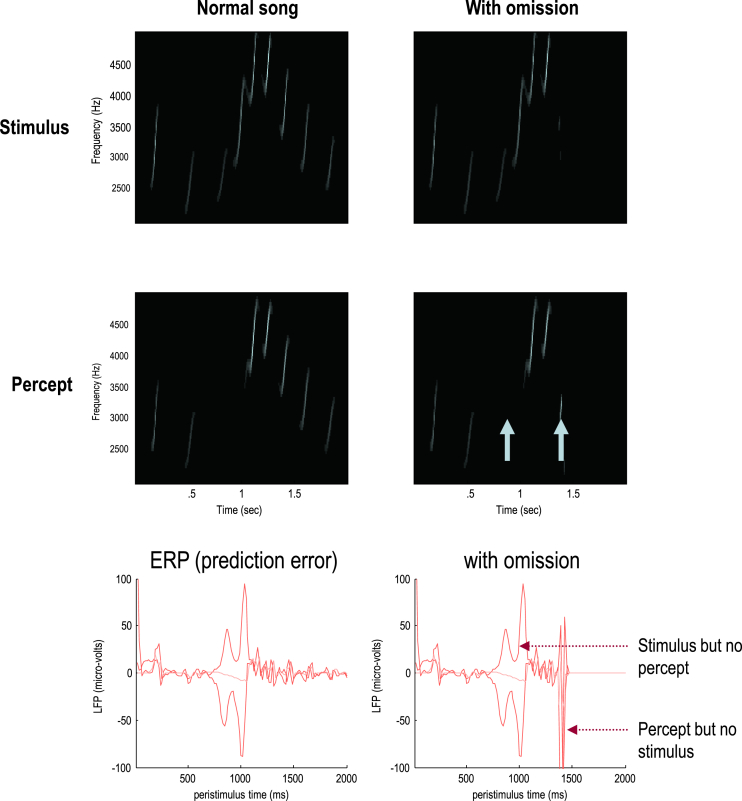
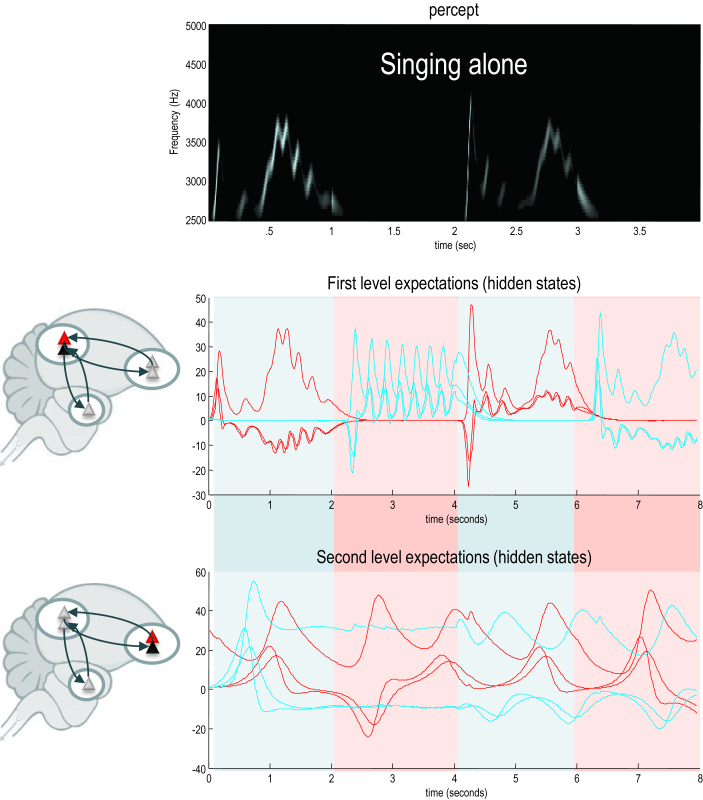
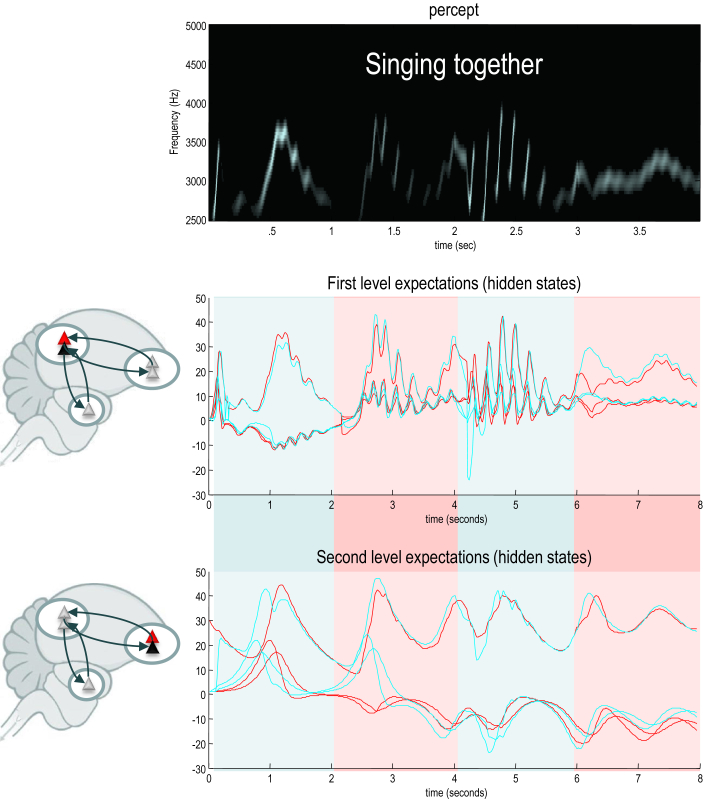
Hermeneutics refers to interpretation and translation of text (typically ancient scriptures) but also applies to verbal and non-verbal communication. In a psychological setting it nicely frames the problem of inferring the intended content of a communication. In this paper, we offer a solution to the problem of neural hermeneutics based upon active inference. In active inference, action fulfils predictions about how we will behave (e.g., predicting we will speak). Crucially, these predictions can be used to predict both self and others--during speaking and listening respectively. Active inference mandates the suppression of prediction errors by updating an internal model that generates predictions--both at fast timescales (through perceptual inference) and slower timescales (through perceptual learning). If two agents adopt the same model, then--in principle--they can predict each other and minimise their mutual prediction errors. Heuristically, this ensures they are singing from the same hymn sheet. This paper builds upon recent work on active inference and communication to illustrate perceptual learning using simulated birdsongs. Our focus here is the neural hermeneutics implicit in learning, where communication facilitates long-term changes in generative models that are trying to predict each other. In other words, communication induces perceptual learning and enables others to (literally) change our minds and vice versa.
诠释学指的是对文本(通常是古代经文)的解释和翻译,但也适用于言语和非言语交流。在心理学背景下,它很好地框定了推断交流预期内容的问题。在本文中,我们基于主动推断为神经诠释学问题提供了一个解决方案。在主动推断中,行动实现了关于我们将如何行动的预测(例如,预测我们将会说话)。至关重要的是,这些预测可分别用于在说话和倾听过程中预测自我和他人。主动推断要求通过更新一个生成预测的内部模型来抑制预测误差——在快速时间尺度上(通过感知推断)和较慢时间尺度上(通过感知学习)。如果两个主体采用相同的模型,那么——原则上——他们可以相互预测并最小化彼此的预测误差。从启发式角度来看,这确保了他们唱的是同一首赞美诗。本文基于近期关于主动推断和交流的研究,通过模拟鸟鸣来说明感知学习。我们这里关注的是学习中隐含的神经诠释学,其中交流促进了试图相互预测的生成模型的长期变化。换句话说,交流诱导感知学习,并使他人能够(从字面上)改变我们的想法,反之亦然。