Davy Carol, Bleasel Jonathan, Liu Hueiming, Tchan Maria, Ponniah Sharon, Brown Alex
South Australian Health & Medical Research Institute, Adelaide, South Australia, Australia.
The George Institute for Global Health, Camperdown, New South Wales, Australia.
BMC Health Serv Res. 2015 May 10;15:194. doi: 10.1186/s12913-015-0854-8.
The increasing prevalence of chronic disease and even multiple chronic diseases faced by both developed and developing countries is of considerable concern. Many of the interventions to address this within primary healthcare settings are based on a chronic care model first developed by MacColl Institute for Healthcare Innovation at Group Health Cooperative.
This systematic literature review aimed to identify and synthesise international evidence on the effectiveness of elements that have been included in a chronic care model for improving healthcare practices and health outcomes within primary healthcare settings. The review broadens the work of other similar reviews by focusing on effectiveness of healthcare practice as well as health outcomes associated with implementing a chronic care model. In addition, relevant case series and case studies were also included.
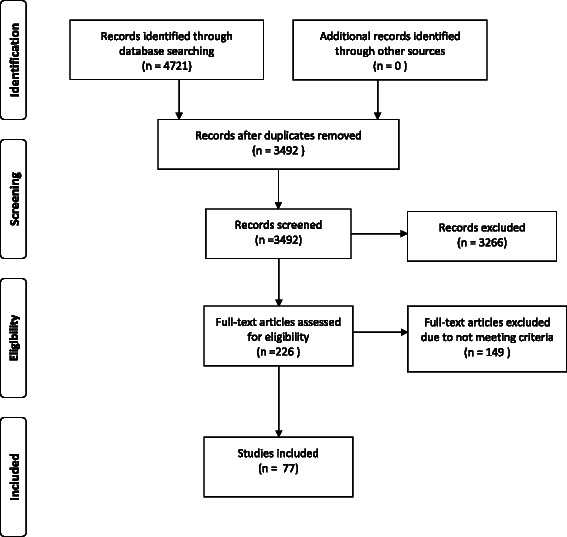
Of the 77 papers which met the inclusion criteria, all but two reported improvements to healthcare practice or health outcomes for people living with chronic disease. While the most commonly used elements of a chronic care model were self-management support and delivery system design, there were considerable variations between studies regarding what combination of elements were included as well as the way in which chronic care model elements were implemented. This meant that it was impossible to clearly identify any optimal combination of chronic care model elements that led to the reported improvements.
While the main argument for excluding papers reporting case studies and case series in systematic literature reviews is that they are not of sufficient quality or generalizability, we found that they provided a more detailed account of how various chronic care models were developed and implemented. In particular, these papers suggested that several factors including supporting reflective healthcare practice, sending clear messages about the importance of chronic disease care and ensuring that leaders support the implementation and sustainability of interventions may have been just as important as a chronic care model's elements in contributing to the improvements in healthcare practice or health outcomes for people living with chronic disease.
发达国家和发展中国家面临的慢性病甚至多种慢性病患病率不断上升,这令人深感担忧。在初级卫生保健环境中,许多应对这一问题的干预措施都基于健康合作组织麦科尔医疗创新研究所最初开发的慢性病护理模式。
本系统文献综述旨在识别和综合国际证据,以证明慢性病护理模式中包含的要素在改善初级卫生保健环境中的医疗实践和健康结果方面的有效性。该综述通过关注医疗实践的有效性以及与实施慢性病护理模式相关的健康结果,拓宽了其他类似综述的工作范围。此外,还纳入了相关的病例系列和病例研究。
在符合纳入标准的77篇论文中,除两篇外,所有论文均报告了慢性病患者的医疗实践或健康结果有所改善。虽然慢性病护理模式最常用的要素是自我管理支持和服务提供系统设计,但不同研究在纳入要素的组合以及慢性病护理模式要素的实施方式上存在很大差异。这意味着无法明确确定导致报告的改善效果的任何最佳慢性病护理模式要素组合。
虽然在系统文献综述中排除报告病例研究和病例系列的论文的主要理由是它们质量不够高或缺乏普遍性,但我们发现它们更详细地描述了各种慢性病护理模式是如何开发和实施的。特别是,这些论文表明,包括支持反思性医疗实践、明确传达慢性病护理重要性的信息以及确保领导者支持干预措施的实施和可持续性等几个因素,在促进慢性病患者的医疗实践改善或健康结果方面,可能与慢性病护理模式的要素同样重要。