Auberval Nathalie, Dal Stéphanie, Bietiger William, Pinget Michel, Jeandidier Nathalie, Maillard-Pedracini Elisa, Schini-Kerth Valérie, Sigrist Séverine
UMR DIATHEC, EA 7294, Centre Européen d'Etude du Diabète, Université de Strasbourg, Fédération de Médecine Translationnelle de Strasbourg, Bld René Leriche, 67200 Strasbourg, France.
UMR DIATHEC, EA 7294, Centre Européen d'Etude du Diabète, Université de Strasbourg, Fédération de Médecine Translationnelle de Strasbourg, Bld René Leriche, 67200 Strasbourg, France ; Structure d'Endocrinologie, Diabète -Nutrition et Addictologie, Pôle NUDE, Hôpitaux Universitaires de Strasbourg, (HUS), 67000 Strasbourg, France.
Diabetol Metab Syndr. 2014 Nov 28;6:130. doi: 10.1186/1758-5996-6-130. eCollection 2014.
Metabolic syndrome is associated with an increased risk of cardiovascular and hepatic complications. Oxidative stress in metabolic tissues has emerged as a universal feature of metabolic syndrome and its co-morbidities. We aimed to develop a rapidly and easily induced model of metabolic syndrome in rats to evaluate its impact on plasma and tissue oxidative stress.
Metabolic syndrome was induced in rats using a high-fat diet (HFD), and these rats were compared to rats fed a normal diet (ND) for 2 months. Metabolic control was determined by measuring body weight, blood glucose, triglycerides, lipid peroxidation and protein carbonylation in plasma. Insulinemia was evaluated through the measure of C-peptide. Histological analysis was performed on the pancreas, liver and blood vessels.
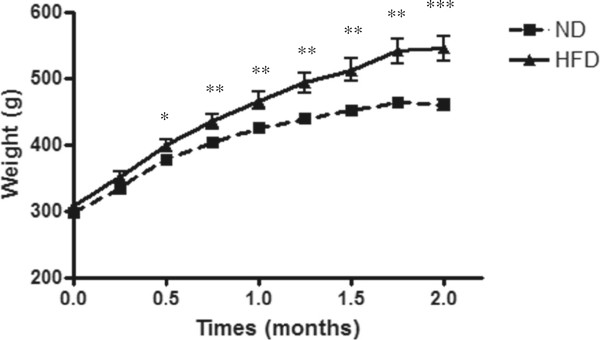
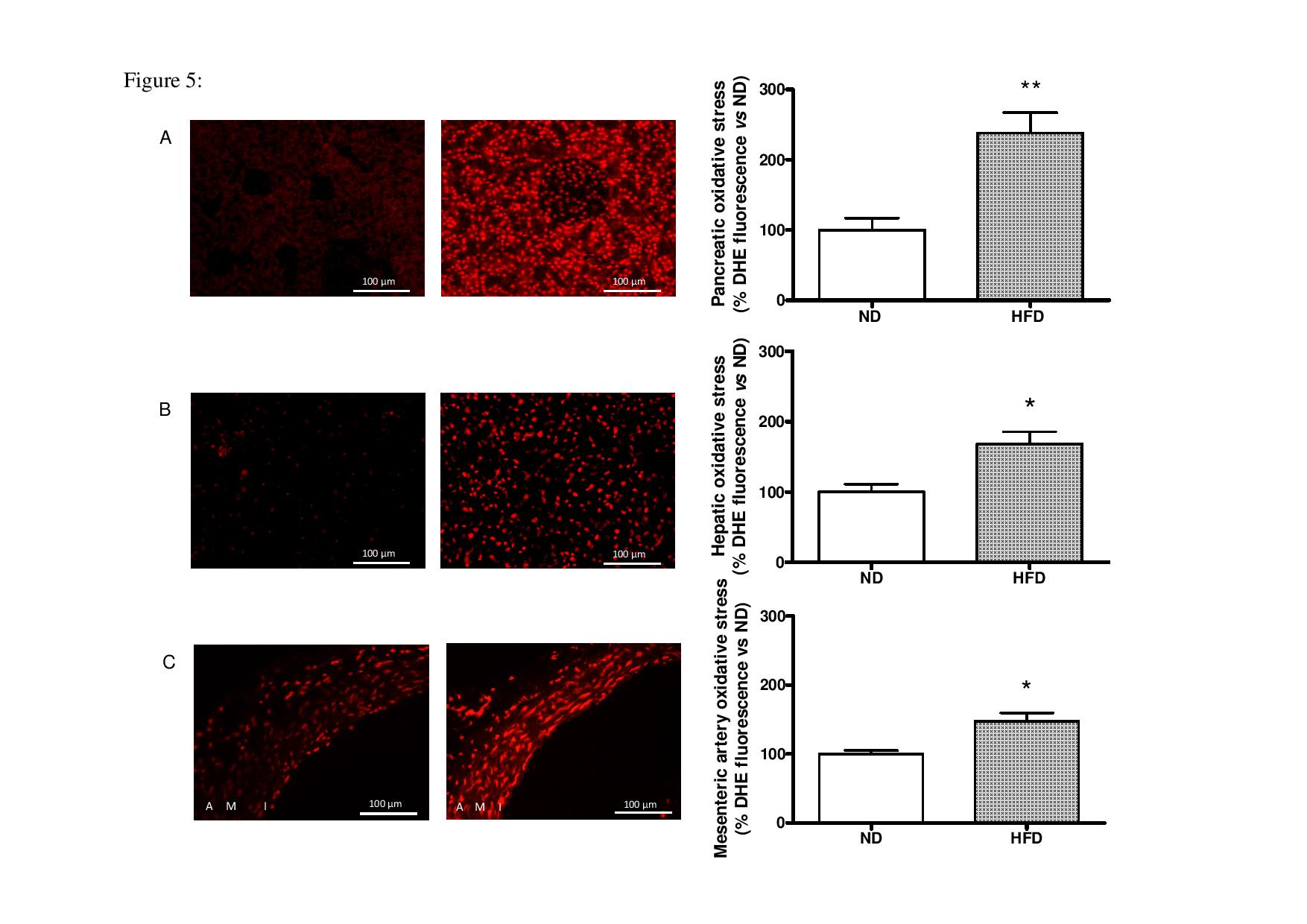
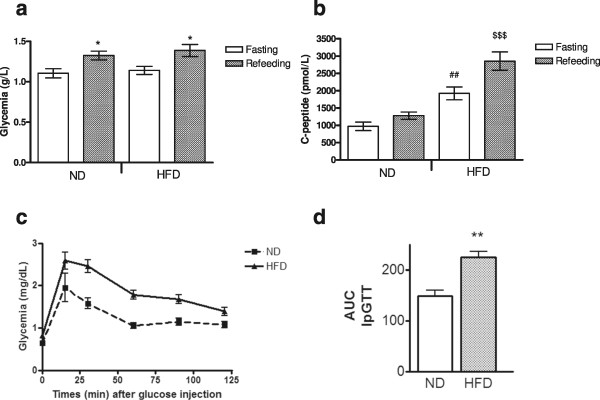
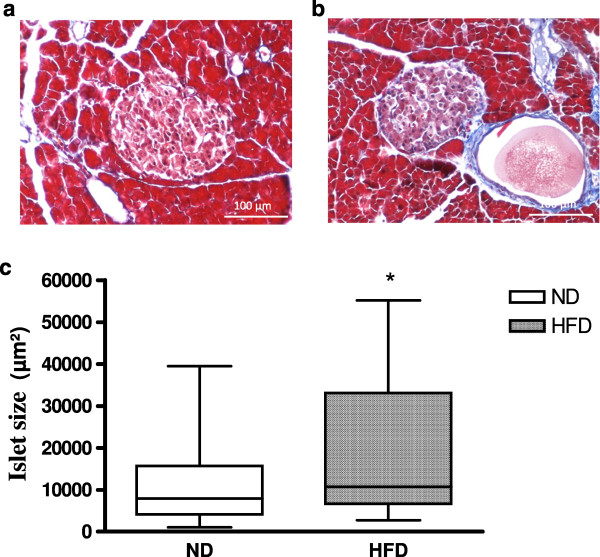
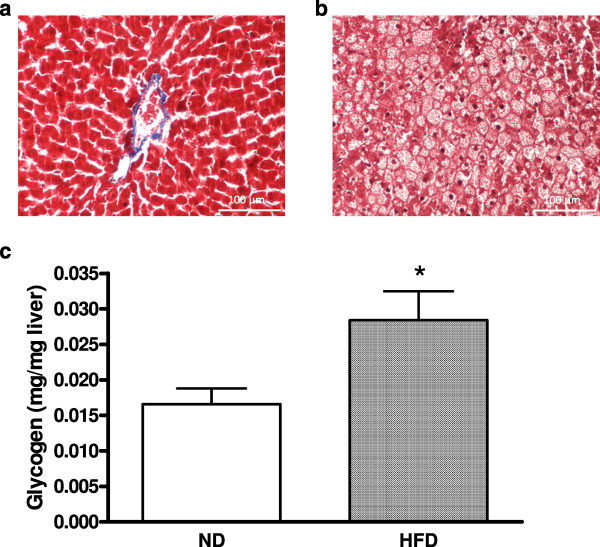
After 2 months, the HFD induced an increase in body weight, insulin and triglycerides. Liver steatosis was also observed in the HFD group, which was associated with an increase in glycogen storage. In the pancreas, the HFD induced islet hyperplasia. Tissue oxidative stress was also increased in the liver, pancreas and blood vessels, but plasma oxidative stress remained unchanged.
This paper reports the development of a fast and easy model of rat metabolic syndrome associated with tissue oxidative stress. This model may be a good tool for the biological validation of drugs or antioxidants to limit or prevent the complications of metabolic syndrome.
代谢综合征与心血管和肝脏并发症风险增加相关。代谢组织中的氧化应激已成为代谢综合征及其合并症的一个普遍特征。我们旨在建立一种快速且易于诱导的大鼠代谢综合征模型,以评估其对血浆和组织氧化应激的影响。
使用高脂饮食(HFD)诱导大鼠发生代谢综合征,并将这些大鼠与喂食正常饮食(ND)2个月的大鼠进行比较。通过测量体重、血糖、甘油三酯、血浆中的脂质过氧化和蛋白质羰基化来确定代谢控制情况。通过测量C肽评估胰岛素血症。对胰腺、肝脏和血管进行组织学分析。
2个月后,高脂饮食导致体重、胰岛素和甘油三酯增加。高脂饮食组还观察到肝脏脂肪变性,这与糖原储存增加有关。在胰腺中,高脂饮食诱导胰岛增生。肝脏、胰腺和血管中的组织氧化应激也增加,但血浆氧化应激保持不变。
本文报道了一种与组织氧化应激相关的快速且易于建立的大鼠代谢综合征模型。该模型可能是用于药物或抗氧化剂生物学验证的良好工具,以限制或预防代谢综合征的并发症。