Department of Health Promotion and Community Health Sciences, Texas A&M Health Science Center School of Public Health , College Station, TX , USA.
Department of Health Promotion and Behavior, College of Public Health, The University of Georgia , Athens, GA , USA.
Front Public Health. 2015 Apr 27;2:156. doi: 10.3389/fpubh.2014.00156. eCollection 2014.
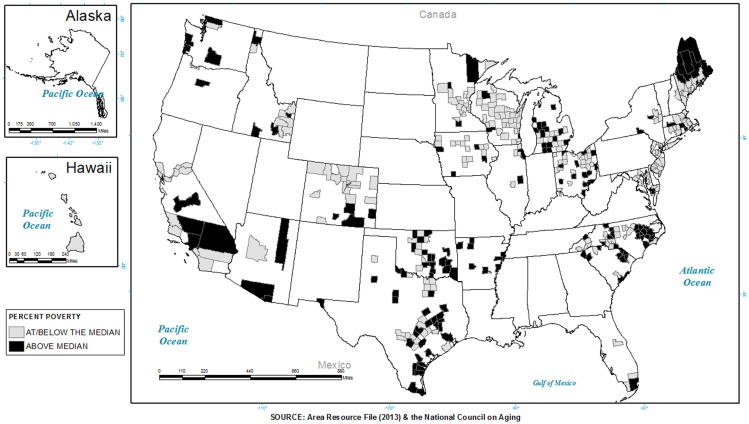
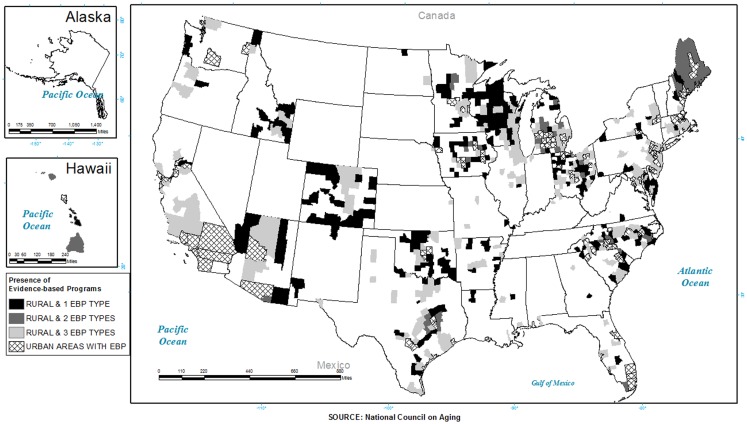
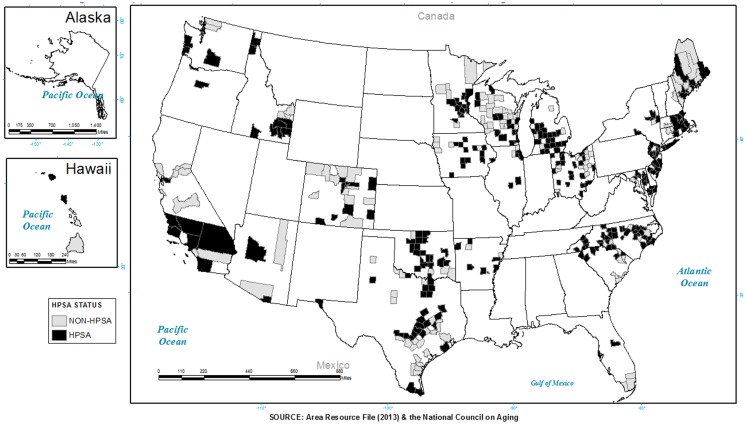
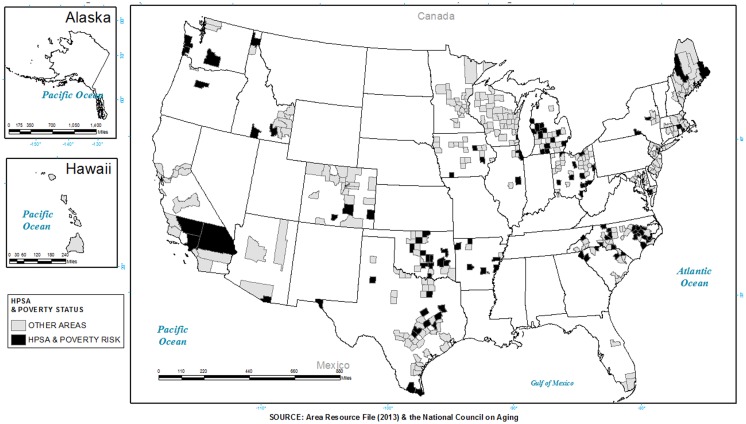
Older adults, who are racial/ethnic minorities, report multiple chronic conditions, reside in medically underserved rural areas, or have low incomes carry a high burden of chronic illness but traditionally lack access to disease prevention programs. The Chronic Disease Self-Management Program (CDSMP), A Matter of Balance/Volunteer Lay Leader (AMOB/VLL), and EnhanceFitness (EF) are widely disseminated evidence-based programs (EBP), but the extent to which they are simultaneously delivered in communities to reach vulnerable populations has not been documented. We conducted cross-sectional analyses of three EBP disseminated within 27 states throughout the United States (US) (2006-2009) as part of the Administration on Aging (AoA) Evidence-Based Disease and Disability Prevention Initiative, which received co-funding from the Atlantic Philanthropies. This study measures the extent to which CDSMP, AMOB/VLL, and EF reached vulnerable older adults. It also examines characteristics of communities offering one of these programs relative to those simultaneously offering two or all three programs. Minority/ethnic participants represented 38% for CDSMP, 26% for AMOB/VLL, and 43% for EF. Rural participation was 18% for CDSMP, 17% for AMOB/VLL, and 25% for EF. Those with comorbidities included 63.2% for CDSMP, 58.7% for AMOB/VLL, and 63.6% for EF while approximately one-quarter of participants had incomes under $15,000 for all programs. Rural areas and health professional shortage areas (HPSA) tended to deliver fewer EBP relative to urban areas and non-HPSA. These EBP attract diverse older adult participants. Findings highlight the capability of communities to serve potentially vulnerable older adults by offering multiple EBP. Because each program addresses unique issues facing this older population, further research is needed to better understand how communities can introduce, embed, and sustain multiple EBP to ensure widespread access and utilization, especially to traditionally underserved subgroups.
老年人,属于少数族裔,患有多种慢性疾病,居住在医疗服务不足的农村地区,或收入较低,他们承受着慢性疾病的沉重负担,但传统上他们缺乏获得疾病预防项目的机会。慢性病自我管理计划(CDSMP)、平衡/志愿者领导(AMOB/VLL)和增强健身(EF)是广泛传播的循证方案(EBP),但这些方案在社区中同时提供以覆盖弱势群体的程度尚未有记录。我们对 27 个美国州(2006-2009 年)内实施的三个 EBP 进行了横断面分析,作为美国老龄管理局(AoA)循证疾病和残疾预防倡议的一部分,该倡议得到了大西洋慈善基金会的联合资助。这项研究衡量了 CDSMP、AMOB/VLL 和 EF 方案覆盖弱势群体老年人的程度。它还检查了提供这些方案之一的社区的特征与同时提供两个或所有三个方案的社区的特征相对比。CDSMP 的少数民族/族裔参与者占 38%,AMOB/VLL 占 26%,EF 占 43%。CDSMP 的农村参与率为 18%,AMOB/VLL 为 17%,EF 为 25%。CDSMP 中有 63.2%的参与者患有多种合并症,AMOB/VLL 为 58.7%,EF 为 63.6%,而所有方案中约有四分之一的参与者收入低于 15,000 美元。农村地区和卫生专业人员短缺地区(HPSA)与城市地区和非 HPSA 相比,提供的 EBP 相对较少。这些 EBP 吸引了各种不同的老年参与者。研究结果突出了社区通过提供多种 EBP 为潜在弱势老年人提供服务的能力。由于每个方案都针对这一老年人群体面临的独特问题,因此需要进一步研究,以更好地了解社区如何引入、嵌入和维持多种 EBP,以确保广泛获得和利用,特别是对传统上服务不足的亚群。