Zitella Laura M, Xiao YiZi, Teplitzky Benjamin A, Kastl Daniel J, Duchin Yuval, Baker Kenneth B, Vitek Jerrold L, Adriany Gregor, Yacoub Essa, Harel Noam, Johnson Matthew D
Department of Biomedical Engineering, University of Minnesota, Minneapolis, Minnesota, United States of America.
Center for Magnetic Resonance Research, University of Minnesota, Minneapolis, Minnesota, United States of America.
PLoS One. 2015 May 12;10(5):e0127049. doi: 10.1371/journal.pone.0127049. eCollection 2015.
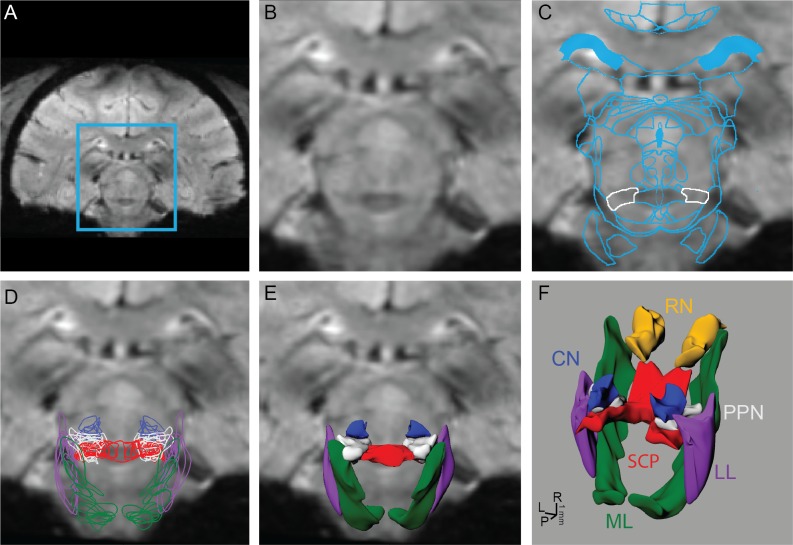
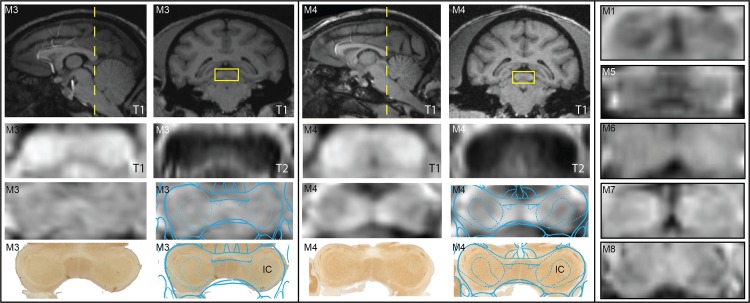
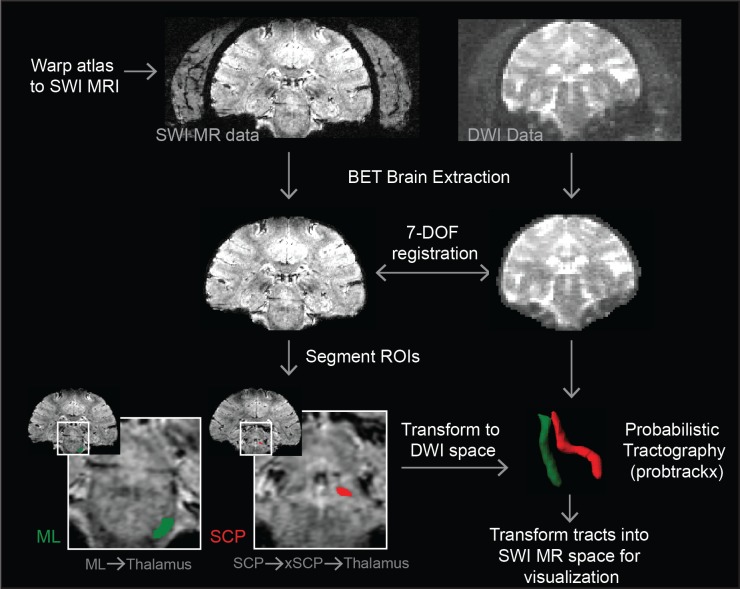
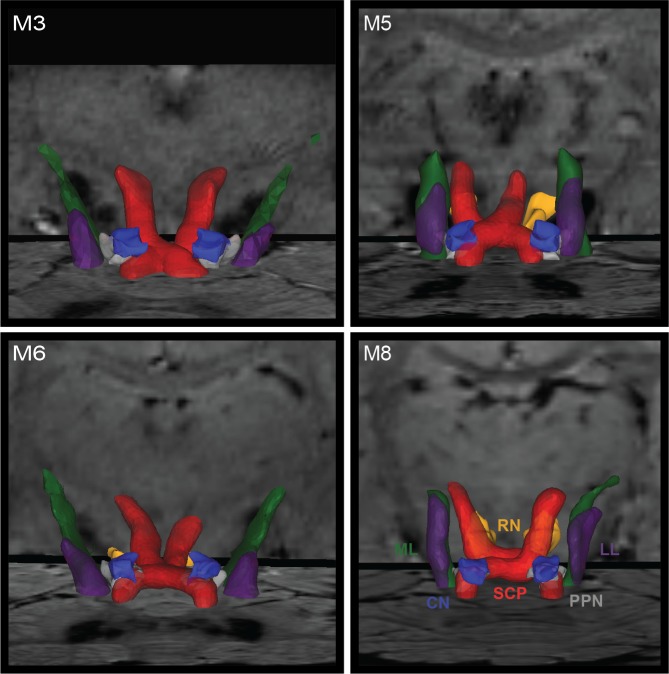
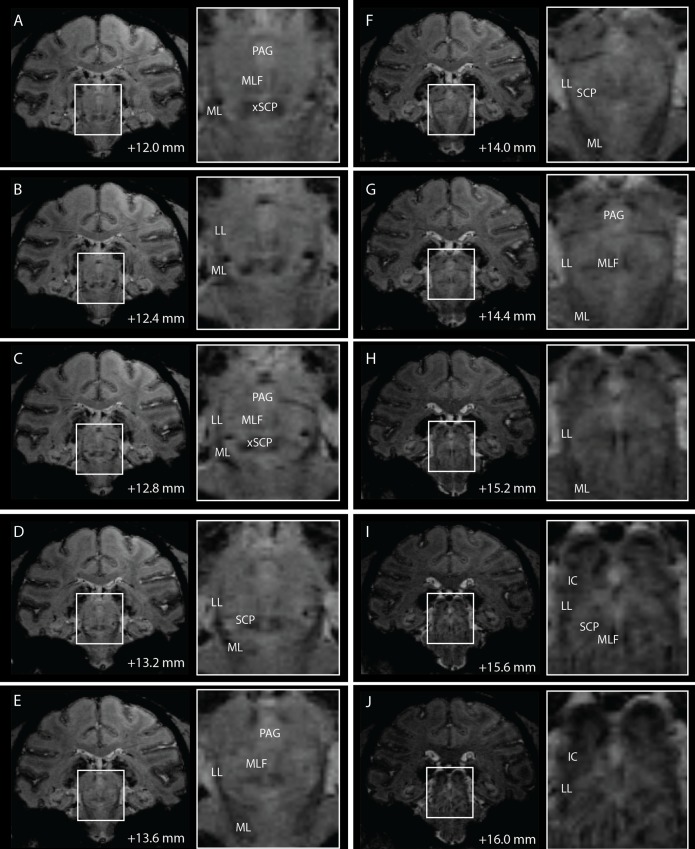
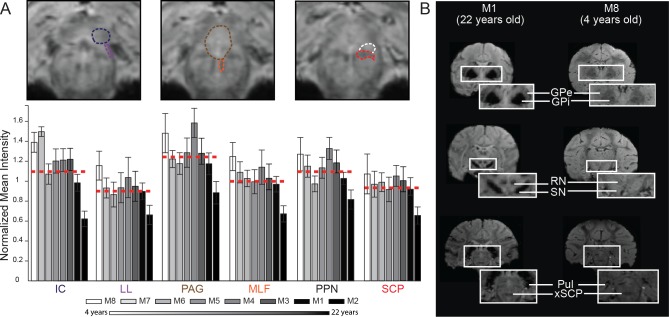
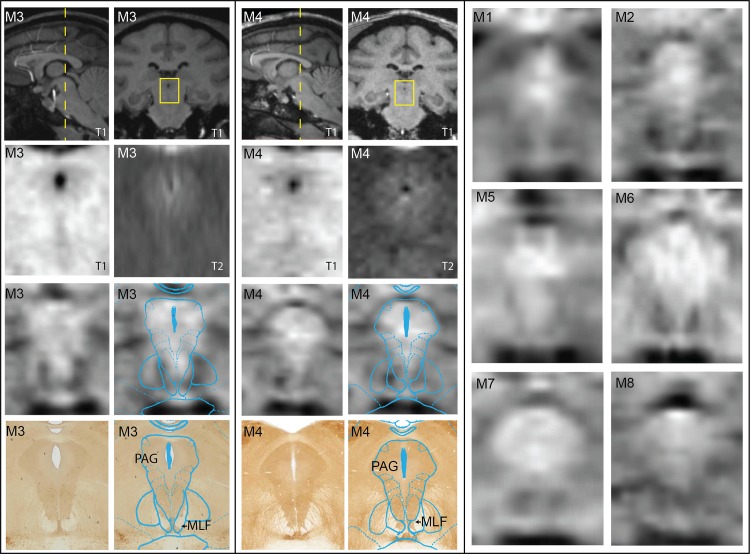
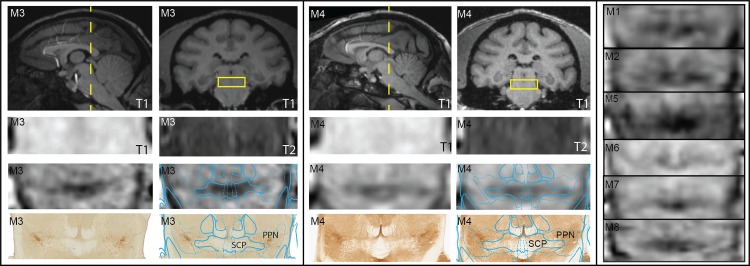
Structural brain imaging provides a critical framework for performing stereotactic and intraoperative MRI-guided surgical procedures, with procedural efficacy often dependent upon visualization of the target with which to operate. Here, we describe tools for in vivo, subject-specific visualization and demarcation of regions within the brainstem. High-field 7T susceptibility-weighted imaging and diffusion-weighted imaging of the brain were collected using a customized head coil from eight rhesus macaques. Fiber tracts including the superior cerebellar peduncle, medial lemniscus, and lateral lemniscus were identified using high-resolution probabilistic diffusion tractography, which resulted in three-dimensional fiber tract reconstructions that were comparable to those extracted from sequential application of a two-dimensional nonlinear brain atlas warping algorithm. In the susceptibility-weighted imaging, white matter tracts within the brainstem were also identified as hypointense regions, and the degree of hypointensity was age-dependent. This combination of imaging modalities also enabled identifying the location and extent of several brainstem nuclei, including the periaqueductal gray, pedunculopontine nucleus, and inferior colliculus. These clinically-relevant high-field imaging approaches have potential to enable more accurate and comprehensive subject-specific visualization of the brainstem and to ultimately improve patient-specific neurosurgical targeting procedures, including deep brain stimulation lead implantation.
脑结构成像为进行立体定向和术中磁共振成像引导的外科手术提供了关键框架,手术效果通常取决于对手术目标的可视化。在此,我们描述了用于在体、特定个体可视化和划分脑干内区域的工具。使用定制的头部线圈,对八只恒河猴进行了脑部的高场7T susceptibility加权成像和扩散加权成像。使用高分辨率概率扩散束描记法识别包括上小脑脚、内侧丘系和外侧丘系在内的纤维束,从而得到与从二维非线性脑图谱扭曲算法的顺序应用中提取的三维纤维束重建结果相当的结果。在susceptibility加权成像中,脑干内的白质束也被识别为低信号区域,且低信号程度与年龄相关。这种成像方式的组合还能够识别包括导水管周围灰质、脚桥核和下丘在内的几个脑干核团的位置和范围。这些与临床相关的高场成像方法有可能实现更准确、更全面的特定个体脑干可视化,并最终改善针对患者的神经外科靶向手术,包括深部脑刺激电极植入。