Dembélé Urbain, Lykke Anne Mette, Koné Yénizié, Témé Bino, Kouyaté Amadou Malé
Institut d'Economie Rurale (IER), Rue Mohamed V, BP: 258, Bamako, Mali.
Institut Supérieur de Formation et de Recherche Appliquée (ISFRA), N'Golonina, Rue 268, Porte 238, BPE: 475, Bamako, Mali.
J Ethnobiol Ethnomed. 2015 Mar 2;11:14. doi: 10.1186/1746-4269-11-14.
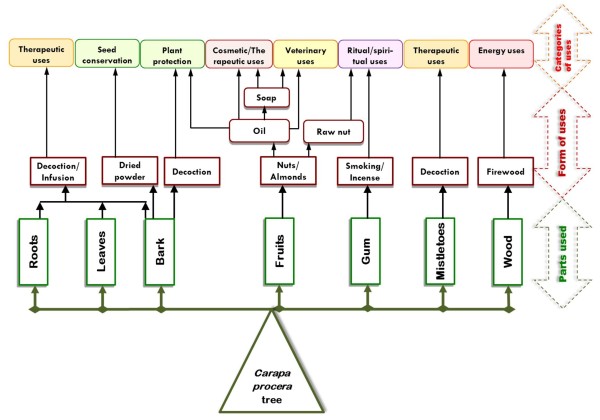
Carapa procera is a native oil tree species with multipurpose values traditionally exploited by the local population in Southern Mali. This study focused on the assessment of local knowledge about the use of Carapa procera.
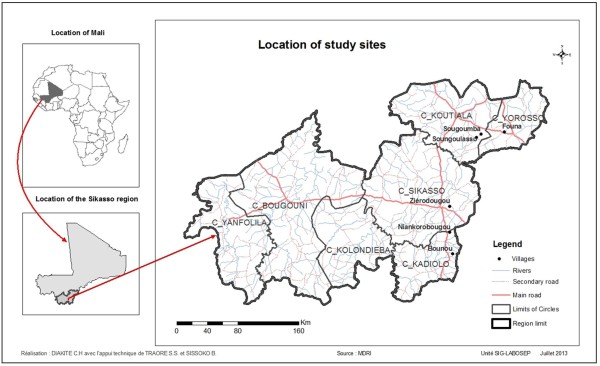
Semi-structured ethnobotanical questionnaires were conducted among the ethnic groups Senufo, Fulani and Bambara in two localities in the Sudanian zone in Mali. Use values among these ethnic groups and gender were evaluated.
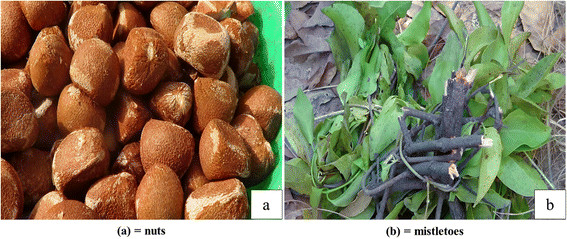
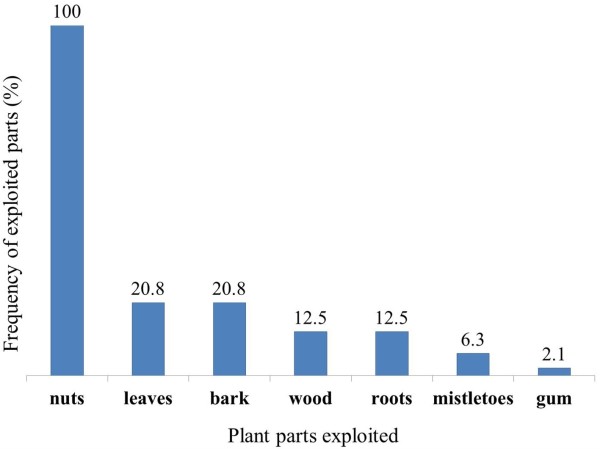
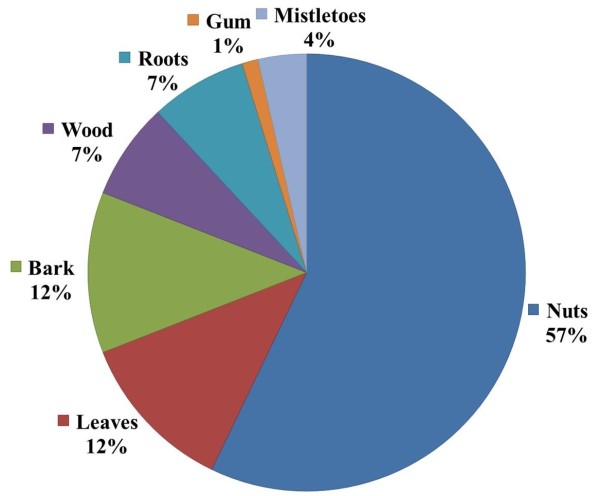
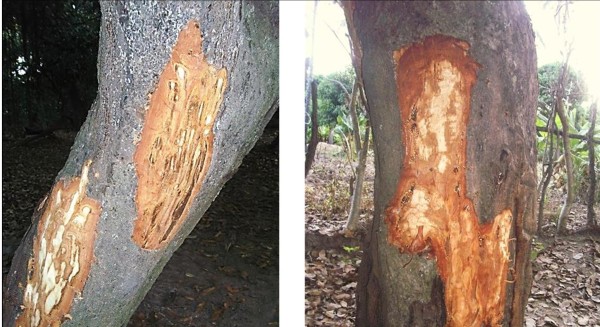
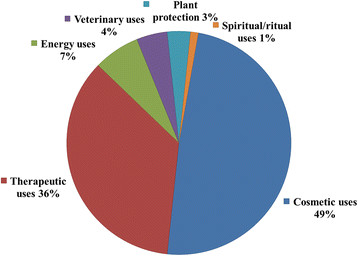
This study showed that Carapa procera is a species with multiple uses and high use values. According to the consensus value for plant parts (CPP), the nuts constituted 57% of exploited plant parts followed by bark and leaves (12%), wood and roots (7%), mistletoes (4%) and gum (1%). The use diversity (UD) values of Carapa procera showed a high proportion of cosmetic (UD = 0.49) and therapeutic (UD = 0.36) uses. The UD for therapeutic uses was higher for ethnic groups in Ziékorodougou than in Niankorobougou. In contrast, the UD for cosmetic uses was higher for ethnic groups in Niankorobougou than in Ziékorodougou. Comparative analysis between ethnic groups revealed that the highest UD for cosmetic uses (0.63) was observed in the Bambara ethnic group, whereas the highest UD for therapeutic uses (0.39) was obtained in the Senufo ethnic group. The UD showed that cosmetic uses were higher for women than for men in both locations. Men in Ziékorodougou had the highest level of knowledge regarding plant parts used, forms of use and the specific reasons for using Carapa procera.
This study highlighted the sociocultural importance of Carapa procera. In the light of its multipurpose uses, the promotion and enhancement of Carapa procera can provide significant socio-economic benefits to local people. In this perspective, it is necessary to implement conservation strategies and sustainable management through domestication of the species.
非洲桃花心木是一种本土油树物种,具有多种用途,在马里南部被当地居民传统利用。本研究聚焦于对非洲桃花心木使用的当地知识评估。
在马里苏丹地区的两个地点,对塞努福族、富拉尼族和班巴拉族进行了半结构化的民族植物学问卷调查。评估了这些族群和性别之间的使用价值。
本研究表明,非洲桃花心木是一种具有多种用途和高使用价值的物种。根据植物部位的共识价值(CPP),坚果占被利用植物部位的57%,其次是树皮和树叶(12%)、木材和根(7%)、槲寄生(4%)和树胶(1%)。非洲桃花心木的使用多样性(UD)值显示,化妆品用途(UD = 0.49)和治疗用途(UD = 0.36)占比很高。齐科罗杜古的族群治疗用途的UD高于年科罗博古。相反,年科罗博古的族群化妆品用途的UD高于齐科罗杜古。族群间的比较分析显示,班巴拉族化妆品用途的UD最高(0.63),而塞努福族治疗用途的UD最高(0.39)。UD表明,两个地点女性的化妆品用途都高于男性。齐科罗杜古的男性对使用的植物部位形式、使用形式以及使用非洲桃花心木的具体原因的了解程度最高。
本研究突出了非洲桃花心木的社会文化重要性。鉴于其多种用途,推广和加强非洲桃花心木可为当地居民带来重大的社会经济效益。从这个角度来看,有必要通过该物种的驯化实施保护策略和可持续管理。