Kisiela Dagmara I, Avagyan Hovhannes, Friend Della, Jalan Aachal, Gupta Shivani, Interlandi Gianluca, Liu Yan, Tchesnokova Veronika, Rodriguez Victoria B, Sumida John P, Strong Roland K, Wu Xue-Ru, Thomas Wendy E, Sokurenko Evgeni V
Department of Microbiology, University of Washington, Seattle, Washington, United States of America.
Division of Basic Sciences, Fred Hutchinson Cancer Research Center, Seattle, Washington, United States of America.
PLoS Pathog. 2015 May 14;11(5):e1004857. doi: 10.1371/journal.ppat.1004857. eCollection 2015 May.
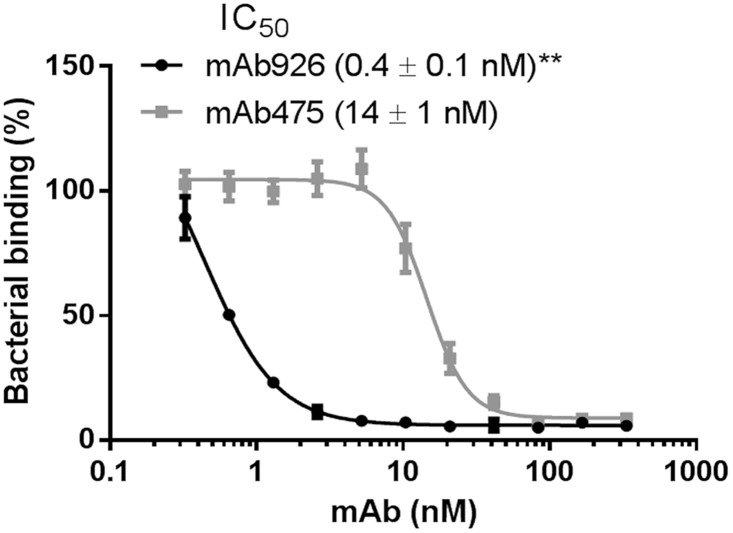
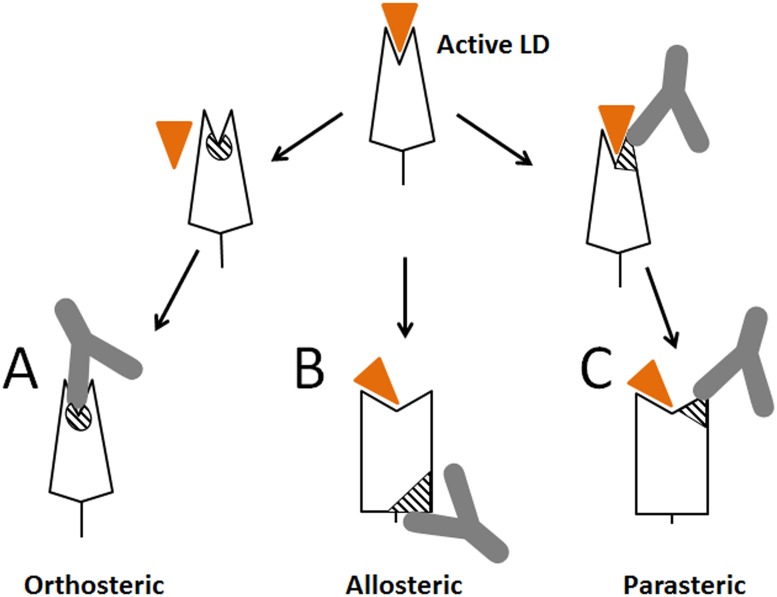
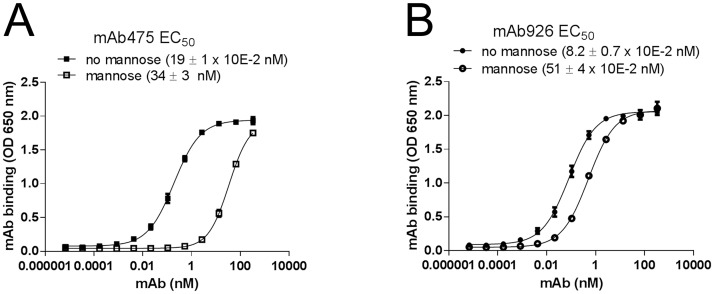
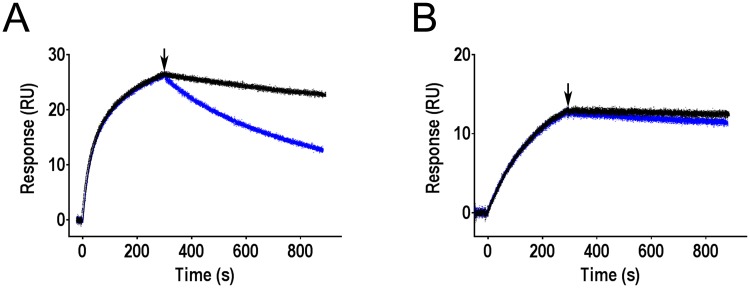
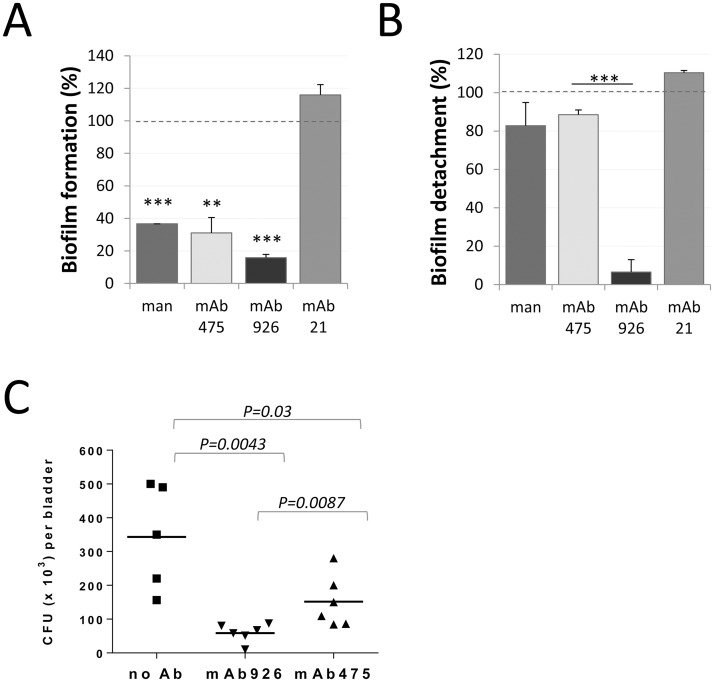
Attachment proteins from the surface of eukaryotic cells, bacteria and viruses are critical receptors in cell adhesion or signaling and are primary targets for the development of vaccines and therapeutic antibodies. It is proposed that the ligand-binding pocket in receptor proteins can shift between inactive and active conformations with weak and strong ligand-binding capability, respectively. Here, using monoclonal antibodies against a vaccine target protein - fimbrial adhesin FimH of uropathogenic Escherichia coli, we demonstrate that unusually strong receptor inhibition can be achieved by antibody that binds within the binding pocket and displaces the ligand in a non-competitive way. The non-competitive antibody binds to a loop that interacts with the ligand in the active conformation of the pocket but is shifted away from ligand in the inactive conformation. We refer to this as a parasteric inhibition, where the inhibitor binds adjacent to the ligand in the binding pocket. We showed that the receptor-blocking mechanism of parasteric antibody differs from that of orthosteric inhibition, where the inhibitor replaces the ligand or allosteric inhibition where the inhibitor binds at a site distant from the ligand, and is very potent in blocking bacterial adhesion, dissolving surface-adherent biofilms and protecting mice from urinary bladder infection.
来自真核细胞、细菌和病毒表面的附着蛋白是细胞黏附或信号传导中的关键受体,也是疫苗和治疗性抗体开发的主要靶点。有人提出,受体蛋白中的配体结合口袋可以在无活性和活性构象之间转换,分别具有弱和强的配体结合能力。在这里,我们使用针对疫苗靶蛋白——尿路致病性大肠杆菌菌毛黏附素FimH的单克隆抗体,证明通过结合在结合口袋内并以非竞争性方式取代配体的抗体,可以实现异常强大的受体抑制作用。这种非竞争性抗体结合到一个环上,该环在口袋的活性构象中与配体相互作用,但在无活性构象中与配体分离。我们将此称为副位抑制,其中抑制剂在结合口袋中与配体相邻结合。我们表明,副位抗体的受体阻断机制不同于正位抑制(抑制剂取代配体)或变构抑制(抑制剂在远离配体的位点结合),并且在阻断细菌黏附、溶解表面附着的生物膜以及保护小鼠免受膀胱感染方面非常有效。