Maioli Margherita, Rinaldi Salvatore, Migheli Rossana, Pigliaru Gianfranco, Rocchitta Gaia, Santaniello Sara, Basoli Valentina, Castagna Alessandro, Fontani Vania, Ventura Carlo, Serra Pier Andrea
1] Department of Biomedical Sciences, University of Sassari, 07100, Sassari, Italy [2] Laboratory of Molecular Biology and Stem Cell Engineering - National Institute of Biostructures and Biosystems, 40121, Bologna, Italy [3] Department of Regenerative Medicine, Rinaldi Fontani Institute, 50144, Florence, Italy.
1] Department of Regenerative Medicine, Rinaldi Fontani Institute, 50144, Florence, Italy [2] Research Department, Rinaldi Fontani Foundation - NPO, 50144, Florence, Italy.
Sci Rep. 2015 May 15;5:10439. doi: 10.1038/srep10439.
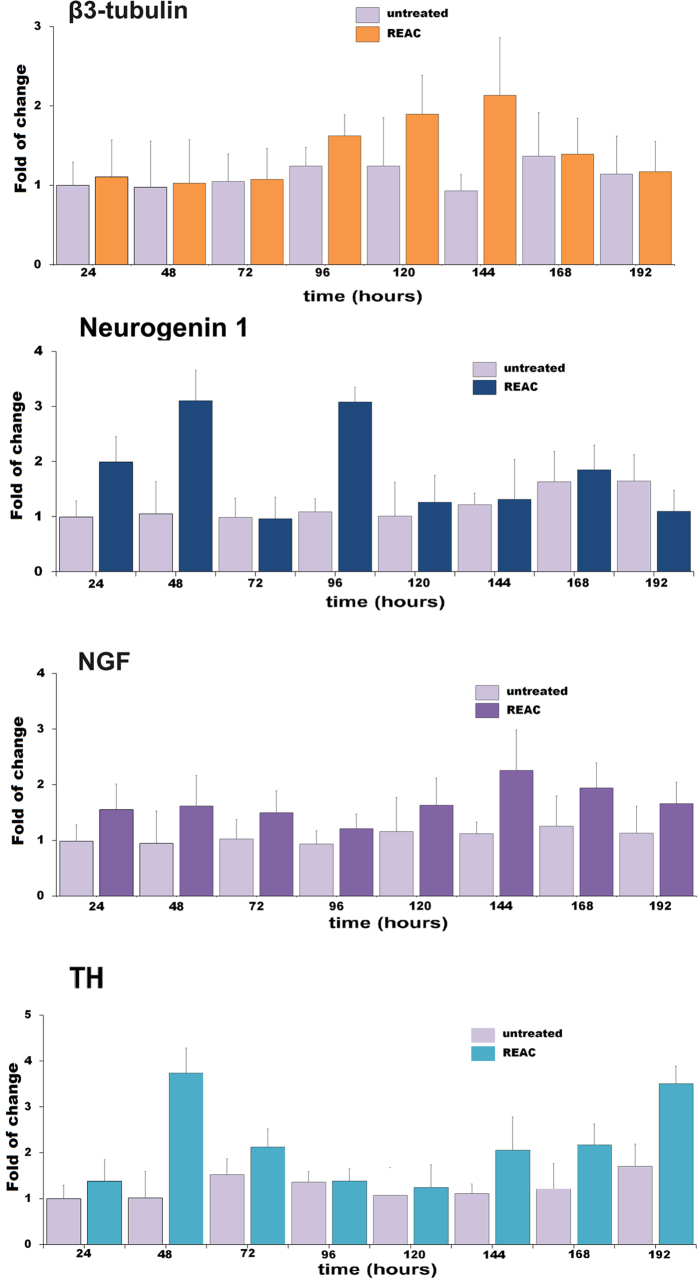
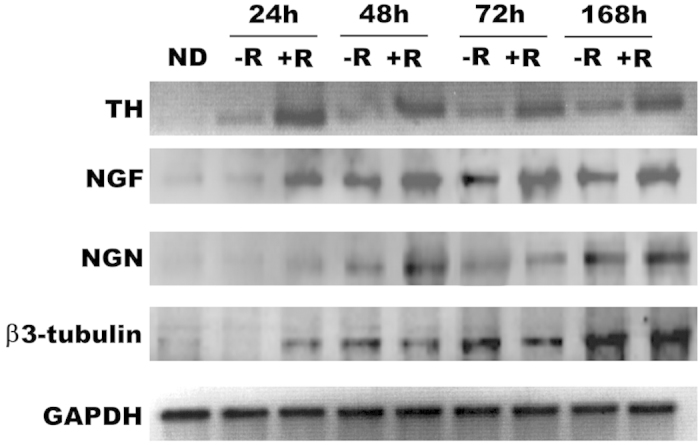
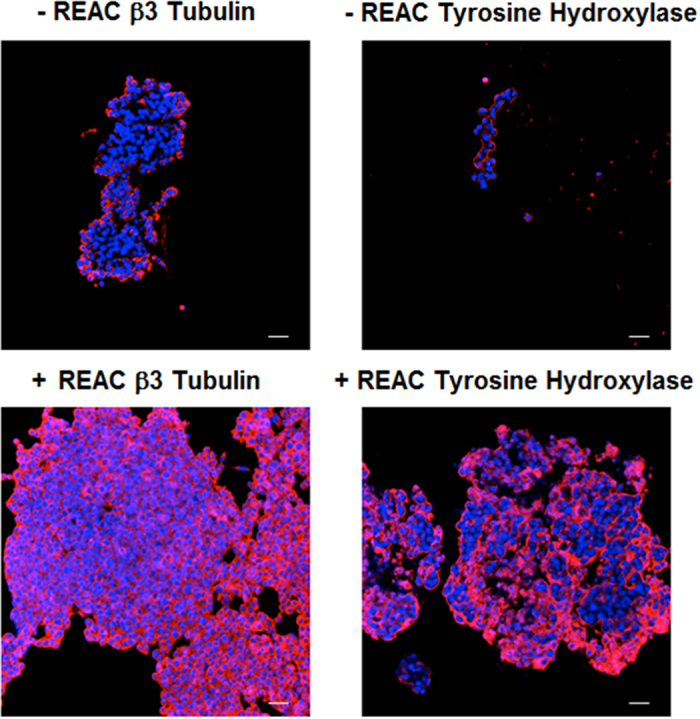
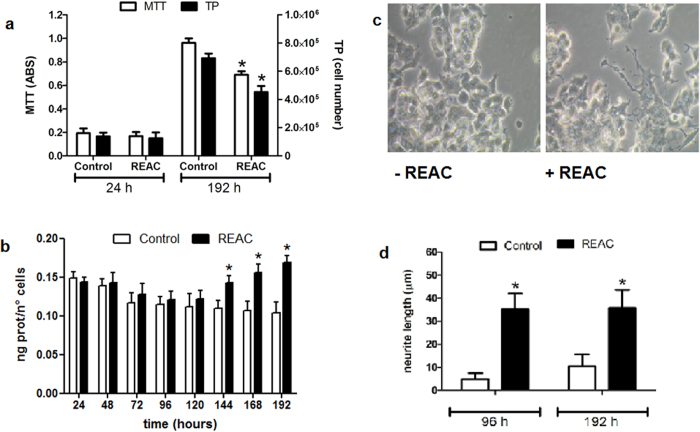
Research for the use of physical means, in order to induce cell differentiation for new therapeutic strategies, is one of the most interesting challenges in the field of regenerative medicine, and then in the treatment of neurodegenerative diseases, Parkinson's disease (PD) included. The aim of this work is to verify the effect of the radio electric asymmetric conveyer (REAC) technology on the PC12 rat adrenal pheochromocytoma cell line, as they display metabolic features of PD. PC12 cells were cultured with a REAC regenerative tissue optimization treatment (TO-RGN) for a period ranging between 24 and 192 hours. Gene expression analysis of specific neurogenic genes, as neurogenin-1, beta3-tubulin and Nerve growth factor, together with the immunostaining analysis of the specific neuronal protein beta3-tubulin and tyrosine hydroxylase, shows that the number of cells committed toward the neurogenic phenotype was significantly higher in REAC treated cultures, as compared to control untreated cells. Moreover, MTT and Trypan blue proliferation assays highlighted that cell proliferation was significantly reduced in REAC TO-RGN treated cells. These results open new perspectives in neurodegenerative diseases treatment, particularly in PD. Further studies will be needed to better address the therapeutic potential of the REAC technology.
为了诱导细胞分化以开发新的治疗策略而对物理手段的应用进行研究,是再生医学领域最有趣的挑战之一,进而在神经退行性疾病(包括帕金森病,PD)的治疗中也是如此。这项工作的目的是验证射频电不对称输送器(REAC)技术对PC12大鼠肾上腺嗜铬细胞瘤细胞系的影响,因为它们表现出帕金森病的代谢特征。PC12细胞用REAC再生组织优化处理(TO-RGN)培养24至192小时。对特定神经源性基因(如神经生成素-1、β3-微管蛋白和神经生长因子)的基因表达分析,以及对特定神经元蛋白β3-微管蛋白和酪氨酸羟化酶的免疫染色分析表明,与未处理的对照细胞相比,经REAC处理的培养物中向神经源性表型分化的细胞数量显著更高。此外,MTT和台盼蓝增殖试验强调,经REAC TO-RGN处理的细胞中细胞增殖显著降低。这些结果为神经退行性疾病治疗,特别是帕金森病治疗开辟了新的前景。需要进一步研究以更好地探讨REAC技术的治疗潜力。