Department of Regenerative Medicine, Rinaldi Fontani Institute, Florence.
Clin Interv Aging. 2012;7:191-4. doi: 10.2147/CIA.S33312. Epub 2012 Jun 29.
Beta-galactosidase is the most widely used biomarker for highlighting the processes of cellular aging, including neurodegeneration. On this basis, we decided to test in vitro whether a set of rescuing/reparative events previously observed by us in subjects treated with radioelectric asymmetric conveyor (REAC) technology may also involve antagonism of a marker of aging-related degenerative processes, as assessed by a reduction in beta-galactosidase at the cellular level.
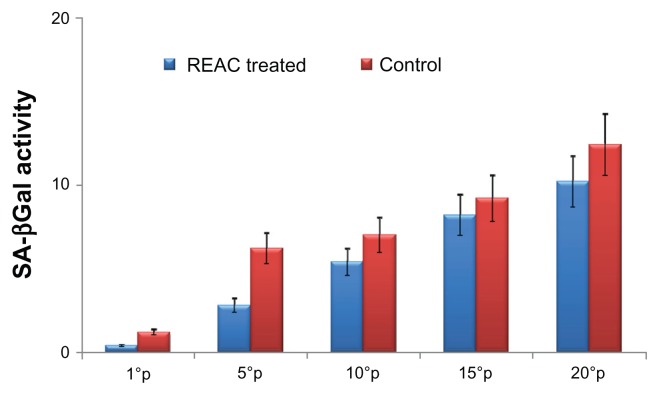
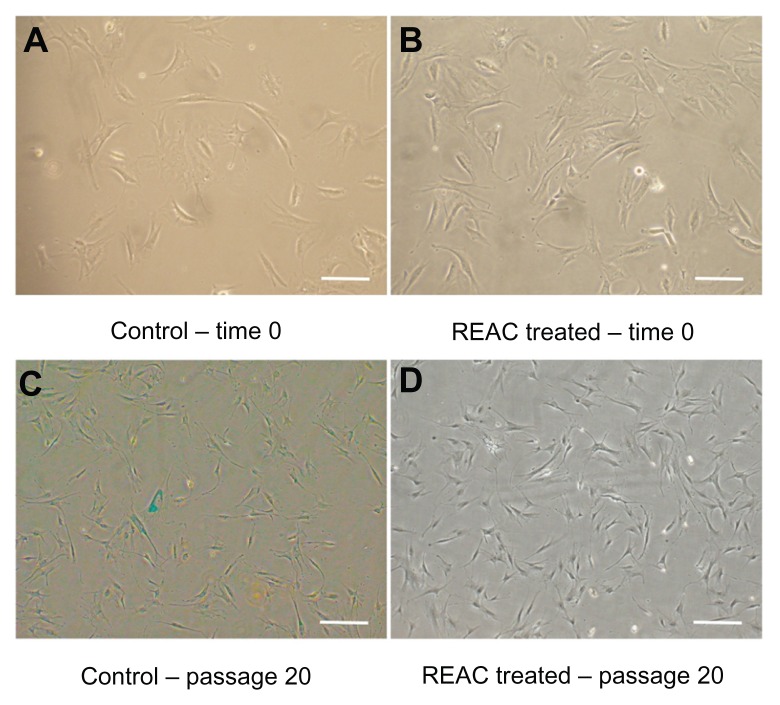
Human adipose-derived stem cells were cultured at different passages, ranging from 5 to 20, with or without REAC exposure for 12 hours. The cells were then processed for biochemical beta-galactosidase staining and morphological microscopy analysis.
We observed a significant reduction in expression of senescence associated-beta-galactosidase, and a persistence of fibroblast-like morphology typical of human adipose-derived stem cells, even at late passages.
Our results indicate the ability of REAC technology to counteract in vitro senescence of human adipose-derived stem cells, and prompt the hypothesis that such technology may be exploited to antagonize in vivo senescence of tissue-resident or transplanted stem cells playing an important role in clinical treatment of age-related processes.
β-半乳糖苷酶是最广泛用于突出细胞衰老过程的生物标志物,包括神经退行性变。在此基础上,我们决定在体外测试一组以前在接受无线电不对称输送器(REAC)技术治疗的受试者中观察到的挽救/修复事件是否也可能涉及到衰老相关退行性过程标志物的拮抗作用,如细胞水平β-半乳糖苷酶的减少来评估。
培养不同传代数(5-20)的人脂肪来源干细胞,有无 REAC 暴露 12 小时。然后对细胞进行生化β-半乳糖苷酶染色和形态学显微镜分析。
我们观察到衰老相关β-半乳糖苷酶的表达显著降低,并且即使在晚期传代中,仍保持人脂肪来源干细胞的成纤维样形态。
我们的结果表明,REAC 技术能够抵抗体外人脂肪来源干细胞的衰老,这促使我们假设该技术可能被用于拮抗组织驻留或移植干细胞的体内衰老,这些干细胞在治疗与年龄相关的过程中发挥着重要作用。