Cao Lingling, Zeng Jianrong, Liu Ke, Bao Liangman, Li Yan
Shanghai Institute of Applied Physics, Chinese Academy of Sciences, Shanghai 201800, China.
School of Physics, University of Chinese Academy of Sciences, Beijing 100049, China.
Int J Environ Res Public Health. 2015 May 12;12(5):5076-89. doi: 10.3390/ijerph120505076.
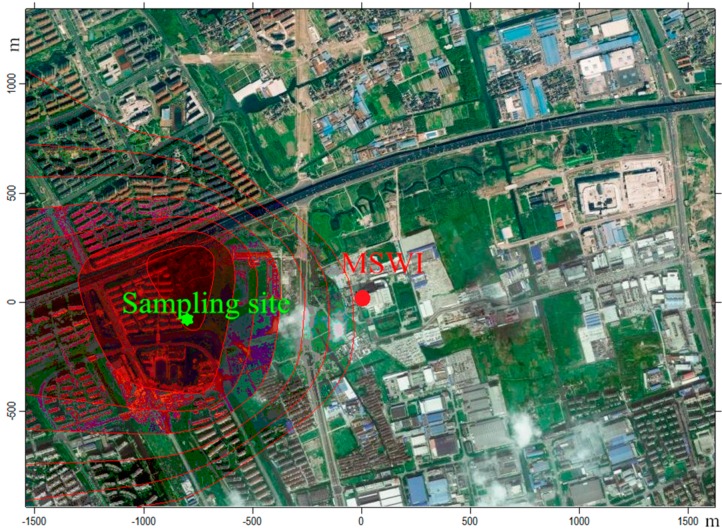
The potential impact of municipal solid waste incineration (MSWI), which is an anthropogenic source of aerosol emissions, is of great public health concern. This study investigated the characterization and cytotoxic effects of ambient ultrafine particles (PM<0.2), fine particles (PM0.2-2.5) and coarse particles (PM2.5-10) collected around a municipal solid waste incineration (MSWI) plant in the Pudong district of Shanghai.
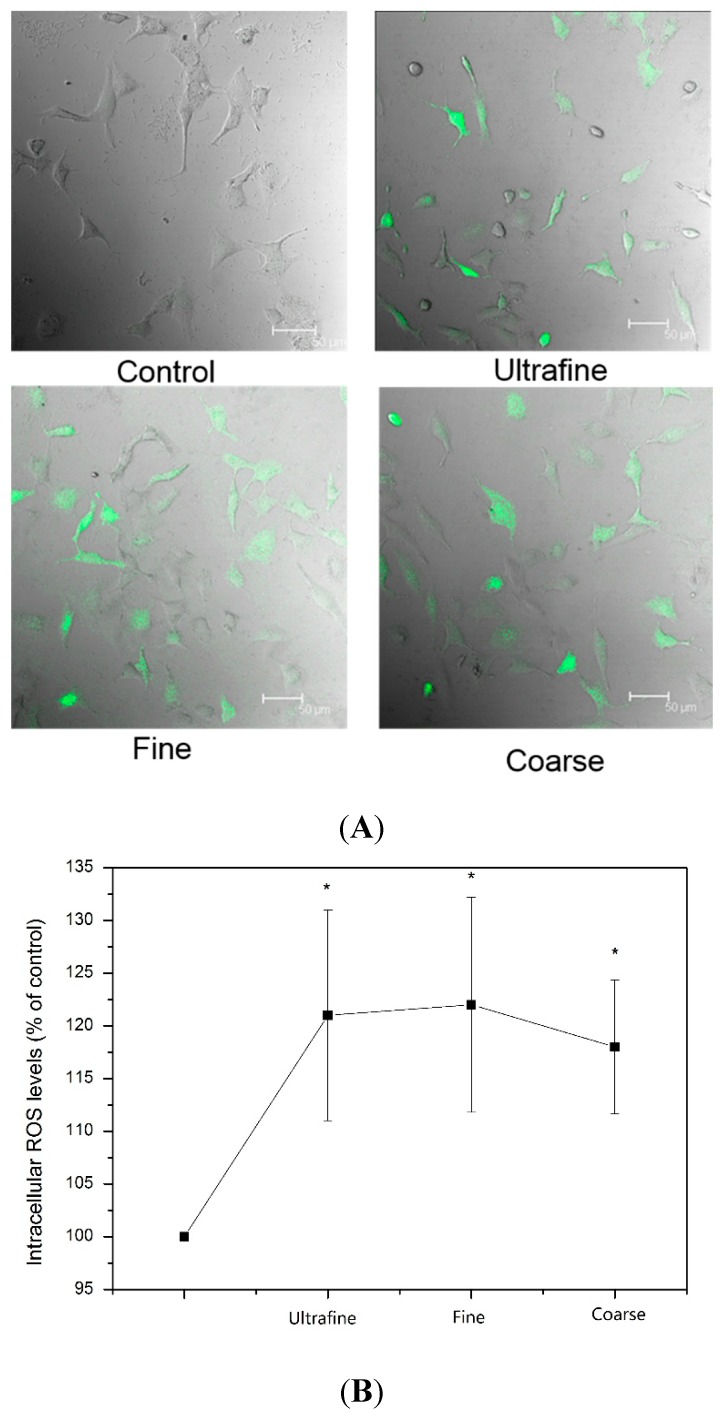
Mass concentrations of trace elements in particulate matter (PM) samples were determined using ICP-MS (Inductively Coupled Plasma Mass Spectrometry). The cytotoxicity of sampled atmospheric PM was evaluated by cell viability and reactive oxygen species (ROS) levels in A549 cells.
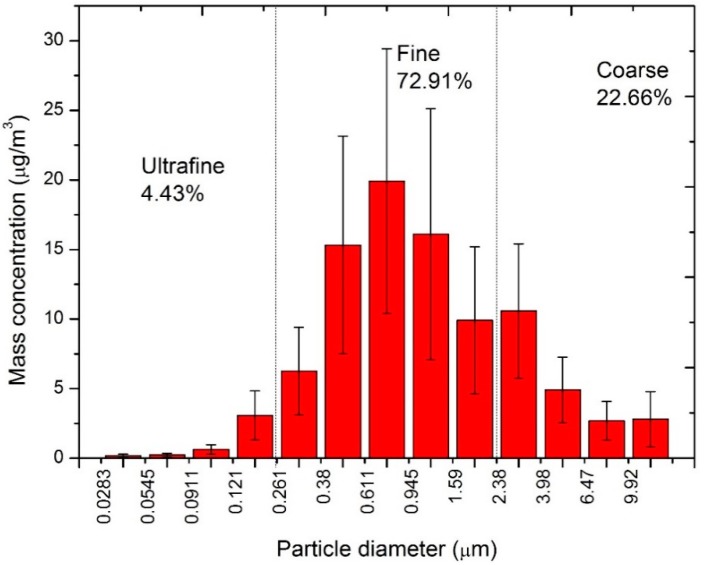
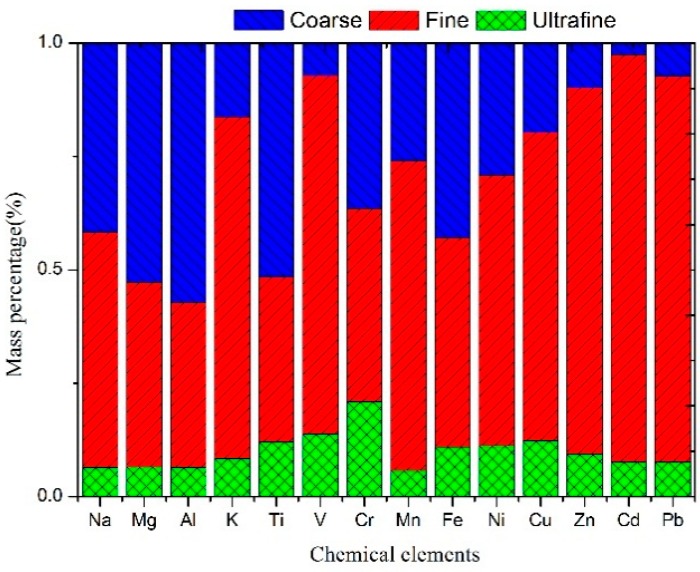
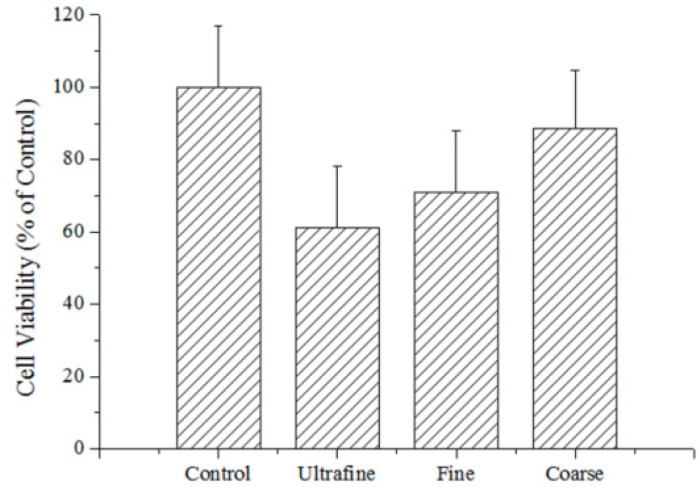
The mass percentage of PM0.2-2.5 accounted for 72.91% of the total mass of PM. Crustal metals (Mg, Al, and Ti) were abundant in the coarse particles, while the anthropogenic elements (V, Ni, Cu, Zn, Cd, and Pb) were dominant in the fine particles. The enrichment factors of Zn, Cd and Pb in the fine and ultrafine particles were extremely high (>100). The cytotoxicity of the size-resolved particles was in the order of coarse particles < fine particles < ultrafine particles.
Fine particles dominated the MSWI ambient particles. Emissions from the MSWI could bring contamination of anthropogenic elements (Zn, Cd and Pb) into ambient environment. The PM around the MSWI plant displayed an additive toxic effect, and the ultrafine and fine particles possessed higher biological toxicity than the coarse particles.
城市固体废弃物焚烧(MSWI)作为气溶胶排放的人为来源,其潜在影响备受公众健康关注。本研究调查了在上海浦东新区一座城市固体废弃物焚烧(MSWI)厂周边采集的环境超细颗粒物(PM<0.2)、细颗粒物(PM0.2 - 2.5)和粗颗粒物(PM2.5 - 10)的特征及细胞毒性效应。
采用电感耦合等离子体质谱法(ICP - MS)测定颗粒物(PM)样品中微量元素的质量浓度。通过A549细胞的细胞活力和活性氧(ROS)水平评估采集的大气PM的细胞毒性。
PM0.2 - 2.5的质量百分比占PM总质量的72.91%。地壳金属(Mg、Al和Ti)在粗颗粒物中含量丰富,而人为源元素(V、Ni、Cu、Zn、Cd和Pb)在细颗粒物中占主导地位。细颗粒物和超细颗粒物中Zn、Cd和Pb的富集因子极高(>100)。粒径分辨颗粒物细胞毒性大小顺序为粗颗粒物<细颗粒物<超细颗粒物。
细颗粒物在MSWI周边环境颗粒物中占主导。MSWI排放可将人为源元素(Zn、Cd和Pb)污染带入周边环境。MSWI厂周边的PM呈现出相加毒性效应,超细颗粒物和细颗粒物比粗颗粒物具有更高的生物毒性。