Zhao Xuemin, Wang Hailong, Li Jing, Shan Zhongyan, Teng Weiping, Teng Xiaochun
Department of Endocrinology and Metabolism, Institute of Endocrinology, The First Affiliated Hospital, China Medical University, Liaoning Provincial Key Laboratory of Endocrine Diseases, Shenyang, P. R. China.
Department of Clinical Epidemiology, Institute of Cardiovascular Disease and Center of Evidence Based Medicine, The First Affiliated Hospital, China Medical University, Shenyang, P. R. China.
PLoS One. 2015 May 18;10(5):e0126989. doi: 10.1371/journal.pone.0126989. eCollection 2015.
Certain epidemiological studies have suggested exposure to polybrominated diphenyl ethers (PBDEs) affect the production and secretion of thyroid hormones (TH); however, conflicting results have been reported in different studies. There is not a convincing conclusion about this debate to date.
To perform a meta-analysis determining if there are correlations between PBDEs exposure and the serum levels of TH. Medical and scientific literature databases were searched for articles that met the eligibility criteria. The included articles were assessed for methodological quality. The correlation coefficient values or regression coefficient values between PBDEs and thyroid stimulating hormone (TSH) or total thyroxine (TT4) from each article were used for analysis.
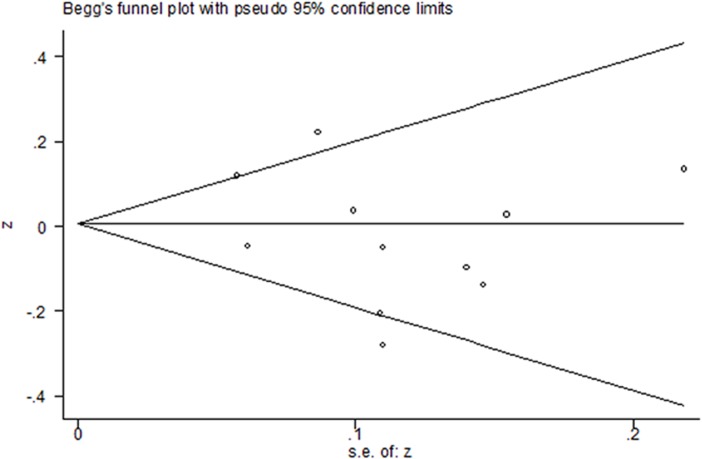
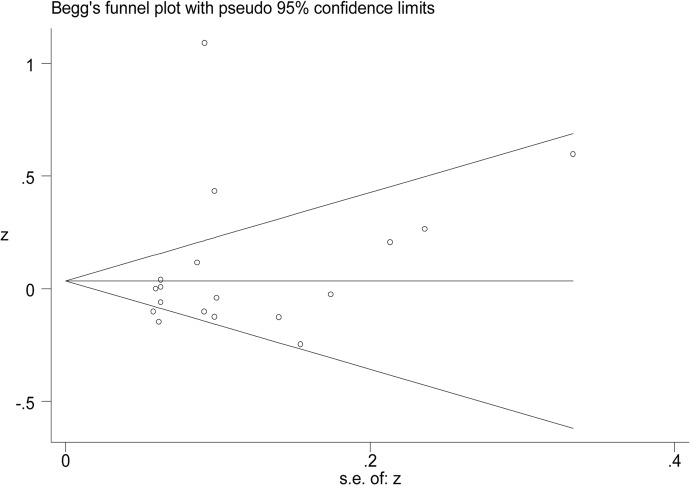
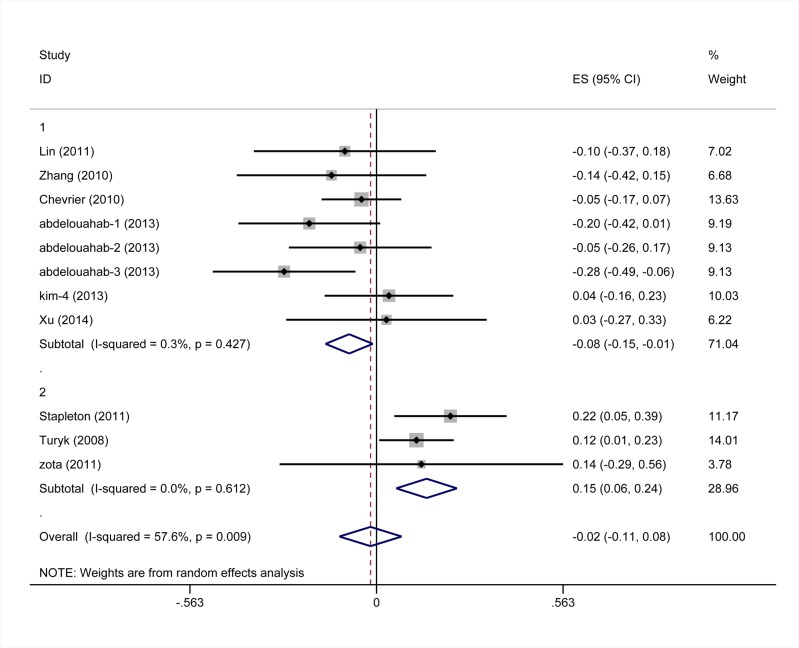
Sixteen articles were included in this meta-analysis. Pearson correlation coefficients (r) were directly collected or calculated from data given in the articles. Then, Fisher's z transformation was performed to convert each correlation coefficient to an approximately normal distribution. For z values between PBDEs exposure and TSH levels, the pooled z value for 18 studies was 0.08 (95% CI: -0.06, 0.22), and indicated significant heterogeneity (I2 values = 90.7%). Subgroup analysis was performed based on the median values of serum PBDEs in each study, there was not significant heterogeneity in each of the four subgroups (I2 values <30%). In meta-analysis of z values between PBDEs exposure and the levels of TT4, the pooled z value for 11 studies was -0.02 (95% CI: -0.11, 0.08), and also indicated significant heterogeneity (I2 values = 57.6%). Similar subgroup analysis was done for the PBDEs exposures and the levels of TT4. No significant heterogeneity was shown in either of the two subgroups (I2 values = 0).
The findings in our meta-analysis indicate the effects of PBDEs on thyroid function may mainly depend on PBDEs exposure and their levels found in serum. The relationship between PBDEs exposure and changes in thyroid function seem to fit an approximate u-shaped curve. These predictions await further verification, namely a prospective longitudinal study.
某些流行病学研究表明,接触多溴二苯醚(PBDEs)会影响甲状腺激素(TH)的产生和分泌;然而,不同研究报告的结果相互矛盾。迄今为止,关于这场争论尚无令人信服的结论。
进行一项荟萃分析,以确定PBDEs暴露与血清TH水平之间是否存在相关性。检索医学和科学文献数据库,查找符合纳入标准的文章。对纳入的文章进行方法学质量评估。使用每篇文章中PBDEs与促甲状腺激素(TSH)或总甲状腺素(TT4)之间的相关系数值或回归系数值进行分析。
本荟萃分析纳入了16篇文章。Pearson相关系数(r)直接从文章中给出的数据收集或计算得出。然后,进行Fisher z变换,将每个相关系数转换为近似正态分布。对于PBDEs暴露与TSH水平之间的z值,18项研究的合并z值为0.08(95%CI:-0.06,0.22),表明存在显著异质性(I2值 = 90.7%)。基于每项研究中血清PBDEs的中位数进行亚组分析,四个亚组中的每一个均无显著异质性(I2值<30%)。在PBDEs暴露与TT4水平之间的z值的荟萃分析中,11项研究的合并z值为-0.02(95%CI:-0.11,0.08),也表明存在显著异质性(I2值 = 57.6%)。对PBDEs暴露与TT4水平进行了类似的亚组分析。两个亚组中均未显示出显著异质性(I2值 = 0)。
我们的荟萃分析结果表明,PBDEs对甲状腺功能的影响可能主要取决于PBDEs暴露及其在血清中的水平。PBDEs暴露与甲状腺功能变化之间的关系似乎符合近似的U形曲线。这些预测有待进一步验证,即进行前瞻性纵向研究。