Gomar Jesús J, Valls Elia, Radua Joaquim, Mareca Celia, Tristany Josep, del Olmo Francisco, Rebolleda-Gil Carlos, Jañez-Álvarez María, de Álvaro Francisco J, Ovejero María R, Llorente Ana, Teixidó Cristina, Donaire Ana M, García-Laredo Eduardo, Lazcanoiturburu Andrea, Granell Luis, Mozo Cristina de Pablo, Pérez-Hernández Mónica, Moreno-Alcázar Ana, Pomarol-Clotet Edith, McKenna Peter J
FIDMAG Hermanas Hospitalarias Research Foundation, Barcelona, Spain; CIBERSAM, Spain; Litwin-Zucker Research Center, the Feinstein Institute for Medical Research, Manhasset, New York;
FIDMAG Hermanas Hospitalarias Research Foundation, Barcelona, Spain;
Schizophr Bull. 2015 Nov;41(6):1387-96. doi: 10.1093/schbul/sbv059. Epub 2015 May 25.
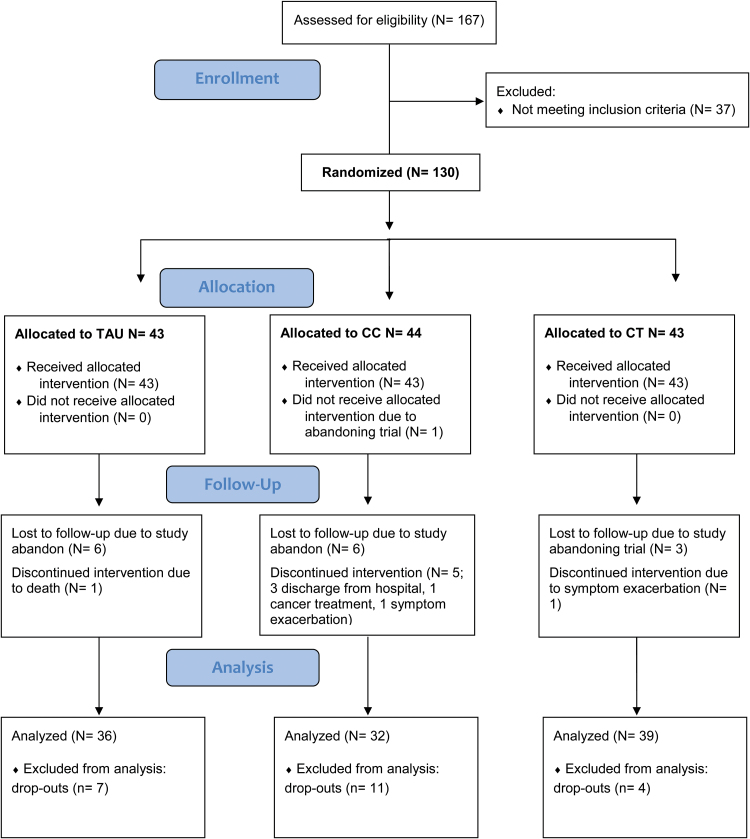
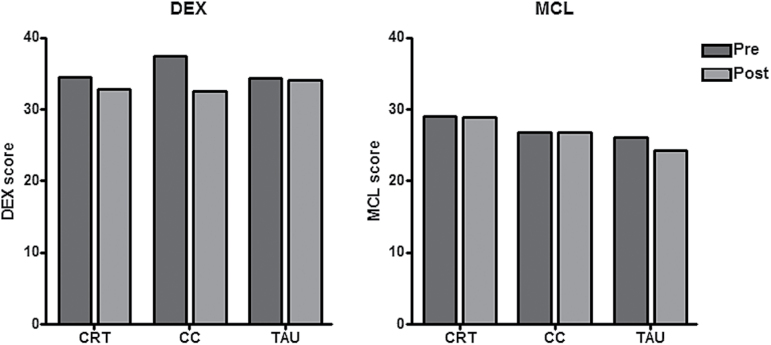
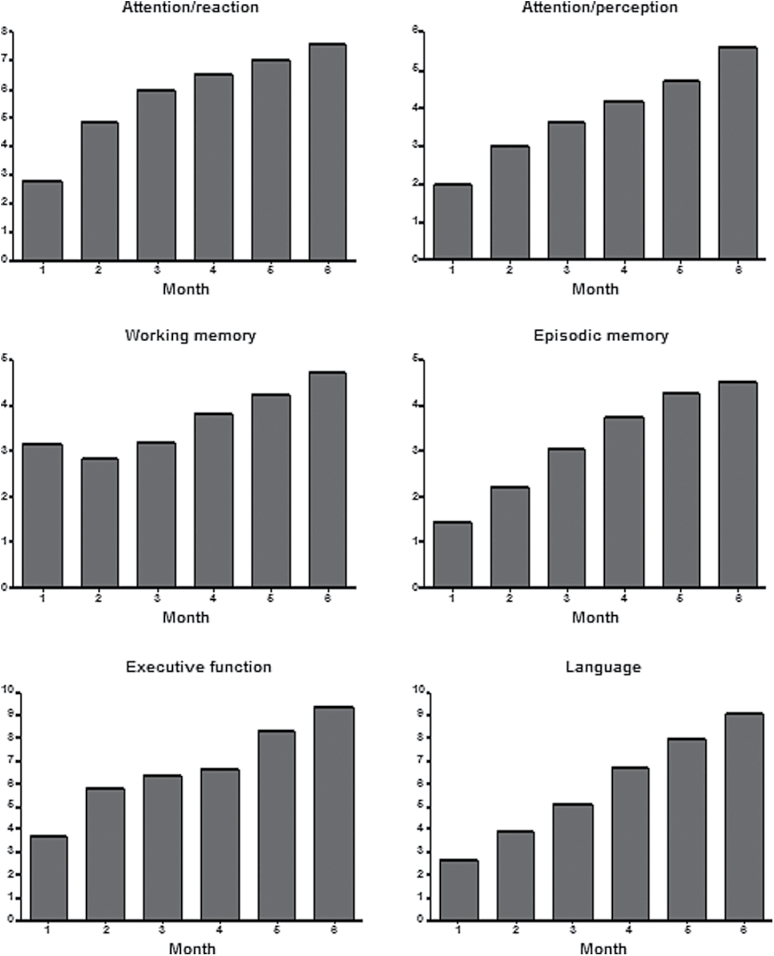
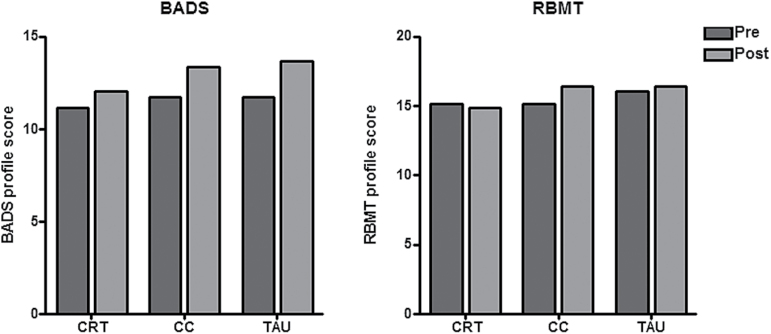
The effectiveness of cognitive remediation therapy (CRT) for the neuropsychological deficits seen in schizophrenia is supported by meta-analysis. However, a recent methodologically rigorous trial had negative findings. In this study, 130 chronic schizophrenic patients were randomly assigned to computerized CRT, an active computerized control condition (CC) or treatment as usual (TAU). Primary outcome measures were 2 ecologically valid batteries of executive function and memory, rated under blind conditions; other executive and memory tests and a measure of overall cognitive function were also employed. Carer ratings of executive and memory failures in daily life were obtained before and after treatment. Computerized CRT was found to produce improvement on the training tasks, but this did not transfer to gains on the primary outcome measures and most other neuropsychological tests in comparison to either CC or TAU conditions. Nor did the intervention result in benefits on carer ratings of daily life cognitive failures. According to this study, computerized CRT is not effective in schizophrenia. The use of both active and passive CCs suggests that nature of the control group is not an important factor influencing results.
荟萃分析支持认知康复疗法(CRT)对精神分裂症患者神经心理缺陷的有效性。然而,最近一项方法严谨的试验却得出了阴性结果。在本研究中,130名慢性精神分裂症患者被随机分配至计算机化CRT组、积极计算机化对照条件(CC)组或常规治疗(TAU)组。主要结局指标是在盲态条件下评定的2个具有生态学效度的执行功能和记忆测验组;还采用了其他执行和记忆测试以及一项整体认知功能测量。在治疗前后获取了照料者对日常生活中执行和记忆障碍的评分。结果发现,计算机化CRT在训练任务上产生了改善,但与CC组或TAU组相比,这并未转化为主要结局指标及大多数其他神经心理测试的改善。该干预措施也未使照料者对日常生活认知障碍的评分产生益处。根据本研究,计算机化CRT对精神分裂症无效。使用积极和消极CC表明,对照组的性质并非影响结果的重要因素。