Cai Changfu, Cheng Fang-Yun, Wu Jing, Zhong Yuan, Liu Gaixiu
Landscape Architecture College of Beijing Forestry University, National Flower Engineering Research Centre, Beijing, China.
National Peony Garden, Luoyang, Henan, China.
PLoS One. 2015 May 26;10(5):e0128584. doi: 10.1371/journal.pone.0128584. eCollection 2015.
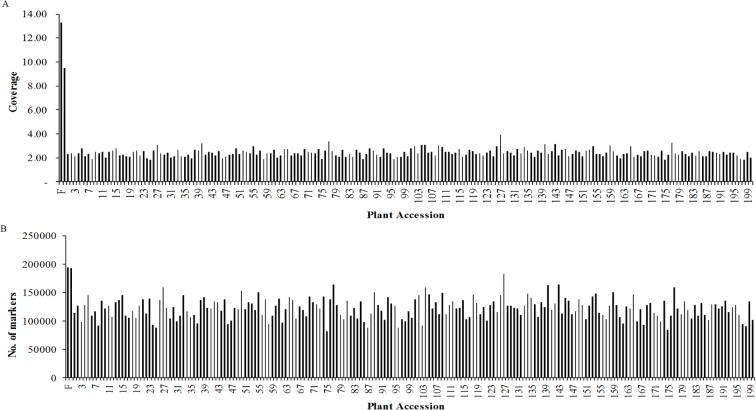
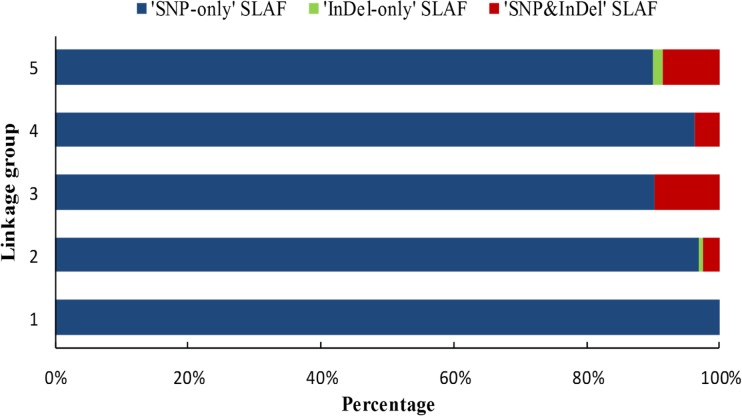
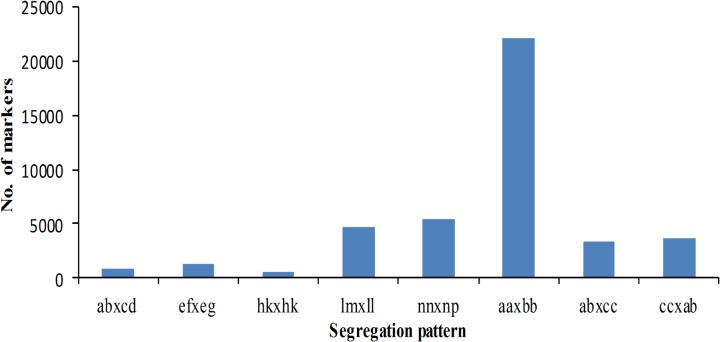
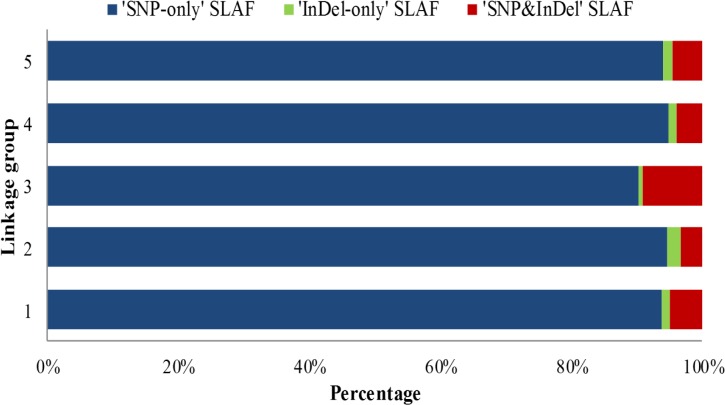
Genetic linkage maps, permitting the elucidation of genome structure, are one of most powerful genomic tools to accelerate marker-assisted breeding. However, due to a lack of sufficient user-friendly molecular markers, no genetic linkage map has been developed for tree peonies (Paeonia Sect. Moutan), a group of important horticultural plants worldwide. Specific-locus amplified fragment sequencing (SLAF-seq) is a recent molecular marker development technology that enable the large-scale discovery and genotyping of sequence-based marker in genome-wide. In this study, we performed SLAF sequencing of an F1 population, derived from the cross P. ostti 'FenDanBai' × P. × suffruticosa 'HongQiao', to identify sufficient high-quality markers for the construction of high-density genetic linkage map in tree peonies. After SLAF sequencing, a total of 78 Gb sequencing data and 285,403,225 pair-end reads were generated. We detected 309,198 high-quality SLAFs from these data, of which 85,124 (27.5%) were polymorphic. Subsequently, 3518 of the polymorphic markers, which were successfully encoded in to Mendelian segregation types, and were in conformity with the criteria of high-quality markers, were defined as effective markers and used for genetic linkage mapping. Finally, we constructed an integrated genetic map, which comprised 1189 markers on the five linkage groups, and spanned 920.699 centiMorgans (cM) with an average inter-marker distance of 0.774 cM. There were 1115 'SNP-only' markers, 18 'InDel-only' markers, and 56 'SNP&InDel' markers on the map. Among these markers, 450 (37.85%) showed significant segregation distortion (P < 0.05). In conclusion, this investigation reported the first large-scale marker development and high-density linkage map construction for tree peony. The results of this study will serve as a solid foundation not only for marker-assisted breeding, but also for genome sequence assembly for tree peony.
遗传连锁图谱有助于阐明基因组结构,是加速标记辅助育种的最强大的基因组工具之一。然而,由于缺乏足够的用户友好型分子标记,尚未为芍药属牡丹组(Paeonia Sect. Moutan)构建遗传连锁图谱,而芍药属牡丹组是全球重要的园艺植物类群。特定位点扩增片段测序(SLAF-seq)是一种最新的分子标记开发技术,能够在全基因组范围内大规模发现基于序列的标记并进行基因分型。在本研究中,我们对由‘凤丹白’牡丹(P. ostti)ב红桥’牡丹(P. × suffruticosa)杂交产生的F1群体进行了SLAF测序,以鉴定足够数量的高质量标记用于构建牡丹的高密度遗传连锁图谱。经过SLAF测序,共产生了78 Gb的测序数据和285,403,225条双端读数。我们从这些数据中检测到309,198个高质量SLAF,其中85,124个(27.5%)是多态性的。随后,3518个多态性标记成功编码为孟德尔分离类型,且符合高质量标记标准,被定义为有效标记并用于遗传连锁图谱构建。最终,我们构建了一个整合遗传图谱,该图谱由五个连锁群上的1189个标记组成,跨度为920.699厘摩(cM),标记间平均距离为0.774 cM。图谱上有1115个‘仅SNP’标记、18个‘仅InDel’标记和56个‘SNP&InDel’标记。在这些标记中,450个(37.85%)表现出显著的分离畸变(P < 0.05)。总之,本研究报道了首次对牡丹进行的大规模标记开发和高密度连锁图谱构建。本研究结果不仅将为标记辅助育种,也将为牡丹基因组序列组装奠定坚实基础。