Wang Victor Bochuan, Sivakumar Krishnakumar, Yang Liang, Zhang Qichun, Kjelleberg Staffan, Loo Say Chye Joachim, Cao Bin
1] School of Materials Science and Engineering, Nanyang Technological University, Singapore 639798, Singapore [2] Singapore Centre on Environmental Life Sciences Engineering (SCELSE), Nanyang Technological University, Singapore 637551, Singapore.
Singapore Centre on Environmental Life Sciences Engineering (SCELSE), Interdisciplinary Graduate School, Nanyang Technological University, Singapore 639798, Singapore.
Sci Rep. 2015 Jun 10;5:11222. doi: 10.1038/srep11222.
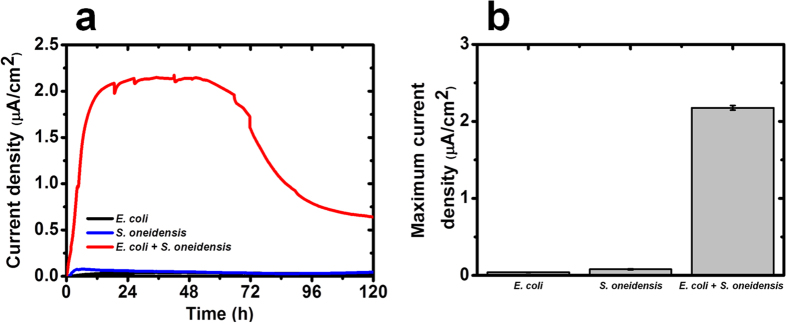
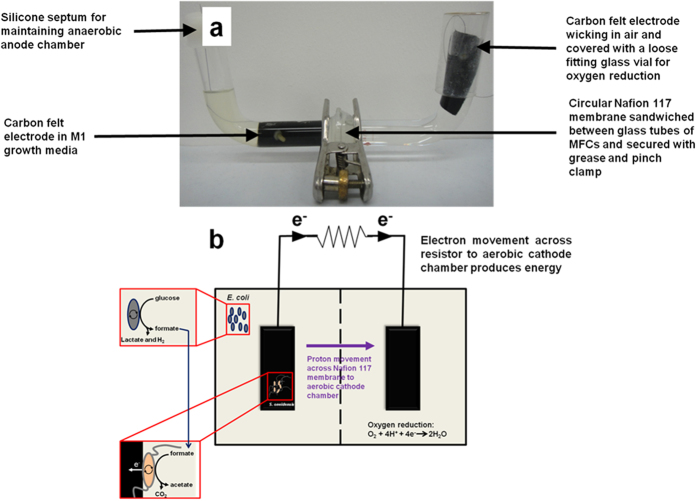
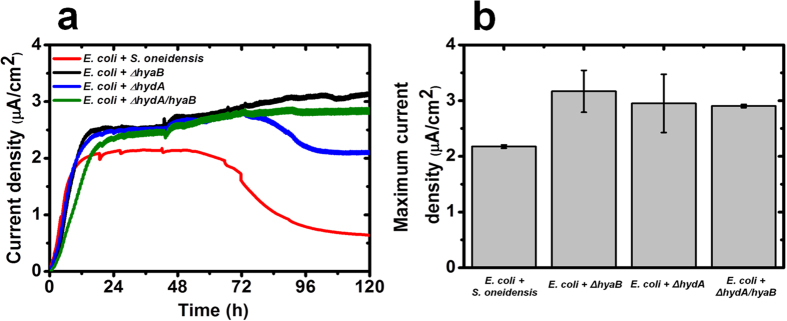
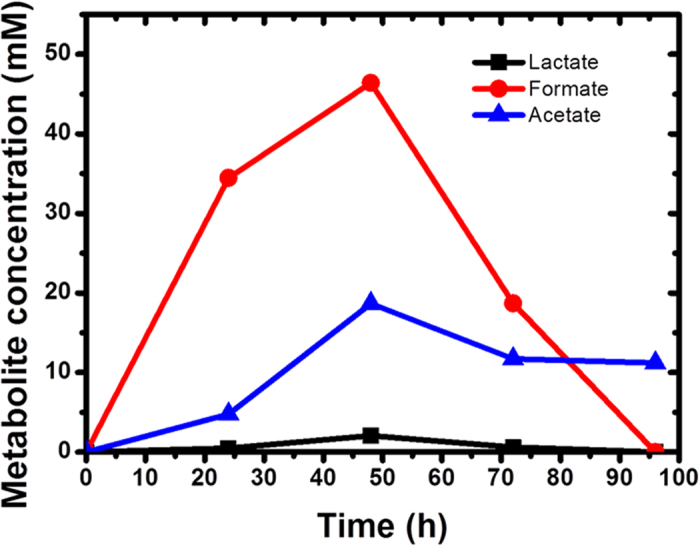
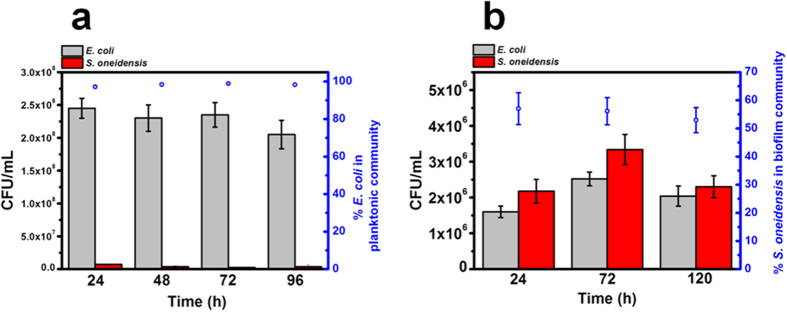
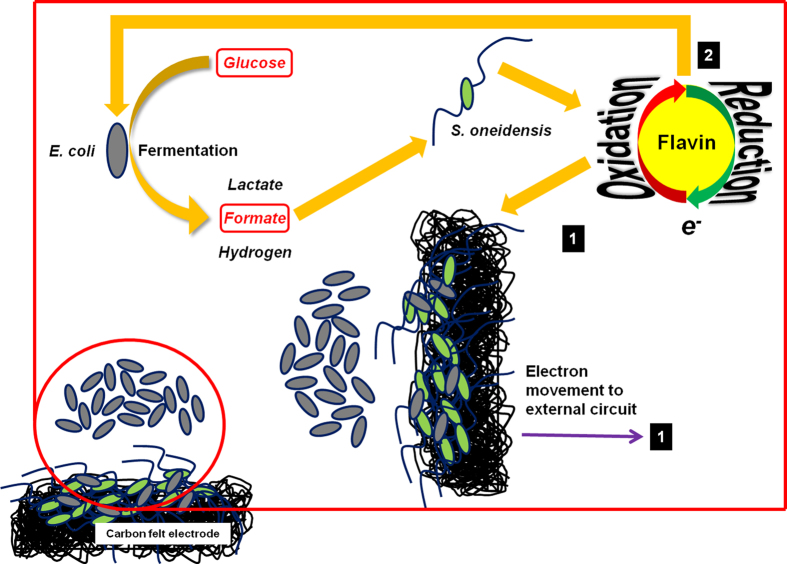
Mutualistic interactions in planktonic microbial communities have been extensively studied. However, our understanding on mutualistic communities consisting of co-existing planktonic cells and biofilms is limited. Here, we report a planktonic cells-biofilm mutualistic system established by the fermentative bacterium Escherichia coli and the dissimilatory metal-reducing bacterium Shewanella oneidensis in a bioelectrochemical device, where planktonic cells in the anode media interact with the biofilms on the electrode. Our results show that the transfer of formate is the key mechanism in this mutualistic system. More importantly, we demonstrate that the relative distribution of E. coli and S. oneidensis in the liquid media and biofilm is likely driven by their metabolic functions towards an optimum communal metabolism in the bioelectrochemical device. RNA sequencing-based transcriptomic analyses of the interacting organisms in the mutualistic system potentially reveal differential expression of genes involved in extracellular electron transfer pathways in both species in the planktonic cultures and biofilms.
浮游微生物群落中的互利共生相互作用已得到广泛研究。然而,我们对由共存的浮游细胞和生物膜组成的互利共生群落的了解有限。在此,我们报告了一种在生物电化学装置中由发酵细菌大肠杆菌和异化金属还原细菌希瓦氏菌建立的浮游细胞 - 生物膜互利共生系统,其中阳极介质中的浮游细胞与电极上的生物膜相互作用。我们的结果表明,甲酸盐的转移是该互利共生系统中的关键机制。更重要的是,我们证明了大肠杆菌和希瓦氏菌在液体介质和生物膜中的相对分布可能是由它们在生物电化学装置中朝着最佳群落代谢的代谢功能驱动的。基于RNA测序的互利共生系统中相互作用生物体的转录组分析可能揭示浮游培养物和生物膜中两个物种参与细胞外电子转移途径的基因的差异表达。