Jo Junyoung, Lee Yoon Jae, Lee Hyangsook
Department of Korean Gynecology, Graduate School, Kyung Hee University, Seoul 130-702, Republic of Korea ; Conmaul Hospital, Seoul 137-881, Republic of Korea.
Department of Korean Gynecology, CHA Bundang Medical Center, CHA University, Seongnam 463-712, Republic of Korea.
Evid Based Complement Alternat Med. 2015;2015:842180. doi: 10.1155/2015/842180. Epub 2015 May 18.
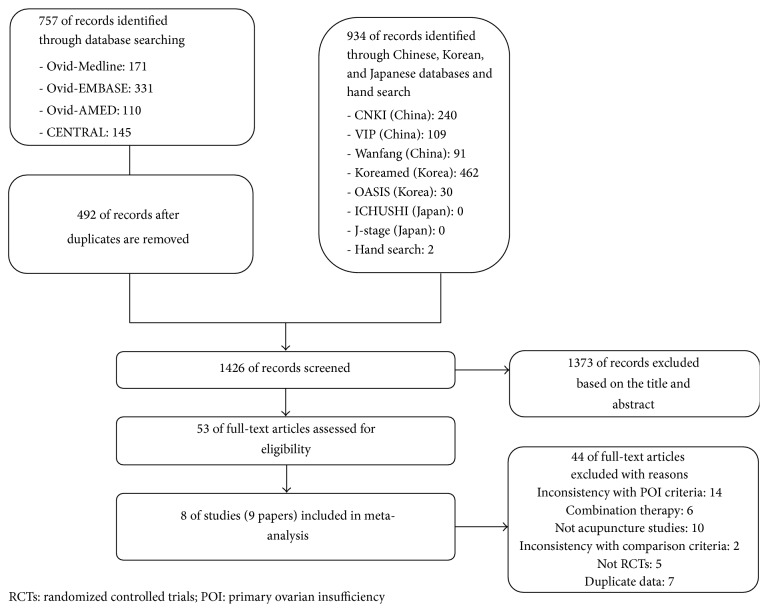
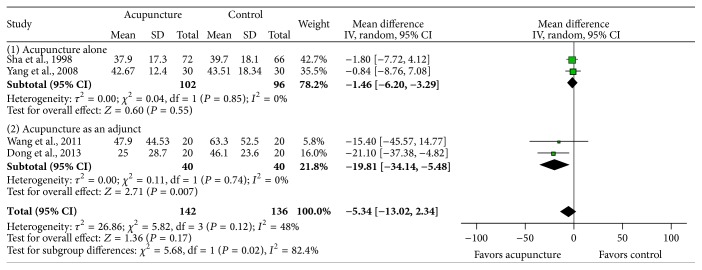
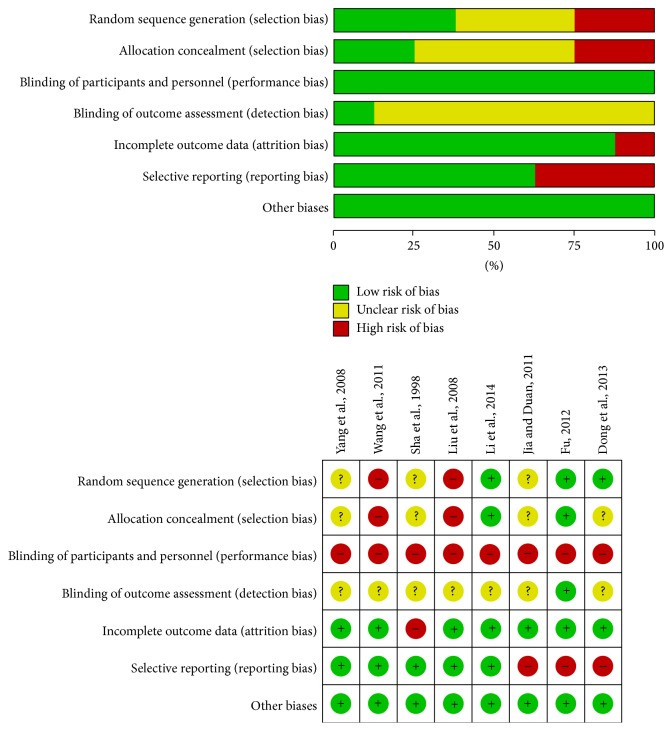
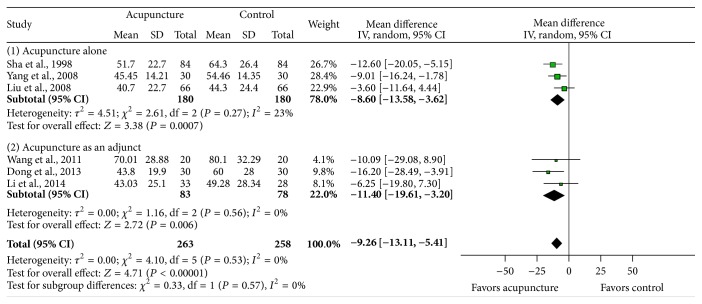
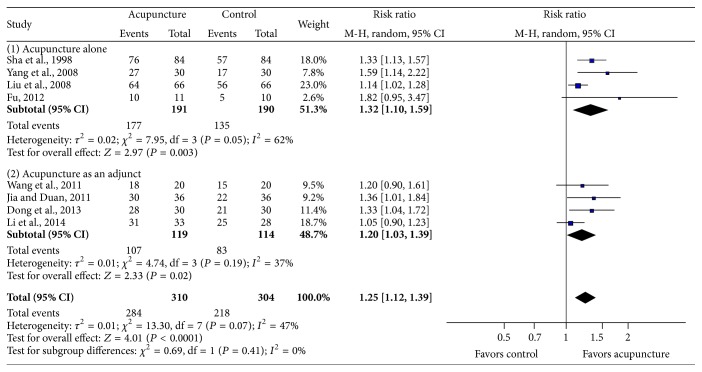
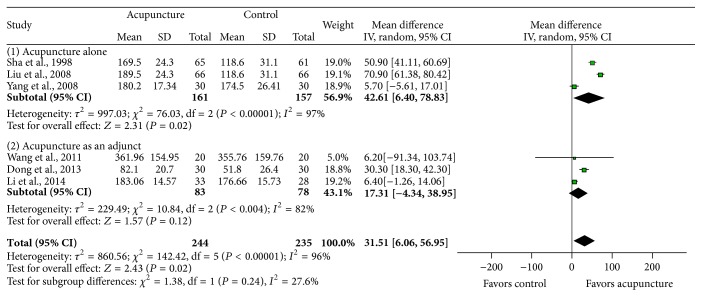
Objective. This systematic review aimed to assess current evidence from randomized controlled trials (RCTs) on the effects of acupuncture for patients with primary ovarian insufficiency (POI). Methods. We searched twelve databases to identify relevant studies published before July 2014. The outcomes were serum follicle-stimulating hormone (FSH) levels and resumption of menstruation. Two reviewers independently assessed the risk of bias using the Cochrane's tool, extracted the results, and evaluated the overall level of the evidence using Grading of Recommendations Assessment, Development, and Evaluation (GRADE) criteria. Results. Eight RCTs were selected. Acupuncture significantly lowered serum FSH levels and more women receiving acupuncture reported resumption of menses. However, the results should be interpreted with caution due to a small number of participants, high risk of bias for blinding, and likely publication bias. The level of evidence for FSH level and resumption of menses were assessed as "low" using GRADE. Conclusion. The current evidence on acupuncture for POI is insufficient to draw a firm conclusion due to scarcity of studies with a low risk of bias and likely publication bias. Further rigorously designed and conducted studies are needed to confirm the effectiveness and safety of acupuncture in patients with POI.
目的。本系统评价旨在评估目前来自随机对照试验(RCT)的关于针刺治疗原发性卵巢功能不全(POI)患者疗效的证据。方法。我们检索了12个数据库,以识别2014年7月之前发表的相关研究。结局指标为血清卵泡刺激素(FSH)水平和月经复潮情况。两名评价者独立使用Cochrane工具评估偏倚风险,提取结果,并使用推荐分级的评估、制定与评价(GRADE)标准评估证据的总体水平。结果。共纳入8项RCT。针刺显著降低了血清FSH水平,更多接受针刺治疗的女性报告月经复潮。然而,由于参与者数量较少、盲法偏倚风险高以及可能存在发表偏倚,对结果的解释应谨慎。使用GRADE评估,FSH水平和月经复潮的证据水平被评定为“低”。结论。由于偏倚风险低的研究稀缺且可能存在发表偏倚,目前关于针刺治疗POI的证据不足以得出确凿结论。需要进一步进行设计严谨、实施规范的研究,以证实针刺治疗POI患者的有效性和安全性。